









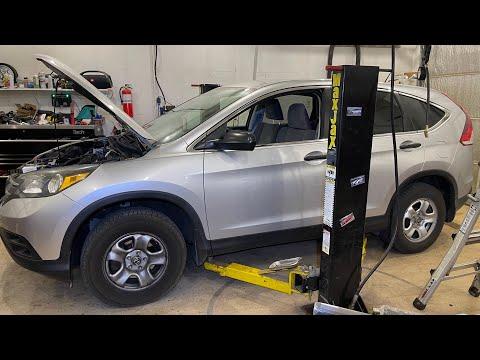





How to Replace the Serpentine Belt on a 2012-2014 Honda CR-V 2.4L (Engine: Inline 4 2.4L)
Step-by-step DIY serpentine belt replacement with tools, parts list, torque specs, and safety tips for your 2013 Honda CR-V
How to Replace the Serpentine Belt on a 2012-2014 Honda CR-V 2.4L (Engine: Inline 4 2.4L)
Step-by-step DIY serpentine belt replacement with tools, parts list, torque specs, and safety tips for your 2013 Honda CR-V for 2012, 2013, 2014


🔧 CR-V - Serpentine Belt Replacement
The serpentine belt drives the alternator, A/C compressor, and other accessories on your CR-V. You’ll remove the old belt, route a new one around the pulleys, and use the automatic tensioner to set correct belt tension.
Difficulty Level: Intermediate (careful but doable for a beginner) | Estimated Time: 1–2 hours
⚠️ Safety & Precautions
- 🛑 Always work with the engine off and completely cooled down. Never put your hands near a running engine.
- 🧯 Set the parking brake and keep the gear selector in P (Park).
- 🔋 Disconnect the negative battery terminal if your tools may contact the starter or alternator power studs.
- 🧤 Support the front of your CR-V with jack stands, not just a jack, if you raise it for better access.
- 👓 Wear safety glasses; there are lots of tight spots and clips that can snap loose.
🔧 Required Tools
You'll need the following tools for this repair:
- 🧰 3/8" drive ratchet
- 🧰 3/8" drive extension (6")
- 🧰 19mm socket
- 🧰 10mm socket
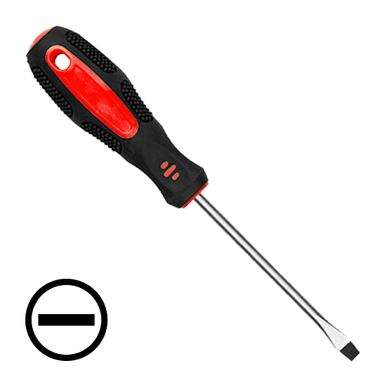
- 🧰 Flathead screwdriver (medium)
- 🧰 Serpentine belt tool or long 3/8" drive breaker bar (specialty)
- 🧰 Torque wrench 3/8" drive (5–75 ft-lbs range)
- 🧰 Floor jack (rated 3-ton minimum)
- 🧰 Jack stands (rated 3-ton minimum)
- 🧰 Wheel chocks
- 🧰 Work light or flashlight
- 🧰 Mechanic gloves
- 🧰 Safety glasses
🔩 Required Parts
HowToo sells all the parts you need for this repair:
- 🧱 Serpentine drive belt (accessory drive belt) for 2.4L - Qty: 1
- 🧱 Plastic push clips for splash shield - Qty: 4–8 (optional, in case old ones break)
- 🧱 Dielectric grease (small packet) - Qty: 1 (optional, for battery terminal if disconnected)
📋 Before You Begin
- Park your CR-V on level ground, set the parking brake, and chock the rear wheels.
- Open the hood and locate the belt and belt routing diagram sticker (usually on the radiator support or underside of hood). If missing, you’ll draw your own diagram in the next step.
- If you plan to work from underneath or through the right wheel well, loosen the front right wheel lug nuts slightly now with the CR-V still on the ground.
- If you want maximum safety, disconnect the negative battery cable with a 10mm socket.
🔨 Step-by-Step Instructions
Follow these steps in order:
Step 1: Raise and support the vehicle (optional but recommended)
- Place wheel chocks behind the rear wheels.
- Use the floor jack (3-ton) under the front center jacking point (front subframe crossmember) to lift the front of your CR-V.
- Set the front end down onto jack stands (3-ton) at the factory pinch weld points on both sides.
- If you want extra access through the wheel well, remove the front right wheel using the 19mm socket and ratchet.
- Never work under a car supported only by a jack.
Step 2: Remove the lower splash shield / inner fender for access
- A splash shield is a plastic cover under the engine area that keeps dirt and water out.
- Use the 10mm socket to remove the bolts holding the front lower splash shield under the engine on the passenger side (if present).
- Use the flathead screwdriver to gently pry out any plastic push clips. Turn the center or pry the head up, then pull the clip out.
- If you removed the front right wheel, pull back or remove the front right inner fender liner fasteners with the 10mm socket and flathead screwdriver for a clearer view of the belt and pulleys.
- Torque spec when reinstalling 10mm splash shield bolts: 9 Nm (7 ft-lbs).
Step 3: Study or create a belt routing diagram
- Look for the factory belt routing sticker. If it’s there, take a clear photo with your phone.
- If there is no sticker, use a marker and paper to draw the belt path around each pulley (crankshaft, alternator, A/C, idler, tensioner, etc.).
- Double-check your drawing; this saves headaches later.
Step 4: Locate the belt tensioner
- A belt tensioner is a spring-loaded arm that keeps the belt tight.
- On your CR-V, the tensioner is on the passenger (right) side of the engine, roughly in the middle of the pulley group. It has a smooth pulley and an arm.
- Find the 19mm bolt at the center of the tensioner pulley. This is where you’ll apply force to release tension.
Step 5: Relieve belt tension
- Install the 19mm socket onto the tensioner pulley bolt.
- Attach the serpentine belt tool or long breaker bar to the socket so you have good leverage.
- From underneath or through the wheel well, rotate the tensioner arm to relieve tension. On this engine, you typically pull the bar toward the front of the car (clockwise when viewed from the passenger side), but move it gently and see which direction loosens the belt.
- While holding the tensioner in the released position, use your free hand to slip the belt off one of the easier-to-reach smooth pulleys (often the alternator or idler).
- Slowly let the tensioner return to its resting position with the breaker bar. Do not let it snap back.
- Keep fingers out from between belt and pulleys.
Step 6: Remove the old belt completely
- Once it’s off one pulley, snake the belt off the remaining pulleys by hand.
- Note how it passes under and over the different pulleys as you remove it; this helps confirm your routing diagram.
- Pull the old belt out from the top or bottom, whichever is easier.
- Compare the old belt and new belt side by side. Length and rib count should match.
Step 7: Inspect pulleys and tensioner
- Spin each accessible pulley by hand (engine off). They should spin smoothly with no grinding or wobble.
- Check the tensioner pulley movement by smoothly rotating the arm again with the 19mm socket and breaker bar. It should move smoothly and spring back firmly.
- If a pulley feels rough or loose, plan to replace it soon, but you can still install the new belt if it’s not failing badly right now.
Step 8: Route the new belt (except over one pulley)
- Using your diagram or photo, start routing the new belt around the lower crankshaft pulley first.
- Then wrap it around the other grooved pulleys (A/C compressor, alternator, power steering if equipped) following the correct path.
- Make sure the belt ribs sit fully in the grooves on each grooved pulley as you go.
- Leave the belt off one easily accessible smooth pulley (often the alternator or idler). This will be your “last pulley” for installation.
- Keep the belt straight; no twists anywhere.
Step 9: Tension the belt and slip it onto the last pulley
- Put the 19mm socket and breaker bar back on the tensioner pulley bolt.
- Rotate the tensioner again to relieve tension, just like before.
- While holding the tensioner, slide the belt over the final pulley with your other hand. Make sure all other sections of belt are still seated correctly on each pulley.
- Once the belt is fully on the last pulley, gently let the tensioner return to its normal position. The tensioner will automatically set the correct belt tension.
Step 10: Double-check belt routing and seating
- From both the top and bottom / wheel well, visually inspect the belt path.
- Confirm the belt matches the routing diagram exactly—no pulleys skipped, no wrong side of a pulley.
- Check that all ribs are fully engaged in the grooves. A common beginner mistake is the belt riding on the edge of a pulley.
Step 11: Reinstall splash shield, inner fender, and wheel
- Reinstall the lower splash shield using the 10mm socket and any plastic clips you removed. Replace broken clips with new ones.
- Torque 10mm splash shield bolts: 9 Nm (7 ft-lbs) using the torque wrench and 10mm socket.
- If you removed the inner fender liner, reinstall its screws and clips with the 10mm socket and flathead screwdriver.
- If you removed the front right wheel, reinstall it and hand-tighten the lug nuts with the 19mm socket.
- Lower the CR-V off the jack stands using the floor jack.
- With the CR-V on the ground, torque the wheel lug nuts in a star pattern to 108 Nm (80 ft-lbs) using the torque wrench and 19mm socket.
Step 12: Reconnect the battery (if disconnected) and test
- If you removed the negative battery cable, reconnect it using the 10mm socket. Tighten it snugly (do not overtighten).
- Optionally, apply a small amount of dielectric grease around the outside of the terminal to help prevent corrosion.
✅ After Repair
- Start the engine and watch the belt for one full minute. It should run smoothly with no wobble, squeal, or walking off pulleys.
- Listen for any new noises: chirping, squealing, or grinding can mean mis-routed belt or bad pulley.
- Turn on the A/C, headlights, and steering from lock to lock to lightly load the belt. Watch for slipping or noise.
- After a short drive (5–10 minutes), shut the engine off and recheck the belt seating and tensioner visually.
💰 DIY vs Shop Cost
Shop Cost: $220–$350 (parts + labor)
DIY Cost: $35–$70 (parts only)
You Save: $150–$280 by doing it yourself!
Shop labor rates vary but typically run $100–$150/hour. This repair takes a shop approximately 0.7–1.0 hours.
🎯 Ready to get started?
HowToo makes it easy: same-day/2-day shipping on every part, plus all the tools and specialty tools you need! Check out the parts and tools sections below to add everything to your cart.
Guide for Serpentine Belt replace for these Honda vehicles
| Year Make Model | Sub Model | Engine | Body Style |
|---|---|---|---|
| 2014 Honda CR-V | - | Inline 4 2.4L | - |
| 2013 Honda CR-V | - | Inline 4 2.4L | - |
| 2012 Honda CR-V | - | Inline 4 2.4L | - |