









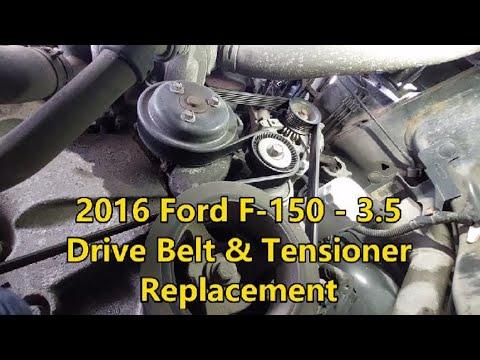



How to Replace the Serpentine Belt on a 2016 Ford F-150
Step-by-step instructions with tools, routing tips, safety checks, and install guidance for 2011, 2012, 2013, 2014, 2015, 2016, 2017, 2018, 2019, 2020, 2021, 2022, 2023
How to Replace the Serpentine Belt on a 2016 Ford F-150
Step-by-step instructions with tools, routing tips, safety checks, and install guidance for 2011, 2012, 2013, 2014, 2015, 2016, 2017, 2018, 2019, 2020, 2021, 2022, 2023


🔧 Serpentine Belt - Replacement
The serpentine belt drives key accessories on your F-150, so a worn or cracked belt should be replaced before it fails. This job is straightforward, but belt routing and tensioner access must be handled carefully so the new belt tracks correctly.
Difficulty Level: Beginner | Estimated Time: 1-2 hours
⚠️ Safety & Precautions
- Engine must be off and completely cool before starting.
- Keep hands, tools, and clothing clear of the fan and pulleys.
- Do not start the engine until the belt is fully seated on every pulley.
- No battery disconnect is required for this repair.
🔧 Required Tools
You'll need the following tools for this repair:
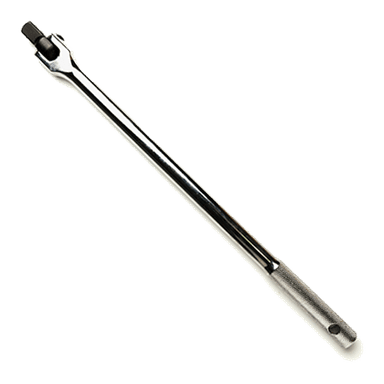
- 3/8-inch drive breaker bar
- 1/2-inch drive ratchet
- 15mm socket
- 8mm socket
- Serpentine belt routing diagram
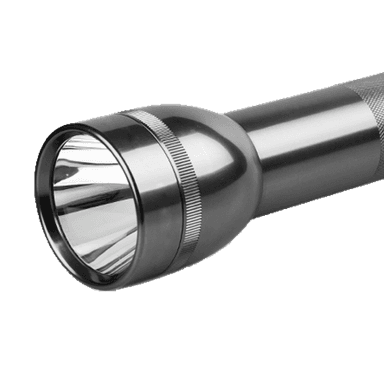
- Flashlight
- Safety glasses
- Mechanic gloves
- Wheel chocks
🔩 Required Parts
HowToo sells all the parts you need for this repair:
- Serpentine belt - Qty: 1
- Belt routing decal - Qty: 1
📋 Before You Begin
- Park on level ground and set the parking brake.
- Let the engine cool fully.
- Open the hood and locate the belt path on the front of the engine.
- Take a photo before removal.
🔨 Step-by-Step Instructions
Follow these steps in order:
Step 1: Locate the belt routing
- Use a flashlight to trace the serpentine belt around the pulleys.
- If present, read the belt routing decal on the radiator support or hood area.
- If the decal is missing, take a clear photo of the belt path before removing it.
Step 2: Release belt tension
- Use a 15mm socket and 3/8-inch drive breaker bar on the belt tensioner.
- Rotate the tensioner slowly to relieve belt tension.
- Keep firm control of the tensioner arm while releasing it.
- Move it smoothly, not fast.
Step 3: Remove the old belt
- Slip the belt off one easily reached pulley first, then remove it from the rest of the pulleys by hand.
- Inspect the old belt for cracks, missing ribs, glazing, or frayed edges.
Step 4: Compare the new belt
- Lay the new belt next to the old one to confirm length and rib count match.
- Make sure the belt ribs line up with the pulley grooves.
Step 5: Install the new belt
- Route the new belt around the pulleys following the diagram.
- Leave one smooth pulley for last so you can slip the belt on more easily.
- Use the 15mm socket and 3/8-inch drive breaker bar to move the tensioner again.
- Slip the belt onto the final pulley and slowly release the tensioner.
- Check that every rib is seated correctly in every grooved pulley.
Step 6: Inspect alignment
- Use a flashlight to verify the belt is centered on each pulley.
- Make sure the belt is not riding on a pulley edge.
- Spin each accessible pulley by hand only if the engine is off and the belt is loose enough to confirm nothing is binding.
Step 7: Start and verify
- Close the hood loosely or keep clear of moving parts.
- Start the engine and watch the belt for a few seconds.
- Listen for squealing, slapping, or chirping sounds.
- If the belt walks off-center, shut the engine off immediately and recheck routing.
✅ After Repair
- Confirm the belt runs smoothly with no noise.
- Recheck tension and alignment after a short test drive.
- Look for any accessories that seem noisy or wobble, since that can point to a bad pulley or tensioner.
💰 DIY vs Shop Cost
Shop Cost: $180-$350 (parts + labor)
DIY Cost: $40-$90 (parts only)
You Save: $140-$260 by doing it yourself!
Shop labor rates vary but typically run $100-$150/hour. This repair takes a shop approximately 1-2 hours.
🎯 Ready to get started?
HowToo makes it easy: same-day/2-day shipping on every part, plus all the tools and specialty tools you need! Check out the parts and tools sections below to add everything to your cart.