









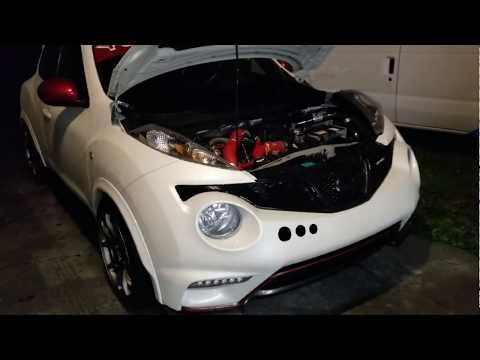







How to Replace the Serpentine Belt on a 2011-2017 Nissan Juke (Step-by-Step Guide) (Engine: Inline 4 1.6L)
Tools, parts list, belt routing tips, safety steps, and torque specs for a smooth DIY install
How to Replace the Serpentine Belt on a 2011-2017 Nissan Juke (Step-by-Step Guide) (Engine: Inline 4 1.6L)
Tools, parts list, belt routing tips, safety steps, and torque specs for a smooth DIY install for 2011, 2012, 2013, 2014, 2015, 2016, 2017


🔧 Juke - Serpentine Belt Replacement
The serpentine belt drives key accessories like the alternator and A/C. Replacing it is mostly about getting access, releasing the automatic tensioner, swapping the belt, then double-checking the belt is seated correctly on every pulley.
Difficulty Level: Intermediate | Estimated Time: 0.8-1.5 hours
Assumption: Stock accessory drive with A/C (most Juke setups).
⚠️ Safety & Precautions
- 🧤 Work on a cool engine; hot pulleys can burn you.
- 🧯 Keep hands/tools away from the electric radiator fan; it can turn on unexpectedly.
- 🧱 Support the Juke with jack stands; never rely on a floor jack alone.
- 🔌 Battery disconnect is recommended: remove the negative terminal to prevent accidental starts.
🔧 Required Tools
You'll need the following tools for this repair:
- Floor jack (rated 2-ton minimum)
- Jack stands (rated 2-ton minimum)
- Wheel chocks
- 21mm socket
- 3/8" drive ratchet
- 3/8" drive breaker bar
- Serpentine belt tool (specialty)
- 14mm socket
- 10mm socket
- Torque wrench (10-200 Nm range)
- Trim clip removal tool
- Flat-blade screwdriver
- Work light
- Mechanic gloves
- Safety glasses
🔩 Required Parts
HowToo sells all the parts you need for this repair:
- Serpentine belt - Qty: 1
- Engine undertray/inner fender liner clips - Qty: 4-10
📋 Before You Begin
- 🅿️ Park on level ground, shift to 1st gear, and set the parking brake.
- 🧱 Chock the rear wheels with wheel chocks.
- 🔌 Disconnect the battery: use a 10mm socket to remove the negative terminal and move it aside.
- 🗺️ Find the belt routing diagram (often under the hood). If there’s no sticker, take a clear photo of the current routing before removing the belt.
🔨 Step-by-Step Instructions
Follow these steps in order:
Step 1: Lift and secure the right-front corner
- Use a floor jack (rated 2-ton minimum) to lift the right-front jack point.
- Place jack stands (rated 2-ton minimum) under a solid support point and lower the Juke onto the stands.
- Give the vehicle a gentle shake to confirm it is stable.
Step 2: Remove the right-front wheel
- Use a 21mm socket and 3/8" drive breaker bar to loosen the lug nuts, then remove them.
- Remove the wheel and set it aside.
- Reinstall later and Torque to 133 Nm (98 ft-lbs).
Step 3: Remove the splash shields for access
- Use a trim clip removal tool and flat-blade screwdriver to remove plastic clips from the inner fender liner access area.
- If an undertray section blocks access, use a 10mm socket to remove the small bolts and lower the panel.
- Bag clips/bolts so nothing gets lost.
Step 4: Locate the belt tensioner and belt routing
- Use a work light to locate the serpentine belt and the automatic tensioner.
- The tensioner is spring-loaded; you rotate it to release belt tension.
- A serpentine belt tool (specialty) is a long, thin handle that fits tight spaces to rotate the tensioner safely.
Step 5: Release tension and remove the old belt
- Install a 14mm socket on the tensioner’s hex/bolt head (common) using a serpentine belt tool (specialty) or 3/8" drive breaker bar (whichever fits best).
- Rotate the tensioner smoothly to relieve belt tension (it will feel strong—this is normal).
- While holding the tensioner, slip the belt off the easiest top pulley you can reach.
- Slowly release the tensioner back to its resting position. Do not let it snap back.
- Remove the belt from the remaining pulleys and pull it out through the wheel well opening.
Step 6: Install the new belt (route first, then tension last)
- Compare the new belt to the old one (length and rib count should match).
- Route the new belt around the pulleys following the under-hood diagram (or your photo).
- Leave one smooth pulley for last (usually the easiest to access) so you can slip the belt on after releasing tension.
- Rotate the tensioner again using the 14mm socket and serpentine belt tool (specialty), then slide the belt onto the last pulley.
- Slowly release the tensioner so it applies tension to the belt.
Step 7: Confirm the belt is seated correctly
- Use a work light to inspect every pulley.
- Make sure the belt ribs sit fully in the grooved pulleys and the belt runs centered on smooth pulleys.
- If the belt is off by even one rib, release the tensioner and correct it now.
Step 8: Reinstall shields, wheel, and reconnect battery
- Reinstall the undertray/liner using the 10mm socket, trim clip removal tool, and any replacement clips as needed.
- Reinstall the wheel and tighten lug nuts snug using a 21mm socket.
- Lower the Juke off the jack stands (rated 2-ton minimum) using the floor jack (rated 2-ton minimum).
- Final-tighten lug nuts with a torque wrench (10-200 Nm range): Torque to 133 Nm (98 ft-lbs).
- Reconnect the battery negative terminal using a 10mm socket.
✅ After Repair
- 🔍 Before starting, do one last visual check that the belt is fully seated on every pulley.
- 🔊 Start the engine and let it idle for 30-60 seconds. Listen for squealing or slapping noises.
- 👀 Watch the belt briefly (from a safe distance). It should run smooth with no wandering.
- 🛠️ After a short test drive, recheck the belt alignment through the wheel well access area.
💰 DIY vs Shop Cost
Shop Cost: $180-$350 (parts + labor)
DIY Cost: $35-$90 (parts only)
You Save: $145-$260 by doing it yourself!
Shop labor rates vary but typically run $100-$150/hour. This repair takes a shop approximately 0.8-1.2 hours.
🎯 Ready to get started?
HowToo makes it easy: same-day/2-day shipping on every part, plus all the tools and specialty tools you need! Check out the parts and tools sections below to add everything to your cart.