













How to Replace the Serpentine Belt on a 2008-2021 Jeep Grand Cherokee 5.7L (Engine: V8 5.7L)
Step-by-step DIY serpentine belt replacement with tools, parts list, safety tips, and torque specs for your 2019 Grand Cherokee
How to Replace the Serpentine Belt on a 2008-2021 Jeep Grand Cherokee 5.7L (Engine: V8 5.7L)
Step-by-step DIY serpentine belt replacement with tools, parts list, safety tips, and torque specs for your 2019 Grand Cherokee for 2008, 2009, 2014, 2015, 2016, 2017, 2018, 2019


🔧 Grand Cherokee - Serpentine Belt Replacement
The serpentine belt on your Grand Cherokee drives the alternator, power steering, A/C and other accessories. You’ll remove tension from the belt, route a new one correctly over all pulleys, and verify proper operation.
Difficulty Level: Beginner-Intermediate | Estimated Time: 1–1.5 hours
⚠️ Safety & Precautions
- ⚠️ Always work with the engine off and completely cooled down to avoid burns.
- ⚠️ Remove the key and keep it away from the vehicle so no one can start the engine while you’re working.
- ⚠️ Keep fingers, clothing, and tools away from pulleys and fans; never rotate the engine by “bumping” the starter.
- ⚠️ If you raise the front of the Grand Cherokee, always use a floor jack and jack stands rated for SUV weight.
- ⚠️ Disconnect the negative battery cable if you feel more comfortable around moving fans, as the electric fan can run unexpectedly.
🔧 Required Tools
You'll need the following tools for this repair:
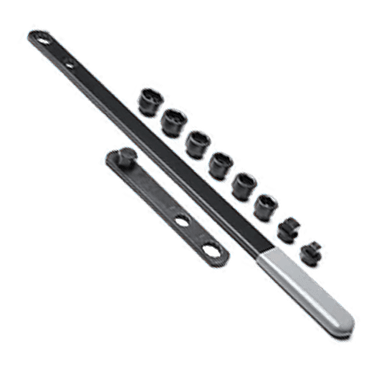
- 🛠️ Serpentine belt tool set (specialty)
- 🛠️ 3/8" drive ratchet
- 🛠️ 1/2" drive ratchet
- 🛠️ 15mm shallow socket
- 🛠️ 13mm socket
- 🛠️ 10mm socket
- 🛠️ 8mm socket
- 🛠️ 3/8" drive extension (6")
- 🛠️ Flat-blade screwdriver (medium)
- 🛠️ Trim clip removal tool (specialty)
- 🛠️ Floor jack (rated 3-ton minimum)
- 🛠️ Jack stands (rated 3-ton minimum)
- 🛠️ Wheel chocks
- 🛠️ Work light or flashlight
- 🛠️ Mechanic’s gloves
- 🛠️ Safety glasses
🔩 Required Parts
HowToo sells all the parts you need for this repair:
- 🔩 Serpentine drive belt (5.7L) - Qty: 1
- 🔩 Belt tensioner assembly - Qty: 1 (optional but recommended if high mileage)
- 🔩 Idler pulley - Qty: 1 (optional, replace if noisy or worn)
- 🔩 Dielectric grease - Qty: 1 small tube (optional for battery connection)
- 🔩 Plastic push clips for lower splash shield - Qty: 4–6 (optional, in case old clips break)
📋 Before You Begin
- Park the Grand Cherokee on level ground, shift to P, and set the parking brake.
- Place wheel chocks behind the rear wheels.
- Open the hood and use the prop rod or hood supports as designed.
- If you prefer extra safety around the electric cooling fan, disconnect the battery:
- Loosen the negative terminal nut with a 10mm socket and remove the cable from the battery post.
- Turn on your work light so you can clearly see the front of the engine and the belt path.
- Locate the belt routing diagram sticker under the hood; if missing, take a clear photo of the existing belt routing from a few angles.
🔨 Step-by-Step Instructions
Follow these steps in order:
Step 1: Raise and secure the front (if needed)
- If access from the top is tight, you may need to work from below as well.
- Position the floor jack (3-ton) under the front crossmember and lift the front of the Grand Cherokee.
- Place jack stands under the factory jacking points and gently lower the vehicle onto the stands.
- Never work under a vehicle supported only by a jack.
Step 2: Remove the lower splash shield (if equipped)
- Use the 8mm socket and 3/8" ratchet to remove the small screws holding the plastic splash shield under the front of the engine.
- Use the trim clip removal tool or flat-blade screwdriver to pop out any plastic push clips.
- Lower the shield and set it aside where you won’t step on it.
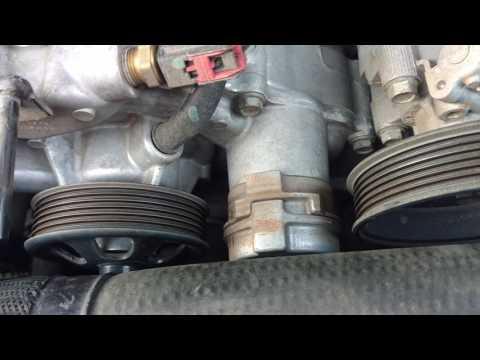
Step 3: Locate the belt tensioner on the 5.7L
- From the front of the engine, look for the spring-loaded tensioner; it’s a small arm with a pulley on the end, usually near the passenger side of the front of the engine.
- The tensioner pulley has a 15mm bolt head or a square boss where your serpentine belt tool or ratchet fits.
- Wipe dirt off the area so you can see clearly.
Step 4: Note the belt routing
- If the factory diagram sticker is present, compare it to the actual routing.
- If no sticker, use your phone to take multiple photos of the belt path over:
- Crankshaft pulley (bottom large pulley)
- Alternator
- Power steering pump
- A/C compressor
- Idler pulley
- Tensioner pulley
- Photos save huge frustration later.
Step 5: Release tension on the serpentine belt
- Attach the 15mm socket to your serpentine belt tool or to a long 1/2" ratchet.
- Place the socket on the tensioner pulley bolt.
- Rotate the tensioner clockwise (toward the passenger side) to relieve belt tension. It will feel springy.
- While holding the tensioner in the released position, use your free hand to slide the belt off one smooth pulley (usually the idler or alternator).
- Slowly let the tensioner return to its resting position.
- Move slowly to avoid snapping back the tensioner.
Step 6: Remove the old belt
- From the top and bottom, carefully pull the belt out from around the fan shroud and all pulleys.
- Note any areas where the belt was twisted or routed tightly; this helps when installing the new one.
- Lay the old belt flat on the ground.
Step 7: Compare new belt to old belt
- Place the new belt next to the old belt on the ground.
- The length should be nearly identical (a few millimeters difference is okay).
- Count the ribs (the grooves) on both belts; they should match.
- Do not install a belt that’s clearly shorter or longer.
Step 8: Inspect pulleys and tensioner
- Spin each accessible pulley (idler, tensioner, alternator, power steering) by hand.
- If a pulley feels rough, makes noise, or has side-to-side play, plan to replace that pulley or the tensioner assembly.
- Check the tensioner arm for smooth spring movement by gently rotating it with the 15mm socket again.
Step 9: Route the new belt (initial placement)
- Refer to the routing diagram sticker or your photos.
- From the bottom, wrap the belt around the crankshaft pulley first, making sure all ribs sit in the grooves.
- Route the belt up and around the lower accessories (A/C compressor and power steering) as shown in the diagram, leaving the easiest upper pulley (often the idler or alternator) for last.
- Make sure ribs stay aligned as you route.
Step 10: Finish routing and apply tension
- From the top, route the belt over the remaining pulleys according to the diagram, again leaving one smooth pulley for last.
- Double-check that:
- The belt sits centered on each ribbed pulley.
- The back (smooth side) of the belt only runs over smooth pulleys.
- Place the 15mm socket and serpentine belt tool on the tensioner bolt again.
- Rotate the tensioner clockwise to relieve tension.
- Slip the belt fully onto the last smooth pulley (often the idler) while holding the tensioner.
- Release the tensioner slowly so it takes up the slack and tensions the belt.
Step 11: Final belt alignment check
- From the top, look at each pulley and confirm the belt is:
- Centered on the grooves
- Not hanging off any edge
- Not twisted
- From underneath, re-check the crankshaft pulley and A/C pulley for proper seating.
- Fix any misalignment before starting the engine.
Step 12: Reinstall the lower splash shield
- Lift the splash shield back into place under the engine.
- Install the screws with the 8mm socket and 3/8" ratchet. Tighten them snugly: Torque to 9 Nm (80 in-lbs).
- Reinstall any plastic push clips using your fingers or the trim clip removal tool to press them fully in.
Step 13: Lower the vehicle and reconnect battery
- Use the floor jack to lift the front slightly, remove the jack stands, then lower the Grand Cherokee to the ground.
- If you disconnected the battery, reinstall the negative battery cable and tighten the nut with a 10mm socket to snug: Torque to 6 Nm (53 in-lbs).
✅ After Repair
- Remove all tools from the engine bay and under the vehicle.
- Start the engine and let it idle while you watch the belt from the side (keep hands and clothing clear).
- Check that the belt runs smoothly, with no wobble, no squealing, and no visible misalignment.
- Turn on the A/C, turn the steering wheel gently, and watch that the belt still runs smoothly under load.
- After a short drive (5–10 minutes), shut the engine off and recheck the belt routing and tension visually.
💰 DIY vs Shop Cost
Shop Cost: $180–$270 (parts + labor)
DIY Cost: $30–$80 (parts only)
You Save: $100–$200 by doing it yourself!
Shop labor rates vary but typically run $100–$150/hour. This repair takes a shop approximately 0.8–1.0 hours.
🎯 Ready to get started?
HowToo makes it easy: same-day/2-day shipping on every part, plus all the tools and specialty tools you need! Check out the parts and tools sections above to add everything to your cart.
Guide for Accessory Drive Belt Tensioner replace for these Jeep vehicles
| Year Make Model | Sub Model | Engine | Body Style |
|---|---|---|---|
| 2021 Jeep Grand Cherokee | - | V8 5.7L | - |
| 2021 Jeep Grand Cherokee | - | V6 3.6L | - |
| 2021 Jeep Grand Cherokee | - | V8 6.4L | - |
| 2021 Jeep Grand Cherokee | - | V8 6.2L | - |
| 2020 Jeep Grand Cherokee | - | V8 5.7L | - |
| 2020 Jeep Grand Cherokee | - | V6 3.6L | - |
| 2020 Jeep Grand Cherokee | - | V8 6.4L | - |
| 2020 Jeep Grand Cherokee | - | V8 6.2L | - |
| 2019 Jeep Grand Cherokee | - | V6 3.0L | - |
| 2019 Jeep Grand Cherokee | - | V8 5.7L | - |
| 2019 Jeep Grand Cherokee | - | V6 3.6L | - |
| 2019 Jeep Grand Cherokee | - | V8 6.4L | - |
| 2019 Jeep Grand Cherokee | - | V8 6.2L | - |
| 2018 Jeep Grand Cherokee | - | V6 3.0L | - |
| 2018 Jeep Grand Cherokee | - | V8 5.7L | - |
| 2018 Jeep Grand Cherokee | - | V6 3.6L | - |
| 2018 Jeep Grand Cherokee | - | V8 6.4L | - |
| 2018 Jeep Grand Cherokee | - | V8 6.2L | - |
| 2017 Jeep Grand Cherokee | - | V6 3.0L | - |
| 2017 Jeep Grand Cherokee | - | V8 5.7L | - |
| 2017 Jeep Grand Cherokee | - | V6 3.6L | - |
| 2017 Jeep Grand Cherokee | - | V8 6.4L | - |
| 2016 Jeep Grand Cherokee | - | V6 3.0L | - |
| 2016 Jeep Grand Cherokee | - | V8 5.7L | - |
| 2016 Jeep Grand Cherokee | - | V6 3.6L | - |
| 2016 Jeep Grand Cherokee | - | V8 6.4L | - |
| 2015 Jeep Grand Cherokee | - | V6 3.0L | - |
| 2015 Jeep Grand Cherokee | - | V8 5.7L | - |
| 2015 Jeep Grand Cherokee | - | V6 3.6L | - |
| 2015 Jeep Grand Cherokee | - | V8 6.4L | - |
| 2014 Jeep Grand Cherokee | - | V6 3.0L | - |
| 2014 Jeep Grand Cherokee | - | V8 5.7L | - |
| 2014 Jeep Grand Cherokee | - | V6 3.6L | - |
| 2014 Jeep Grand Cherokee | - | V8 6.4L | - |
| 2013 Jeep Grand Cherokee | - | V8 5.7L | - |
| 2013 Jeep Grand Cherokee | - | V6 3.6L | - |
| 2013 Jeep Grand Cherokee | - | V8 6.4L | - |
| 2012 Jeep Grand Cherokee | - | V8 5.7L | - |
| 2012 Jeep Grand Cherokee | - | V6 3.6L | - |
| 2012 Jeep Grand Cherokee | - | V8 6.4L | - |
| 2011 Jeep Grand Cherokee | - | V8 5.7L | - |
| 2011 Jeep Grand Cherokee | - | V6 3.6L | - |
| 2010 Jeep Grand Cherokee | - | V8 5.7L | - |
| 2009 Jeep Grand Cherokee | - | V6 3.0L | - |
| 2009 Jeep Grand Cherokee | - | V8 5.7L | - |
| 2008 Jeep Grand Cherokee | - | V6 3.0L | - |
| 2008 Jeep Grand Cherokee | - | V8 5.7L | - |