









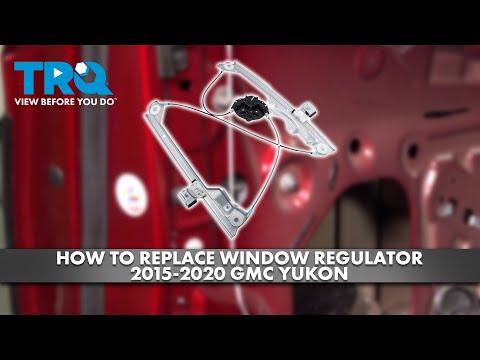





How to Replace the Rear Door Window Regulator on a 2018 GMC Yukon
Step-by-step rear window repair with required tools/parts, safety tips, and key torque specs
How to Replace the Rear Door Window Regulator on a 2018 GMC Yukon
Step-by-step rear window repair with required tools/parts, safety tips, and key torque specs


🔧 Yukon - Rear Door Window Regulator Replacement
On your Yukon, the rear door window regulator is the cable-and-track assembly that raises/lowers the glass. Replacement usually fixes a window that’s stuck, crooked, grinding/clicking, or drops into the door.
Difficulty Level: Intermediate | Estimated Time: 2-3 hours (first time)
⚠️ Safety & Precautions
- ⚠️ Disconnect the negative battery cable before working in the door (side-impact airbag wiring is routed there).
- ⚠️ Support the window glass with tape before loosening it so it can’t fall and shatter.
- ⚠️ Keep fingers clear of the regulator track and cable spool while powered.
- ⚠️ Do not turn the ignition on with door airbag connectors unplugged.
🔧 Required Tools
You'll need the following tools for this repair:
- Safety glasses
- Cut-resistant work gloves
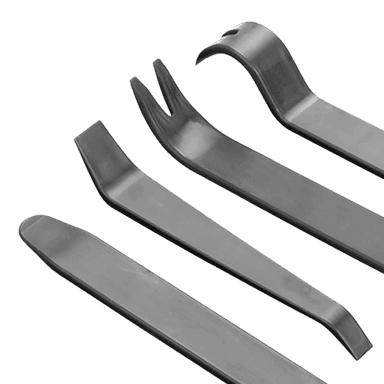
- Trim removal tool set
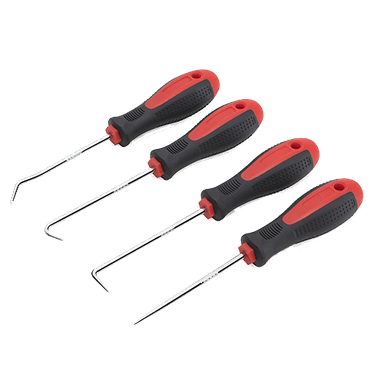
- Pick tool
- Ratchet
- 7mm socket
- 10mm socket
- Torx T30 screwdriver
- Torque wrench (in-lb)
- Painters tape (2 in.)
- Magnetic parts tray
- Needle-nose pliers
- Electric drill
- Drill bit set
- Pop rivet gun (specialty)
🔩 Required Parts
HowToo sells all the parts you need for this repair:
- Rear door window regulator assembly (correct side) - Qty: 1
- Rear door window regulator motor - Qty: 1 (only if not included)
- Door trim panel retainer clips - Qty: 6-10 (as needed)
- Window regulator rivet kit or bolt kit - Qty: 1
- Water shield butyl tape - Qty: 1 (as needed)
📋 Before You Begin
- Park on level ground and open the rear door you’re working on.
- Lower the window to about halfway if it still moves (this lines up the glass fasteners with the access holes).
- Disconnect the battery: use a 10mm socket to remove the negative terminal and isolate it so it can’t spring back.
- Have painters tape ready to hold the glass up when the regulator is disconnected.
🔨 Step-by-Step Instructions
Follow these steps in order:
Step 1: Remove the rear door trim panel
- Use a trim removal tool set to gently pry off the trim covers in the pull handle/armrest area.
- Remove the door panel screws using a 7mm socket and a Torx T30 screwdriver (locations vary by option package; remove any you find).
- Use the trim removal tool set to pop the panel clips free around the perimeter.
- Lift the panel straight up to unhook it from the window ledge.
- Unplug the switch/lighting connectors using a pick tool to release tabs.
Step 2: Remove the water shield (vapor barrier)
- Peel the water shield back slowly by hand.
- If the butyl adhesive fights you, use a trim removal tool set to separate it without tearing the plastic.
- Set the shield aside where it won’t collect dirt.
Step 3: Support the window glass
- Use painters tape (2 in.) to tape the glass to the door frame (2–3 long strips from outside over the top and down inside).
- Use more tape than you think you need.
Step 4: Disconnect the glass from the regulator
- Reconnect the window switch temporarily and reconnect the battery only if needed to move the glass to the access position; then disconnect the battery again using a 10mm socket.
- Through the access holes, remove the glass-to-regulator fasteners using a 10mm socket.
- Torque to 89 in-lb (10 Nm) during reassembly.
- Once the fasteners are out/loose, slide the glass fully up by hand and re-tape it securely.
Step 5: Unplug the regulator motor
- Unplug the motor electrical connector using a pick tool to release the lock tab.
Step 6: Remove the regulator (bolted or riveted)
- Look at the regulator mounting points inside the door:
- If you see bolts: remove them with a 10mm socket.
- If you see large rivet heads: drill the rivets out using an electric drill and a drill bit set (start small, then step up until the head separates).
- A pop rivet gun pulls new rivets tight.
- Maneuver the regulator out through the main door opening.
Step 7: Transfer the motor (only if required)
- If your new regulator did not include a motor, remove the motor screws from the old regulator using a 10mm socket or Torx T30 screwdriver (varies by supplier).
- Install the motor onto the new regulator and tighten evenly.
Step 8: Install the new regulator
- Position the new regulator into the door the same way the old one came out.
- If bolted: install mounting bolts by hand, then tighten with a 10mm socket.
- Torque to 89 in-lb (10 Nm) for regulator-to-door fasteners (typical for this application).
- If riveted: install new rivets using a pop rivet gun (specialty) (a rivet gun is a hand tool that pulls a rivet until it clamps tight, then snaps the mandrel).
- Reconnect the motor connector until it clicks.
Step 9: Reattach the glass to the regulator
- Carefully remove some tape so the glass can lower slightly into position.
- Align the glass with the regulator clamps/holes and start the fasteners by hand.
- Tighten with a 10mm socket.
- Torque to 89 in-lb (10 Nm).
Step 10: Function test before reassembly
- Reconnect the battery negative terminal using a 10mm socket.
- Turn the ignition on and run the window fully down and fully up while watching for tilting or binding.
- If it tilts, loosen the glass fasteners slightly with a 10mm socket, square the glass in the run channels, then re-tighten to 89 in-lb (10 Nm).
- Disconnect the battery again with a 10mm socket before reinstalling the water shield and trim (recommended).
Step 11: Reinstall the water shield and door panel
- Press the water shield back into the butyl; add water shield butyl tape if it won’t stick.
- Reconnect all door-panel connectors.
- Hang the panel on the top ledge, then press the clips in around the perimeter.
- Reinstall screws using a 7mm socket and Torx T30 screwdriver.
- Reconnect the battery negative terminal using a 10mm socket.
✅ After Repair
- Run the rear window up/down 5–10 times to confirm smooth travel and consistent sealing.
- Listen for clicking (cable misrouted) or popping (glass not seated in clamps).
- Confirm the door locks, speaker, and window switch all work (connectors fully seated).
- If the auto-up/down feature acts strange, cycle the window fully down, then fully up and hold the switch up for 2 seconds.
💰 DIY vs Shop Cost
Shop Cost: $350-$700 (parts + labor)
DIY Cost: $90-$250 (parts only)
You Save: $260-$450 by doing it yourself!
Shop labor rates vary but typically run $100-$150/hour. This repair takes a shop approximately 1.5-2.5 hours.
🎯 Ready to get started?
HowToo makes it easy: same-day/2-day shipping on every part, plus all the tools and specialty tools you need! Check out the parts and tools sections below to add everything to your cart.