









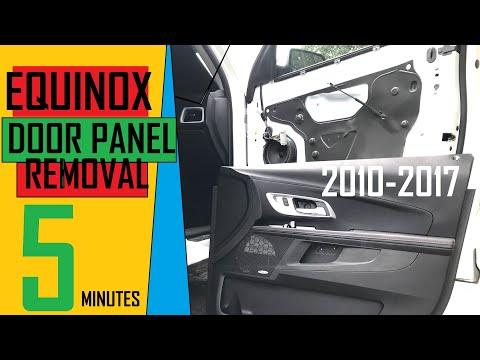





How to Replace the Rear Door Lock Actuator on a 2014 Chevrolet Equinox
Step-by-step DIY rear door latch actuator replacement with tools, parts list, safety tips, and testing instructions
How to Replace the Rear Door Lock Actuator on a 2014 Chevrolet Equinox
Step-by-step DIY rear door latch actuator replacement with tools, parts list, safety tips, and testing instructions


🔧 Equinox - Rear Door Lock Actuator Replacement
You’ll be removing the rear interior door panel, taking out the latch/actuator assembly, swapping in the new actuator, and reinstalling everything. The left and right rear doors are almost identical, so this guide works for either side.
Difficulty Level: Intermediate | Estimated Time: 1.5–2.5 hours
⚠️ Safety & Precautions
- ⚠️ Work on a flat surface with the vehicle in Park and the parking brake set.
- ⚠️ Turn ignition off and remove the key so the locks do not cycle while you work.
- ⚠️ Disconnect the negative battery cable if you are nervous about airbags or electrical connectors. The side airbag is in the door but you will not unplug it if you stay away from the big yellow connector.
- ⚠️ Use plastic trim tools so you don’t crack interior panels or scratch paint.
- ⚠️ Keep screws and clips organized; mixing them up can cause rattles later.
🔧 Required Tools
You'll need the following tools for this repair:
- 🛠️ 7mm socket
- 🛠️ 10mm socket
- 🛠️ 1/4" drive ratchet
- 🛠️ 3/8" drive ratchet
- 🛠️ 1/4" drive extension (3"–6")
- 🛠️ Torx T20 screwdriver
- 🛠️ Torx T30 screwdriver
- 🛠️ Flat trim removal tool (plastic)
- 🛠️ Panel clip removal tool (specialty)
- 🛠️ Small flathead screwdriver
- 🛠️ Needle-nose pliers
- 🛠️ Pick tool or dental pick (specialty)
- 🛠️ Torque wrench (inch-lb and ft-lb scale)
- 🛠️ Masking tape
- 🛠️ Work light or flashlight
- 🛠️ Mechanic gloves
- 🛠️ Safety glasses
🔩 Required Parts
HowToo sells all the parts you need for this repair:
- 🔩 Rear door lock actuator (door latch assembly), side-specific - Qty: 1
- 🔩 Rear door interior panel clips (Equinox-specific) - Qty: 6–10 recommended
- 🔩 Rear door water shield/butyl sealant strip - Qty: 1 only if original is torn
- 🔩 White lithium grease (spray or tube) - Qty: 1
- 🔩 Electrical contact cleaner - Qty: 1 optional
📋 Before You Begin
- Park the Equinox on level ground, shift to Park, and set the parking brake.
- Turn off ignition and remove the key. Make sure all interior lights go out.
- If you prefer extra safety, disconnect the negative battery terminal with a 10mm socket and wait 5–10 minutes.
- Lower the affected rear window fully before you start. This gives more access inside the door.
- Open the rear door you’re working on fully so you have room.
🔨 Step-by-Step Instructions
Follow these steps in order:
Step 1: Remove the interior door trim panel
- Use the flat trim removal tool to gently pry off the small plastic cover behind the inside door handle (where your fingers pull to open).
- Use a 7mm socket and 1/4" ratchet to remove the screw behind that cover.
- On the armrest or door pull pocket, look for another screw cover; pry it off with the small flathead screwdriver and remove the screw with the 7mm socket.
- Check the bottom edge of the door panel for additional 7mm screws and remove them with the 7mm socket if present.
- Slide the panel clip removal tool between the panel and metal door at the bottom corner; gently pry to pop the first clip.
- Work your way around the edges, popping all clips. Pull straight out, not sideways.
- Lift the door panel straight up to unhook it from the window ledge, then pull it slightly away from the door.
- Unplug the electrical connectors from the window switch and any courtesy light by pressing the tabs with your small flathead screwdriver if needed.
- Unclip the inside door handle cable by rotating the black plastic retainer out and lifting the cable end out of its slot using needle-nose pliers if fingers are tight.
- Set the trim panel somewhere clean and safe.
Step 2: Remove the water shield (vapor barrier) carefully
- You’ll see a plastic sheet stuck to the door with sticky butyl. This keeps water out of the cabin.
- Use your flat trim removal tool or fingers to slowly peel the plastic back from the rear latch area. Try to keep the sticky seal intact.
- Peel it back only as far as needed to reach the latch/actuator; tape it out of the way to the window glass with masking tape.
- Do not tear the sheet if you can avoid it.
Step 3: Disconnect lock and handle rods from the latch
- Look inside the rear edge of the door; you’ll see metal rods going to the latch. These connect the inside handle, outside handle, and lock.
- Use the work light to see the colored plastic clips that hold each rod.
- With a pick tool or small flathead screwdriver, carefully flip each plastic retainer open (it swings away from the rod), then lift the rod out of the clip.
- Remember or take a photo of which rod goes where. Phone photos are your best friend.
Step 4: Unplug the actuator electrical connector
- Find the electrical connector going to the lock actuator on the latch assembly.
- Press the locking tab with your thumb or a small flathead screwdriver and pull the plug straight out.
- If it’s dusty or corroded, spray a little electrical contact cleaner and let it dry.
Step 5: Remove the exterior handle access cover and Torx screw
- On the outside edge of the door (where the door latches), find the small plastic round or rectangular plug near the door handle area.
- Pry this plug out gently with the small flathead screwdriver.
- Behind it, there is a Torx screw holding the rear part of the outside handle in place. Use a Torx T20 screwdriver to loosen this screw. You usually do not remove it fully, just back it out several turns.
- Gently pull the small rear cap of the exterior handle (if equipped) outward and remove it by hand.
- Now slightly move the main exterior handle to create slack for the handle rod inside. You usually do not remove the handle completely.
Step 6: Remove the latch/actuator assembly from the door
- On the door’s rear edge, locate the three Torx screws around the latch catch.
- Use a Torx T30 screwdriver with your 1/4" ratchet and extension if needed to remove all three screws.
- Torque on reassembly should follow GM specs; use a torque wrench if available and refer to official data. Snug, not over-tight, is crucial here.
- From inside the door, maneuver the latch/actuator assembly out. You may need to tilt and rotate it to clear the window guide and rods.
- Be patient; do not force or bend rods.
Step 7: Separate the old actuator from the latch (if not a one-piece unit)
- Many replacement parts come as a combined latch + actuator. If yours is a complete unit, skip to Step 8.
- If the actuator is a separate piece mounted on the latch, place the assembly on a clean bench.
- Use the Torx T20 screwdriver or 7mm socket (depending on design) to remove the small screws holding the actuator to the latch.
- Gently separate the actuator from the latch, noting how the mechanical lever lines up.
- Lightly apply white lithium grease to the latch gears and sliding areas, but keep it off electrical parts.
Step 8: Install the new actuator onto the latch
- Match the new actuator to the old one, making sure the connector and levers are in the same position.
- Install the actuator onto the latch in the same orientation as original.
- Reinstall the screws with the Torx T20 screwdriver or 7mm socket. Snug them firmly but do not strip them.
Step 9: Reinstall the latch/actuator assembly into the door
- Feed the latch/actuator assembly back into the door through the opening, watching that rods and wires do not get pinched.
- Line up the latch with the holes at the rear edge of the door.
- Install the three latch screws by hand first, then tighten them with the Torx T30 screwdriver.
- Torque to GM’s specified value from service information; do not overtighten.
- Reconnect the electrical connector to the actuator, making sure it clicks.
Step 10: Reconnect rods and exterior handle
- Reinstall each control rod into its correct plastic clip on the latch, using your earlier photo as a guide.
- Place the rod into the hole, then swing the plastic retainer closed with your pick tool or fingers until it snaps.
- Check that the outside handle rod is seated correctly at both the handle and latch ends.
- On the outside of the door, position the small rear handle cap back in place, then tighten the Torx screw with the Torx T20 screwdriver through the access opening.
- Reinstall the plastic access plug by pressing it in with your fingers.
Step 11: Test the latch and lock before closing the door
- With the door still open, use a small flathead screwdriver to rotate the latch hook (on the door edge) to the closed position, simulating a closed door.
- Operate the inside and outside door handles to see if they release the latch smoothly.
- Use the power lock switch (you can momentarily reconnect the window switch plug and battery if disconnected) to lock/unlock and confirm the actuator moves.
- Once confirmed, pull the inside handle to release the latch and return it to open position.
Step 12: Reinstall the water shield
- Press the plastic sheet (vapor barrier) back into place, lining up edges with the original marks.
- Press firmly along the butyl seal so it sticks all around and there are no gaps.
- If any area has lost its stickiness or is torn, use fresh butyl or sealant strip to close it up.
Step 13: Reinstall the interior door panel
- Reconnect the inside door handle cable to the handle on the panel: drop the cable end into its slot and snap the plastic retainer back using your fingers or needle-nose pliers.
- Reconnect all electrical connectors (window switch, light) until they click.
- Hook the top of the door panel onto the window ledge by hanging it from above, then align the clips with the holes in the door.
- Hit around the edges of the panel with the heel of your hand to pop each clip back in.
- Reinstall the 7mm screws in the armrest, behind the inner handle cover, and along the bottom using the 7mm socket.
- Reinstall any small plastic screw covers by pressing them in with your fingers.
Step 14: Reconnect battery (if removed) and final testing
- If you disconnected the battery, reconnect the negative terminal with the 10mm socket and tighten snugly.
- Close the rear door gently and verify it latches properly.
- Use the key fob and inside lock switch to lock/unlock all doors and confirm the repaired rear door responds every time.
- Check inside and outside handles with the door locked and unlocked to make sure operation feels normal.
✅ After Repair
- Test all door functions: power lock, manual lock knob, child safety lock (if equipped), and both handles.
- Drive at low speed over bumps and listen for new rattles from the repaired door; if you hear any, a clip or screw may be loose.
- If you disconnected the battery, you may need to reinitialize the window auto-down/auto-up by holding the switch fully up and down for a few seconds.
💰 DIY vs Shop Cost
Shop Cost: $250–$400 (parts + labor)
DIY Cost: $60–$140 (parts only)
You Save: $110–$340 by doing it yourself!
Shop labor rates typically run $100–$150/hour. This repair takes a shop about 1–1.5 hours.
🎯 Ready to get started?
HowToo makes it easy: same-day/2-day shipping on every part, plus all the tools and specialty tools you need! Check out the parts and tools sections above to add everything to your cart and get your Equinox’s rear door locking like new again.