









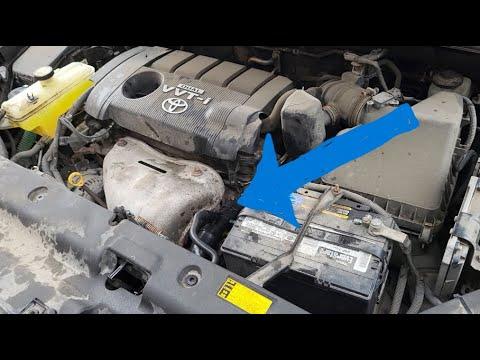





How to Replace the Radiator Hoses on a 2013-2018 Toyota RAV4 2.5L (Engine: Inline 4 2.5L)
Step-by-step DIY radiator hose replacement with tools, parts list, coolant refill, bleeding procedure, safety tips, and torque notes
How to Replace the Radiator Hoses on a 2013-2018 Toyota RAV4 2.5L (Engine: Inline 4 2.5L)
Step-by-step DIY radiator hose replacement with tools, parts list, coolant refill, bleeding procedure, safety tips, and torque notes for 2013, 2014, 2015, 2016, 2017, 2018


RAV4 - Radiator Hose Replacement 🚗
Got it—you want to replace a radiator hose on your RAV4. There are two main ones: the upper radiator hose and the lower radiator hose.
Quick questions before we start:
- ✅ Which hose are you changing: upper, lower, or both?
- ✅ Do you have access to basic tools and a safe, flat place to work (like a driveway)?
I'll give you the full guide assuming you want to do both hoses, and you can just skip the steps for the one you’re not doing.
RAV4 - Safety & Prep ⚠️
- ⚠️ Never open the cooling system when the engine is hot. Let the engine cool at least 1–2 hours. The coolant can be under pressure and cause burns.
- ⚠️ Keep coolant away from kids and pets; it is poisonous but has a sweet smell.
- ⚠️ Always support the vehicle with jack stands if you lift it. A jack alone can fail.
Tip: If the radiator cap is cool enough to touch with your bare hand, the system is usually safe to open slowly.
RAV4 - Parts You’ll Need 📦
- 🧰 Upper radiator hose (2018 RAV4 SE 2.5L AWD specific)
- 🧰 Lower radiator hose (same vehicle-specific)
- 🧰 New hose clamps (if your new hoses don’t come with them)
- Spring clamps (OEM style) or screw-type (worm gear) clamps
- 🧰 Coolant: Toyota Super Long Life Coolant (pink, premixed 50/50)
- System capacity is about 8.7–9.5 quarts (8.2–9.0 L), but you won’t drain all of it just for hoses.
- 🧰 Optional: new radiator cap if yours is old or crusty
Always use Toyota pink coolant or a direct equivalent; mixing types can cause sludge.
RAV4 - Tools Required 🛠️
- 🛠️ Socket set (metric): 10 mm, 12 mm sockets with ratchet and short extension
- 🛠️ Pliers:
- Hose clamp pliers (special pliers that grip spring clamps) – very helpful
- Regular slip-joint pliers if you don’t have clamp pliers
- 🛠️ Flathead screwdriver (for worm-gear clamps and gently prying hoses)
- 🛠️ Drain pan (large enough for at least 10 L of coolant)
- 🛠️ Funnel (for refilling coolant)
- 🛠️ Rags or paper towels
- 🛠️ Work gloves and safety glasses
- 🛠️ Optional: Jack and jack stands (if you want easier access to the lower hose)
“Spring clamp” = the factory clamp you squeeze with pliers to open. “Worm gear clamp” = clamp with a screw you tighten.
RAV4 - Accessing the Hoses 🔧
Upper Radiator Hose (top front of engine)
- 🔧 The upper hose runs from the top of the radiator (driver side) to the engine thermostat housing / coolant outlet on the front of the engine.
- 🔧 You can reach it from above with the hood open; no need to remove big parts, but you may move a plastic cover if present (10 mm bolts or clips).
Lower Radiator Hose (bottom front, lower area)
- 🔧 The lower hose runs from the bottom of the radiator (passenger side) to the water pump / engine inlet.
- 🔧 Access is easier from underneath. Turn the wheels straight, and if needed, raise the front and support with jack stands.
RAV4 - Draining Coolant 💧
- 🧊 Make sure the engine is completely cool.
- 🧊 Open the hood and slowly loosen the radiator cap to release any remaining pressure.
- 🧊 Place the drain pan under the radiator drain cock:
- On your RAV4, it’s at the bottom of the radiator, usually on the passenger side, facing rearward.
- 🧊 Use your fingers or pliers (gently) to open the drain cock and let coolant flow into the pan.
- 🧊 Let it drain until the flow slows to a drip, then close the drain cock snugly by hand. Do not overtighten; it’s plastic.
Tip: If you only want to lose less coolant, you can skip the drain cock and just pull the lower hose, but it will be messier.
RAV4 - Removing the Upper Radiator Hose 🔩
- 🔩 Locate the upper hose between the top of the radiator and the engine outlet.
- 🔩 At the radiator end:
- Use hose clamp pliers or regular pliers to squeeze the spring clamp and slide it back along the hose, away from the radiator neck.
- 🔩 At the engine end:
- Do the same: squeeze the clamp and slide it back along the hose.
- 🔩 Twist the hose gently at each end to break it loose:
- If it’s stuck, use a flathead screwdriver to carefully work under the edge of the hose, but do not gouge the plastic radiator neck.
- 🔩 Once loose, pull the hose off both ends and remove it.
If the radiator neck starts to flex a lot, stop and work more gently—those plastic necks can crack.
RAV4 - Removing the Lower Radiator Hose 🔩
- 🔩 Move under the front of the vehicle (use jack stands if raised).
- 🔩 Locate the lower hose from the bottom of the radiator to the engine inlet.
- 🔩 Repeat the same clamp steps:
- Squeeze the spring clamp at the radiator end and slide it back.
- Squeeze the clamp at the engine end and slide it back.
- 🔩 Twist and pull the hose off both ends. Expect more coolant to drain when you remove this hose—keep the drain pan under it.
RAV4 - Inspecting Hose Connections 👀
- 👀 Check the radiator necks and engine fittings for:
- Cracks
- Heavy corrosion
- Old rubber stuck on the neck
- 👀 Clean the necks with a rag. Do not sand or file them.
RAV4 - Installing the New Hoses ✅
Upper Hose Install
- ✅ Compare the new hose to the old one to confirm shape and length.
- ✅ Slide the clamps onto the hose first (if they’re not already on).
- ✅ Push the hose fully onto the radiator neck until it bottoms out.
- ✅ Position the clamp:
- Place the clamp over the raised bead or just behind the end of the neck.
- ✅ Repeat at the engine end: push hose fully on, then position the clamp correctly.
Lower Hose Install
- ✅ Do the same steps for the lower hose: compare, slide clamps on, push hose fully onto radiator and engine fittings, then position clamps.
- ✅ Make sure the hose is not twisted and does not rub on any sharp edges or moving parts.
Clamps should sit straight and centered; if they’re crooked, they can leak.
RAV4 - Refill & Bleed the Cooling System 🌡️
- 🌡️ Make sure the radiator drain cock is closed and both hoses are installed with clamps tight.
- 🌡️ Set the cabin heater to HOT and fan to LOW. This helps coolant flow through the heater core.
- 🌡️ Slowly fill the radiator with Toyota pink coolant using a funnel until it reaches the neck.
- 🌡️ Fill the coolant reservoir to the FULL mark.
- 🌡️ Leave the radiator cap off for now.
- 🌡️ Start the engine and let it idle.
- Watch the coolant level in the radiator; as air burps out, the level will drop.
- Add coolant as needed to keep it near the top.
- 🌡️ Gently squeeze the upper radiator hose a few times to help push air out.
- 🌡️ Let the engine warm up until the upper hose gets hot (thermostat open) and the radiator fan cycles on once.
- 🌡️ When bubbles stop and the level stabilizes, top off to just below the neck and install the radiator cap securely.
- 🌡️ Recheck the reservoir and adjust to the FULL mark.
Stay clear of the radiator fan; it can start automatically even if you’re not touching anything.
RAV4 - Final Checks & Torque Specs 🔍
- 🔍 Inspect all hose connections for leaks with the engine running.
- 🔍 After a short drive and full cool-down, recheck:
- Coolant level in reservoir
- Hose clamps still in place
- No dried coolant trails (white/pink crust) around hose ends
Torque notes (where applicable):
- 🧷 Radiator drain cock: hand-tight only (plastic; do not wrench it).
- 🧷 Any brackets or covers you removed (10 mm bolts): typically 7–9 ft-lb (10–12 N·m).
Coolant Disposal & Extra Tips 🧪
- 🧪 Pour old coolant into sealed containers and take it to a local workshop or recycling center. Do not pour it on the ground or into drains.
- 🧪 If you see the temperature gauge going higher than normal after the job, stop, let it cool, and recheck coolant level and for trapped air.
Next step: Tell me if you’re doing upper only, lower only, or both, and I can tailor this to exactly what you’re about to do and help you with any step that feels unclear.
HowToo makes it easy: below this answer you’ll see the correct hoses, clamps, coolant, and tools for your RAV4. You can add them straight to your cart from the parts section for fast shipping.
Guide for Radiator Coolant Hose replace for these Toyota vehicles
| Year Make Model | Sub Model | Engine | Body Style |
|---|---|---|---|
| 2018 Toyota RAV4 | - | Inline 4 2.5L | - |
| 2017 Toyota RAV4 | - | Inline 4 2.5L | - |
| 2016 Toyota RAV4 | - | Inline 4 2.5L | - |
| 2015 Toyota RAV4 | - | Inline 4 2.5L | - |
| 2014 Toyota RAV4 | - | Inline 4 2.5L | - |
| 2013 Toyota RAV4 | - | Inline 4 2.5L | - |