









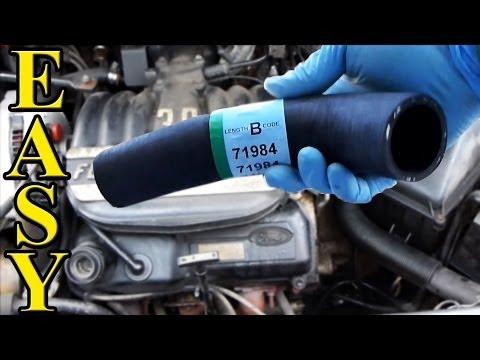






How to Replace the Radiator Hoses on a 2005-2013 Chevy Silverado 1500 (Engine: V8 6.0L)
Step-by-step DIY radiator hose removal, installation, tools, coolant refill, and safety tips for your Silverado 1500
How to Replace the Radiator Hoses on a 2005-2013 Chevy Silverado 1500 (Engine: V8 6.0L)
Step-by-step DIY radiator hose removal, installation, tools, coolant refill, and safety tips for your Silverado 1500 for 2005, 2006, 2007, 2009, 2010, 2013


🔧 Silverado 1500 - Radiator Hose Replacement
You’ll be removing the old radiator hose, draining some coolant, then installing a new hose and refilling the cooling system. This protects your engine from overheating and coolant leaks.
Difficulty Level: Beginner | Estimated Time: 1–2 hours
⚠️ Safety & Precautions
- 🔥 Only work on the cooling system with the engine completely cold. Hot coolant can cause severe burns.
- ⚡ This is a hybrid, but this job is on the standard engine cooling system. Avoid orange high-voltage cables and components.
- 🧯 Keep coolant off belts and pulleys; it makes them slip.
- 🐶 Keep coolant away from children and pets. It is toxic and sweet-tasting.
- 🔌 Battery disconnect is not required, but you can remove the negative battery cable with a 10mm wrench if you want extra safety.
🔧 Required Tools
You'll need the following tools for this repair:
- 🧰 Floor jack (rated 3-ton minimum)
- 🧰 Jack stands (rated 3-ton minimum)
- 🧰 Wheel chocks
- 🧰 10mm socket
- 🧰 13mm socket
- 🧰 1/4" drive ratchet
- 🧰 3/8" drive ratchet
- 🧰 3/8" drive torque wrench (5–80 ft-lbs range)
- 🧰 Hose clamp pliers (specialty)
- 🧰 Regular slip-joint pliers
- 🧰 Flathead screwdriver (6mm blade)
- 🧰 Utility knife
- 🧰 Coolant drain pan (at least 10-liter capacity)
- 🧰 Small funnel
- 🧰 Shop rags
- 🧰 Safety glasses
- 🧰 Nitrile or mechanic gloves
- 🧰 Plastic trim tool
🔩 Required Parts
HowToo sells all the parts you need for this repair:
- 🔩 Upper radiator hose (6.0L Hybrid) - Qty: 1
- 🔩 Lower radiator hose (6.0L Hybrid) - Qty: 1
- 🔩 Radiator hose clamps (correct diameter) - Qty: 2–4
- 🔩 DEX-COOL compatible engine coolant (50/50 premix) - Qty: 2–3 gallons
- 🔩 Cooling system flush chemical (optional) - Qty: 1
- 🔩 Radiator cap (if original is old) - Qty: 1
- 🔩 Distilled water - Qty: 1–2 gallons (if mixing concentrate)
📋 Before You Begin
- Park your Silverado on level ground, set the parking brake, and put the transmission in P.
- Let the engine cool for at least 1–2 hours until the upper hose feels cold to the touch.
- Place wheel chocks behind the rear wheels.
- Open the hood and locate the radiator, upper hose (top of radiator to engine), and lower hose (bottom of radiator to engine).
- If you want extra safety, disconnect the negative battery cable with a 10mm socket.
🔨 Step-by-Step Instructions
Follow these steps in order:
Step 1: Lift and Support the Front (if needed)
- Use the floor jack to lift the front of your Silverado by the front crossmember.
- Place jack stands under the frame rails and gently lower the truck onto them.
- Never work under a vehicle supported only by a jack.
Step 2: Relieve Pressure and Remove Radiator Cap
- Put on safety glasses and gloves.
- Slowly turn the radiator cap counterclockwise by hand until it reaches the first stop to release any leftover pressure.
- After any hiss stops, press down and turn further to remove the cap.
Step 3: Position Drain Pan and Drain Coolant
- Slide the coolant drain pan under the radiator drain (bottom of the radiator, usually passenger side).
- Use slip-joint pliers or your fingers to open the drain petcock if equipped, or loosen the lower hose clamp at the radiator with hose clamp pliers or a flathead screwdriver.
- Let enough coolant drain so the level is below the hose you’re changing (usually 4–6 liters).
- Drain slowly to avoid splashing.
Step 4: Remove Any Covers or Shields
- If there is a lower splash shield, remove its bolts with a 10mm socket and 1/4" ratchet.
- Set bolts and shield aside where you won’t lose them.
Step 5: Remove the Upper Radiator Hose
- Locate the upper hose from the top of the radiator to the engine.
- Use hose clamp pliers or slip-joint pliers to compress the spring clamp at the radiator end, then slide the clamp back along the hose.
- Twist the hose gently by hand to break it loose; if stuck, carefully slide a flathead screwdriver under the hose edge to free it. Do not gouge the plastic fitting.
- Pull the hose off the radiator neck and aim it into the drain pan for any remaining coolant.
- Repeat the clamp and removal process at the engine end of the hose.
- If the hose is very stuck, carefully slice lengthwise with a utility knife and peel it off.
Step 6: Remove the Lower Radiator Hose
- Locate the lower hose from the bottom of the radiator to the engine (usually near the water pump inlet).
- Use hose clamp pliers or slip-joint pliers to compress the lower hose clamp at the radiator end and slide it back.
- Twist and pull the hose off the radiator. Aim into the drain pan.
- Move to the engine end, compress the clamp, slide it back, then twist and remove the hose from the engine fitting.
Step 7: Inspect Fittings and Clean Surfaces
- Check the radiator necks and engine hose nipples for cracks or heavy corrosion.
- Use a shop rag to wipe off any old rubber, rust, or debris.
- Clean surfaces seal better and prevent leaks.
Step 8: Install the New Upper Radiator Hose
- Compare the new upper hose with the old one to match shape and length.
- Slide new hose clamps onto the hose before installing it.
- Push one end of the hose fully onto the radiator neck by hand until it seats fully.
- Position the clamp over the raised bead on the neck and release with hose clamp pliers.
- Repeat for the engine side: push hose fully onto the engine fitting and position the clamp correctly.
- Make sure the hose is not twisted and has clearance from belts or pulleys.
Step 9: Install the New Lower Radiator Hose
- Compare the new lower hose with the old one to ensure correct shape.
- Slide new hose clamps onto the hose.
- Install the hose onto the engine fitting first, seat it fully, then position the clamp with hose clamp pliers.
- Install the radiator-side end of the hose onto the lower radiator neck and position the clamp.
- Confirm the hose is not rubbing against frame, fan, or moving parts.
Step 10: Close Drain and Reinstall Shields
- If you opened the radiator drain petcock, close it by turning it clockwise by hand. Do not overtighten.
- Reinstall any lower splash shield using the 10mm socket and tighten bolts to 10 Nm (89 in-lbs) with the torque wrench.
Step 11: Refill the Cooling System
- Place a funnel in the radiator filler neck.
- Pour in DEX-COOL 50/50 premix slowly until the radiator is full.
- Fill the coolant reservoir (expansion tank) to the COLD mark.
- Pour slowly to reduce trapped air.
Step 12: Bleed Air from the System
- Leave the radiator cap off for now.
- Start the engine and let it idle. Turn the heater to HOT and fan to low.
- Watch the coolant level in the radiator. As the engine warms, air bubbles may come out and the level may drop.
- Add more coolant as needed to keep it near the top.
- When the upper radiator hose feels hot and firm and the heater blows hot, most air is out.
- Shut off the engine and top off the radiator if needed.
Step 13: Install Radiator Cap and Final Checks
- Install the radiator cap by pressing down and turning clockwise until fully seated.
- Check around both hoses and clamps for any signs of leaks.
- Wipe any spilled coolant with shop rags.
Step 14: Lower the Vehicle
- Use the floor jack to lift the front slightly, remove the jack stands, and lower the truck to the ground.
- Remove wheel chocks.
✅ After Repair
- Start the engine and let it reach normal operating temperature while parked.
- Check for leaks around the new hoses and clamps.
- After the engine cools completely (later the same day or next morning), recheck coolant level in the reservoir and top off to the COLD mark if needed.
- Over the next few drives, keep an eye on the temperature gauge and the ground under the truck for any drips.
💰 DIY vs Shop Cost
Shop Cost: $250–$450 (parts + labor for both hoses)
DIY Cost: $70–$150 (hoses, clamps, coolant)
You Save: $180–$300 by doing it yourself!
Shop labor rates usually run $100–$150/hour. This repair takes a shop about 1.0–1.5 hours.
🎯 Ready to get started?
HowToo makes it easy: same-day/2-day shipping on every part, plus all the tools and specialty tools you need! Check out the parts and tools sections above to add everything to your cart.
Guide for Radiator Coolant Hose replace for these Chevrolet vehicles
| Year Make Model | Sub Model | Engine | Body Style |
|---|---|---|---|
| 2013 Chevrolet Silverado 1500 | - | V8 5.3L | - |
| 2013 Chevrolet Silverado 1500 | - | V8 6.0L | - |
| 2010 Chevrolet Silverado 1500 | - | V8 5.3L | - |
| 2010 Chevrolet Silverado 1500 | - | V8 6.0L | - |
| 2009 Chevrolet Silverado 1500 | - | V8 5.3L | - |
| 2009 Chevrolet Silverado 1500 | - | V8 6.0L | - |
| 2007 Chevrolet Silverado 1500 | - | V8 5.3L | - |
| 2007 Chevrolet Silverado 1500 | - | V8 6.0L | - |
| 2006 Chevrolet Silverado 1500 | - | V8 5.3L | - |
| 2006 Chevrolet Silverado 1500 | - | V8 6.0L | - |
| 2005 Chevrolet Silverado 1500 | - | V8 5.3L | - |
| 2005 Chevrolet Silverado 1500 | - | V8 6.0L | - |