














How to Replace the Radiator Hose on a 2022 Jeep Grand Cherokee WK
Step-by-step DIY radiator hose replacement with tools, parts list, coolant refill, and safety tips for 2022
How to Replace the Radiator Hose on a 2022 Jeep Grand Cherokee WK
Step-by-step DIY radiator hose replacement with tools, parts list, coolant refill, and safety tips for 2022


🔧 Grand Cherokee WK - Radiator Hose Replacement
You'll be removing the old radiator hose, draining some coolant, and installing a new hose with fresh clamps on your Grand Cherokee WK. This restores proper coolant flow and prevents leaks or overheating.
Difficulty Level: Beginner | Estimated Time: 1–1.5 hours
⚠️ Safety & Precautions
- 🔥 Only work on the cooling system when the engine is completely cool; hot coolant can cause serious burns.
- 💧 Slowly open the coolant reservoir cap with a rag over it to release any leftover pressure.
- 🧪 Coolant is poisonous to people and animals; keep it off skin and out of reach of kids and pets.
- 🚗 Set the parking brake and keep the Grand Cherokee WK on level ground so it can’t roll.
- 🔌 Battery disconnect is not required for this job.
- ♻️ Plan to collect and properly dispose of old coolant; do not dump it on the ground or into drains.
🔧 Required Tools
You'll need the following tools for this repair:
- 1/4" drive ratchet
- 1/4" drive 8mm socket
- 1/4" drive 10mm socket
- 6" extension (1/4" drive)
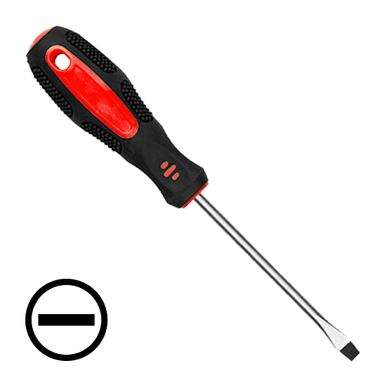
- Flathead screwdriver (medium size)
- Hose clamp pliers (specialty)
- Long-nose pliers
- Utility knife or hose cutter
- Plastic trim tool set
- Drain pan (at least 10-liter capacity)
- Small funnel
- Shop towels or rags
- Safety glasses
- Mechanic gloves
🔩 Required Parts
HowToo sells all the parts you need for this repair:
- Upper radiator hose (engine to radiator) - Qty: 1
- Lower radiator hose (radiator to engine) - Qty: 1 (optional but recommended while system is open)
- Radiator hose clamps (worm-gear or OEM style) - Qty: 4
- Engine coolant (HOAT / OAT, Jeep-spec, premixed 50/50) - Qty: 2–3 gallons
- Coolant-safe RTV or O-ring (if included with hose ends) - Qty: as supplied
- Shop towels or absorbent pads - Qty: 1 pack
📋 Before You Begin
- Park the Grand Cherokee WK on level ground, shift to Park, and set the parking brake.
- Let the engine cool for at least 1–2 hours until the upper radiator hose feels cold to the touch.
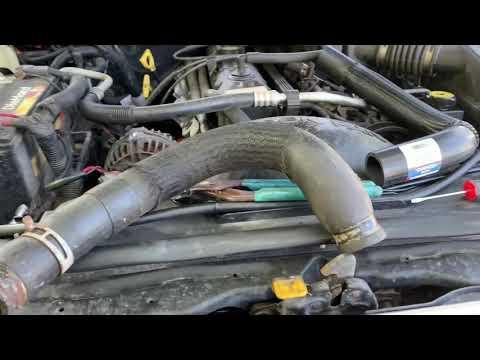
- Open the hood and locate the upper radiator hose (from the top of the radiator on the passenger side to the engine/thermostat area).
- Place a large drain pan under the front of the vehicle, slightly toward the passenger side, to catch coolant.
- Have your new hose and clamps laid out in the same orientation as the old hose to avoid confusion.
🔨 Step-by-Step Instructions
Follow these steps in order:
Step 1: Relieve coolant pressure
- Put on mechanic gloves and safety glasses before starting.
- With the engine cool, place a drain pan under the engine bay, centered under the radiator area.
- Use your hand and a rag to slowly loosen the coolant reservoir cap; if you hear a hiss, pause and let pressure bleed off, then remove the cap fully.
- If cap is hard to turn, wait until engine is fully cold.
Step 2: Drain some coolant
- Slide the drain pan further forward, just behind the front bumper on the passenger side, where coolant will drip when the hose is removed.
- You can either partially open the radiator drain (if accessible) or just allow coolant to drain from the hose connection itself.
- If you see a plastic shield underneath, use a plastic trim tool set to gently remove any push clips to lower the shield for better access.
Step 3: Locate and inspect the upper radiator hose
- From above, follow the large hose from the top of the radiator (passenger side) to the engine/thermostat housing.
- Note how the hose routes and how far it pushes onto each fitting; you can take a photo with your phone for reference.
- Identify the clamp style: spring clamps (squeeze type) or worm-gear clamps (screw type).
Step 4: Loosen the radiator-end clamp
- For spring clamp: Use hose clamp pliers to squeeze the tabs together and slide the clamp back along the hose, away from the radiator neck.
- For worm-gear clamp: Use a flathead screwdriver or 8mm socket on a 1/4" drive ratchet to loosen the clamp screw, then slide the clamp back on the hose.
- Slide clamp at least 2–3 cm away from the fitting.
Step 5: Loosen the engine-end clamp
- At the engine/thermostat housing end, locate the clamp.
- Use hose clamp pliers for spring clamps or a flathead screwdriver / 8mm socket with the 1/4" drive ratchet for screw clamps to loosen it.
- Slide the clamp back along the hose just like you did at the radiator side.
Step 6: Break the hose loose
- Old hoses can “glue” themselves to fittings over time.
- Gently twist the hose at the radiator end by hand; if it won’t move, use long-nose pliers to lightly grip and twist, but do not crush the plastic radiator neck.
- If still stuck, carefully slide a flathead screwdriver between the hose and the fitting to break the seal. Work slowly all around.
- Be gentle; radiator neck is plastic and can crack.
Step 7: Remove the hose and catch coolant
- Once the hose at the radiator end is loose, pull it off and aim the open end down into the drain pan to catch coolant.
- Now pull the hose off the engine end and direct any remaining coolant into the pan.
- Lift the old hose out of the engine bay and keep it pointed upward to limit dripping.
Step 8: Clean the hose connection surfaces
- Use shop towels to wipe the radiator neck and the engine/thermostat outlet until they are clean and smooth.
- Make sure there are no chunks of old rubber left on the fittings.
- If there is corrosion or debris, lightly clean with a rag; do not sand or scratch the surfaces.
Step 9: Prepare the new hose and clamps
- Lay the new hose next to the old one to verify length, bend angles, and orientation.
- Slide new radiator hose clamps onto each end of the new hose before you install it.
- Position the clamps loosely near the ends but leave room to push the hose fully onto the fittings.
Step 10: Install hose on engine side first
- Push the new hose onto the engine/thermostat outlet until it seats fully against the stop or as far as the old hose went.
- Position the clamp about 3–5 mm from the hose end, over the smooth part of the fitting, not on a raised bead.
- For worm-gear clamp: Use an 8mm socket on the 1/4" drive ratchet to tighten the screw until snug: Torque to about 3 Nm (27 in-lbs).
- For spring clamp: Use hose clamp pliers to squeeze the tabs and move the clamp into position, then release.
- Clamp should be tight, but not crushing the hose.
Step 11: Install hose on radiator side
- Route the hose the same way the old one was routed, avoiding kinks or rubbing on sharp edges.
- Push the hose onto the radiator neck fully until it seats like the original.
- Move the clamp into position 3–5 mm from the end of the hose.
- For worm-gear clamp: Use an 8mm socket and 1/4" drive ratchet to tighten: Torque to about 3 Nm (27 in-lbs).
- For spring clamp: Use hose clamp pliers to position and release the clamp.
Step 12: Double-check routing and connections
- Confirm the hose is not twisted and has smooth curves.
- Make sure it is not touching any moving parts (belts, pulleys, fans) or very hot spots (exhaust components).
- Verify both clamps are fully over the fittings and not on the hose edge.
Step 13: Refill coolant
- Using a funnel, slowly pour the correct premixed coolant into the reservoir until it reaches the “MAX” or “FULL” mark.
- Watch under the vehicle and around the new hose for any immediate leaks.
- If you drained a lot of coolant, you may need to add more after bleeding air out.
Step 14: Bleed air from the cooling system
- With the reservoir cap still off, start the engine and let it idle.
- Turn the heater to maximum temperature and fan to medium so coolant flows through the heater core.
- Watch the coolant level in the reservoir; as the engine warms, air bubbles may come up.
- Add more coolant with a funnel as the level drops, keeping it near the “MAX” mark.
- Once the upper radiator hose is warm and the bubbles mostly stop, turn off the engine.
Step 15: Final coolant level set and leak check
- Let the engine cool down again for at least 30–45 minutes.
- Re-check the coolant level; top off to the “COLD” or “MAX” mark as needed using a funnel.
- Install and tighten the coolant reservoir cap by hand.
- Check around the new hose ends and under the Grand Cherokee WK for any signs of dripping.
Step 16: Reinstall any shields and clean up
- If you removed any lower splash shields, reinstall them using the plastic trim tool set to push clips back into place.
- Wipe up any spilled coolant with shop towels.
- Pour the old coolant from the drain pan into sealed containers using a funnel for proper disposal at a recycling center or shop.
✅ After Repair
- Start the engine and let it reach normal operating temperature while parked; watch the temperature gauge to ensure it stays in the normal range.
- Check again for leaks at both ends of the new hose and underneath the Grand Cherokee WK.
- Take a short, gentle test drive, then re-check the coolant level once the engine cools completely; top off if needed.
- Over the next few days, inspect the hose and reservoir level before driving to be sure everything stays dry and stable.
💰 DIY vs Shop Cost
Shop Cost: $250–$450 (parts + labor)
DIY Cost: $60–$120 (parts only)
You Save: $190–$330 by doing it yourself!
Shop labor rates vary but typically run $100–$150/hour. This repair takes a shop approximately 1.0–1.2 hours.
🎯 Ready to get started?
HowToo makes it easy: same-day/2-day shipping on every part, plus all the tools and specialty tools you need! Check out the parts and tools sections above to add everything to your cart.