









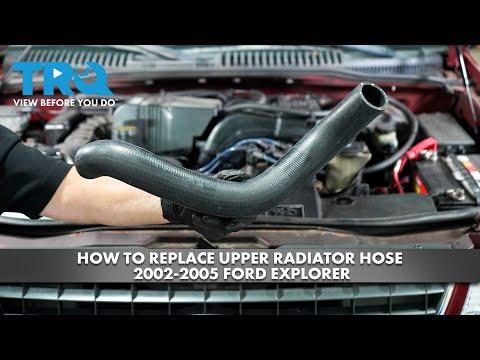






How to Replace the Radiator Hose on a 2019 Ford Explorer
Step-by-step DIY radiator hose replacement with tools, parts list, coolant refill, bleeding, safety tips, and cost savings
How to Replace the Radiator Hose on a 2019 Ford Explorer
Step-by-step DIY radiator hose replacement with tools, parts list, coolant refill, bleeding, safety tips, and cost savings


🔧 Explorer - Radiator Hose Replacement
You’ll be removing the old radiator hose (upper or lower), draining some coolant, installing a new hose, and refilling/bleeding the cooling system. This keeps the engine from overheating and prevents leaks.
Difficulty Level: Beginner | Estimated Time: 1–2 hours
⚠️ Safety & Precautions
- ⚠️ Only work on the cooling system when the engine is completely cool; hot coolant is under pressure and can cause severe burns.
- ⚠️ Open the coolant reservoir cap slowly with a rag in case pressure remains.
- ⚠️ Support the vehicle with jack stands if you lift it; never rely on a jack alone.
- ⚠️ Keep coolant away from children and pets; it is toxic but sweet-tasting.
- ⚠️ Avoid getting coolant on the accessory belt and electrical connectors.
- Battery disconnect is not required for this job.
🔧 Required Tools
You'll need the following tools for this repair:
- Floor jack (rated 3-ton minimum)
- Jack stands (rated 3-ton minimum, Qty: 2)
- Wheel chocks
- 8mm socket
- 10mm socket
- Ratchet handle (1/4" or 3/8" drive)
- Socket extension 6"
- Hose clamp pliers (specialty)
- Standard slip-joint pliers
- Flathead screwdriver (medium)
- Plastic trim removal tool
- Radiator hose removal tool (hook pick style) (specialty)
- Drain pan (at least 10-liter capacity)
- Flexible funnel
- Shop towels or rags
- Spray bottle with water
- Safety glasses
- Nitrile gloves
🔩 Required Parts
HowToo sells all the parts you need for this repair:
- Upper radiator hose (engine to top of radiator) - Qty: 1
- Lower radiator hose (engine to bottom of radiator) - Qty: 1
- Hose clamps (correct size for upper hose) - Qty: 2
- Hose clamps (correct size for lower hose) - Qty: 2
- Engine coolant (Ford Orange OAT, pre-mixed or concentrate) - Qty: 2–3 gallons equivalent
- Distilled water (if using coolant concentrate) - Qty: 2–3 gallons
- Shop towels or absorbent pads - Qty: 1 pack
📋 Before You Begin
- Park the Explorer on a level surface, shift to Park, set the parking brake, and turn the engine off.
- Let the engine cool completely; ideally wait at least 1–2 hours after driving.
- Place wheel chocks behind the rear wheels if lifting the front of the vehicle.
- Locate the coolant reservoir on the passenger side of the engine bay; this is where you’ll refill coolant later.
- Have your new hose next to you so you can match its shape and orientation to the old one.
🔨 Step-by-Step Instructions
Follow these steps in order:
Step 1: Relieve any remaining pressure
- Put on safety glasses and nitrile gloves.
- Place a drain pan under the front bumper area, roughly below the radiator.
- Slowly loosen the coolant reservoir cap by hand; if you hear hissing, pause and let pressure release, then remove the cap fully.
- If it hisses strongly, the system is still hot—wait more.
Step 2: Lift the front (mainly needed for lower hose)
- If you’re doing the lower radiator hose, position a floor jack (3-ton) under the front jacking point and raise the front of the Explorer.
- Place jack stands under the proper frame points and lower the vehicle gently onto the stands.
- Confirm stability by gently rocking the vehicle before you go underneath.
Step 3: Remove any plastic covers or shields (if needed)
- Use an 8mm socket and ratchet to remove any lower splash shield screws directly under the radiator (for access to the lower hose).
- Use a plastic trim removal tool to pop out plastic clips holding the shield, if present.
- Set the shield and hardware aside in order.
Step 4: Drain enough coolant
- Move the drain pan under the side of the radiator where the hose you’re replacing is located.
- On many Explorers there is no convenient drain plug; instead, you will drain by loosening the hose itself.
- Use hose clamp pliers to squeeze the spring clamp on the radiator end of the hose and slide the clamp several centimeters back along the hose.
- Gently twist the hose at the radiator connection using your hands or a radiator hose removal tool to break it free, then pull it off and let coolant drain into the pan.
- Twist first, then pull to avoid tearing fittings.
Step 5: Remove the old hose completely
- Move the drain pan under the engine-side connection of the hose.
- Use hose clamp pliers again to compress the spring clamp on the engine side and slide it back along the hose.
- Twist and pull the hose off the engine fitting. A hose removal tool can help carefully break it loose without prying on plastic parts.
- Note how the hose is routed and rotated (which way the bends face); take a quick photo with your phone for reference.
- Remove the hose from the vehicle and compare it to the new one to confirm size and shape match.
Step 6: Clean the fittings
- Use a clean shop towel to wipe both the radiator outlet/inlet and engine outlet/inlet where the hose connects.
- Remove any old rubber stuck on the fittings; avoid scratching the metal or plastic.
- If there is corrosion or buildup, gently clean it off with the towel; do not use sandpaper or anything abrasive.
Step 7: Install the new hose
- Slide the new hose clamps onto the new hose ends if your replacement hose doesn’t come with clamps already installed.
- Route the new hose in the same path as the old one, ensuring it is not rubbing hard edges or kinked.
- Push the hose fully onto the engine fitting by hand until it seats completely against the stop.
- Use hose clamp pliers to position the clamp over the raised bead area of the fitting. There is no torque spec for spring clamps; simply center them correctly.
- Repeat the same process for the radiator side of the hose, ensuring the hose is fully seated and the clamp is correctly positioned.
- Double-check that the hose is not twisted along its length.
Step 8: Reinstall splash shields (if removed)
- Position the lower splash shield back under the radiator.
- Use the plastic trim tool to reinstall any push clips.
- Use the 8mm socket and ratchet to reinstall all screws snugly. No specific torque is required, just tighten until they are secure and the plastic is not deformed.
Step 9: Lower the vehicle
- Use the floor jack to lift the front slightly and remove the jack stands.
- Lower the Explorer fully to the ground.
- Remove the wheel chocks from the rear wheels.
Step 10: Refill the cooling system
- Make sure the reservoir cap is off and the drain pan is no longer under any open fittings.
- Place a funnel into the coolant reservoir opening.
- Pour the correct Ford Orange OAT coolant (pre-mixed or mixed 50/50 with distilled water) slowly into the reservoir until it reaches slightly above the “MAX” line.
- Pour slowly to reduce trapped air.
Step 11: Bleed air from the system
- With the reservoir cap still off, start the engine and let it idle.
- Set the cabin heater to maximum temperature and fan to low; this helps coolant circulate through the heater core.
- Watch the coolant level in the reservoir; as the thermostat opens, the level may drop.
- Add more coolant with the funnel as needed to keep the level between MIN and MAX.
- Once the engine reaches normal operating temperature and the heater blows hot air, let it idle for another 5–10 minutes while watching for bubbles.
- When bubbles stop and the level stabilizes, install the reservoir cap snugly by hand.
Step 12: Clean up and check for leaks
- Turn off the engine and let it cool for at least 20–30 minutes.
- Inspect around both ends of the new hose using a flashlight; look for any dampness or drips.
- If you see a small seep, use hose clamp pliers to slightly reposition the clamp closer to the fitting bead.
- Use the spray bottle with water and shop towels to rinse and wipe any spilled coolant off engine parts.
- Pour used coolant from the drain pan into sealed containers for proper recycling at a local shop or recycling center.
✅ After Repair
- Take a short test drive (10–15 minutes) with the heater on, then park and let the engine cool.
- Recheck the coolant level in the reservoir once the engine is cool; top off to the “MAX” line if needed.
- Inspect again for leaks at all hose connections after the test drive.
- Over the next few days, glance at the ground where you park and under the hood for any fresh coolant leaks.
💰 DIY vs Shop Cost
Shop Cost: $250–$400 (parts + labor, one hose; more if both)
DIY Cost: $80–$160 (parts and coolant)
You Save: $170–$240 by doing it yourself!
Shop labor rates vary but typically run $100–$150/hour. This repair takes a shop approximately 1–1.5 hours.
🎯 Ready to get started?
HowToo makes it easy: same-day/2-day shipping on every part, plus all the tools and specialty tools you need! Check out the parts and tools sections above to add everything to your cart.