








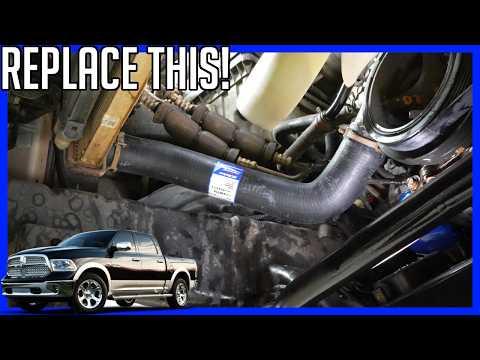







How to Replace the Radiator Hose on a 2016 Ram 1500 (Upper or Lower)
Step-by-step cooling system DIY guide with tools, parts list, coolant refill/bleeding steps, and safety tips for 2013, 2014, 2015, 2016, 2017, 2018, 2020, 2021
How to Replace the Radiator Hose on a 2016 Ram 1500 (Upper or Lower)
Step-by-step cooling system DIY guide with tools, parts list, coolant refill/bleeding steps, and safety tips for 2013, 2014, 2015, 2016, 2017, 2018, 2020, 2021


🔧 1500 - Radiator Hose Replacement
Replacing a radiator hose stops coolant leaks and prevents overheating. The job is mostly about safely draining some coolant, swapping the hose, and refilling/bleeding the cooling system so no air pockets remain.
Difficulty Level: Intermediate | Estimated Time: 1.0-2.5 hours
⚠️ Safety & Precautions
- ⚠️ Only work on a fully cold engine; hot coolant can spray and burn.
- ⚠️ Never open the coolant cap when hot; pressure can release suddenly.
- ⚠️ Support the truck with jack stands if you lift it—never rely on a jack alone.
- ⚠️ Keep coolant off belts and pulleys; it can cause slipping.
- ⚠️ Clean spills immediately; coolant is toxic to people and pets.
🔧 Required Tools
You'll need the following tools for this repair:
- Safety glasses
- Nitrile gloves
- Floor jack (rated 3-ton minimum)
- Jack stands (rated 3-ton minimum)
- Wheel chocks
- Drain pan (at least 3 gallons)
- Funnel with long neck
- Pliers
- Hose clamp pliers (specialty)
- Flat-blade screwdriver
- 8mm socket
- 10mm socket
- 1/4" ratchet
- 3" extension
- Trim clip removal tool
- Pick tool (hose pick) (specialty)
- Shop towels
- Flashlight
🔩 Required Parts
HowToo sells all the parts you need for this repair:
- Radiator hose (upper or lower, as applicable) - Qty: 1
- Hose clamps - Qty: 2
- Engine coolant (Mopar OAT 50/50 premix or OAT concentrate + distilled water) - Qty: 1-2 gallons
- Distilled water - Qty: 1-2 gallons (if using concentrate)
- Coolant cap - Qty: 1 (optional, if old cap is weak)
📋 Before You Begin
- Park on level ground, shift to Park, and set the parking brake.
- Let the engine cool completely (best: sit overnight).
- Place wheel chocks behind the rear tires.
- Put a drain pan under the radiator area before loosening anything.
- Tip: Take a photo of hose routing first.
🔨 Step-by-Step Instructions
Follow these steps in order:
Assumption: This covers the main radiator hose (upper or lower) with common spring-style clamps; steps note the alternate screw-style clamp method.
Step 1: Remove pressure from the cooling system (cold engine)
- Use your hand to slowly loosen the coolant reservoir cap (degas bottle cap) until any tiny hiss stops, then remove it completely.
- Set the cap somewhere clean.
Step 2: Raise the front (if needed for access)
- Use a floor jack (rated 3-ton minimum) to lift the front at the proper jacking point.
- Set the truck onto jack stands (rated 3-ton minimum) and gently rock it to confirm it’s stable.
Step 3: Drain enough coolant so the hose won’t dump everywhere
- Slide the drain pan (at least 3 gallons) under the radiator lower area.
- If equipped with a radiator drain (petcock), open it carefully using pliers as needed and drain 1-2 gallons.
- If there’s no easy drain, you can skip the petcock and be ready for a spill when the lower hose comes off (keep the drain pan positioned).
Step 4: Clear access to the hose
- Use a 10mm socket, 1/4" ratchet, and 3" extension to remove any intake/airbox fasteners that block access (if applicable).
- Use a trim clip removal tool to pop any plastic push-clips holding a shroud/cover (if applicable).
- Use a flashlight to confirm which hose you’re replacing:
- Upper hose: from top of radiator to engine.
- Lower hose: from bottom of radiator to engine.
Step 5: Loosen the hose clamps
- If you have spring clamps (most common), squeeze the clamp tabs using hose clamp pliers (specialty) and slide the clamp back on the hose about 2 inches.
- If you have screw-style clamps, loosen them using a flat-blade screwdriver until the hose can move.
- Tip: Position clamps so you can reach them later.
Step 6: Break the hose free
- Twist the hose by hand to break the seal at the radiator neck and the engine fitting.
- If it’s stuck, slide a pick tool (hose pick) (specialty) under the hose end to gently separate it from the fitting (do not gouge the plastic radiator neck).
- Pull the hose off slowly while keeping the drain pan positioned to catch coolant.
Step 7: Prep the fittings and compare parts
- Use shop towels to wipe the radiator neck and engine fitting clean.
- Inspect for cracks, pitting, or broken necks. If a radiator neck is damaged, don’t install the new hose—coolant leaks will continue.
- Hold the new hose next to the old one and confirm the same shape, length, and end diameters.
Step 8: Install the new hose and clamps
- Slide the new clamps onto the hose first (use pliers if needed).
- Push the hose fully onto the radiator neck and engine fitting until it bottoms out.
- Position the clamps behind the raised bead on each fitting.
- For spring clamps, use hose clamp pliers (specialty) to move them into place.
- For screw clamps, tighten using a flat-blade screwdriver until snug (do not crush the hose).
Step 9: Reinstall any removed intake/shrouds
- Reinstall components using a 10mm socket, 1/4" ratchet, and 3" extension.
- If any small bolts were removed, snug them evenly (plastic parts crack if overtightened).
Step 10: Refill coolant
- Use a funnel with long neck to fill the coolant reservoir with Engine coolant (Mopar OAT 50/50 premix) to the MAX line (cold).
- If using concentrate, mix with distilled water to make a 50/50 mix before filling.
Step 11: Bleed air from the system
- Start the engine and let it idle with the cap off for a few minutes while watching the coolant level (use a flashlight).
- Set the HVAC to HOT and fan to LOW to help move coolant through the heater core.
- If your cooling system has a bleeder screw near the thermostat housing, crack it open slightly using an 8mm socket just until air spits out, then close it once a steady coolant stream appears.
- Top off coolant as the level drops. Do not let it run empty.
- Reinstall the reservoir cap once bubbles reduce and the level stabilizes.
- Tip: Keep hands away from the fan area.
Step 12: Lower the truck and final top-off
- Shut the engine off and let it cool.
- Use the floor jack (rated 3-ton minimum) to lift slightly, remove jack stands (rated 3-ton minimum), and lower to the ground.
- Recheck coolant level cold and add as needed using the funnel with long neck.
✅ After Repair
- Check for leaks at both hose ends with the engine idling and fully warmed up.
- Watch the temperature gauge on a short test drive; it should stay normal.
- After the first heat-cycle (drive, then fully cool), recheck the coolant level and top off to the MAX (cold) line.
- If you smell coolant or see drips, re-seat the hose and reposition/tighten the clamps.
💰 DIY vs Shop Cost
Shop Cost: $250-$550 (parts + labor)
DIY Cost: $40-$140 (parts only)
You Save: $110-$510 by doing it yourself!
Shop labor rates vary but typically run $100-$150/hour. This repair takes a shop approximately 1.0-2.0 hours.
🎯 Ready to get started?
HowToo makes it easy: same-day/2-day shipping on every part, plus all the tools and specialty tools you need! Check out the parts and tools sections below to add everything to your cart.