















How to Replace the Power Steering Pump on a 2016 GMC Acadia (Step-by-Step Guide)
Tools, parts list, pulley puller/installer tips, torque specs, and bleeding procedure to fix whining or stiff steering
How to Replace the Power Steering Pump on a 2016 GMC Acadia (Step-by-Step Guide)
Tools, parts list, pulley puller/installer tips, torque specs, and bleeding procedure to fix whining or stiff steering


🔧 Acadia - Power Steering Pump Replacement
The power steering pump supplies hydraulic pressure so your steering stays light and smooth. Replacing it typically involves removing the serpentine belt, disconnecting the pressure/return lines, and transferring the pump pulley to the new pump.
Difficulty Level: Advanced | Estimated Time: 3-6 hours
Assumption: Your Acadia uses a press-fit pulley that must be pulled/installed with a special tool.
⚠️ Safety & Precautions
- 🛑 Support the SUV on jack stands before working underneath.
- 🔥 Work on a cool engine; keep fluid off hot exhaust parts.
- 🧤 Wear gloves and safety glasses; power steering fluid is irritating.
- 🚫 Do not crank the engine with the belt removed.
- 🧽 Clean around hoses/fittings first to keep dirt out of the system.
- 🔌 Battery disconnect is not required, but keep tools clear of the radiator fan and belt path.
🔧 Required Tools
You'll need the following tools for this repair:
- Floor jack (rated 3-ton minimum)
- Jack stands (rated 3-ton minimum)
- Wheel chocks
- Safety glasses
- Nitrile gloves
- Drain pan (at least 2-gallon)
- Fender cover
- Trim clip remover
- Flathead screwdriver
- Pliers
- Serpentine belt tool
- 15mm socket
- 10mm socket
- 13mm socket
- 3/8" ratchet
- 3/8" torque wrench
- Socket extensions (3" and 6")
- Line wrench set
- 16mm line wrench
- 18mm line wrench
- Shop rags
- Fluid suction pump (hand pump)
- Power steering pump pulley puller/installer kit (specialty)
- Paint marker
🔩 Required Parts
HowToo sells all the parts you need for this repair:
- Power steering pump - Qty: 1
- Power steering pump pulley - Qty: 1 (only if damaged or not transferable)
- Power steering pressure line O-ring/seal kit - Qty: 1
- Power steering return hose clamp - Qty: 1 (recommended)
- GM-approved power steering fluid - Qty: 2-3 quarts
- Brake cleaner or degreaser - Qty: 1
📋 Before You Begin
- 🅿️ Park on level ground, set the parking brake, and chock the rear wheels.
- 📍 Use a paint marker to note the serpentine belt routing, or take a clear photo.
- 🧴 Use a hand suction pump (a small hand-operated fluid pump) to remove as much fluid as possible from the reservoir before disconnecting hoses.
- ⬆️ Raise the front and place the SUV securely on jack stands so the front wheels can turn freely for bleeding.
🔨 Step-by-Step Instructions
Follow these steps in order:
Step 1: Remove the engine cover and improve access
- Remove the plastic engine cover by lifting it upward (use your hands; use a trim clip remover if any clips fight you).
- If the intake duct blocks access, loosen clamps with a flathead screwdriver and move the duct aside.
Step 2: Drain the power steering reservoir as much as possible
- Use a fluid suction pump (hand pump) to suck fluid out of the reservoir and into a drain pan.
- Wipe the reservoir area with shop rags so dirt can’t fall into open lines.
Step 3: Release serpentine belt tension and remove the belt from the pump
- Install a 15mm socket on the belt tensioner and rotate it using a 3/8" ratchet or serpentine belt tool.
- Slip the belt off the power steering pump pulley, then slowly release the tensioner.
- Tip: Don’t remove the whole belt unless needed.
Step 4: Disconnect the return hose at the pump/reservoir connection
- Position the drain pan under the pump area.
- Use pliers to slide the spring clamp back on the return hose.
- Twist and pull the hose off, then aim it into the drain pan.
Step 5: Disconnect the high-pressure line (use line wrenches)
- Clean the fitting with brake cleaner or degreaser and shop rags.
- Use an 18mm line wrench (or 16mm line wrench, depending on fitting) to loosen the pressure line fitting at the pump.
- Remove the line and immediately cap/cover the open end with a clean rag to keep dirt out.
- Remove and discard the old O-ring/seal, and set the line aside.
Step 6: Unbolt and remove the power steering pump
- Remove the pump mounting bolts using a 13mm socket with a 3/8" ratchet and extensions (3" and 6") as needed.
- Lift the pump out carefully without spilling fluid on the belt and pulleys.
Step 7: Transfer the pulley to the new pump (press-fit pulley)
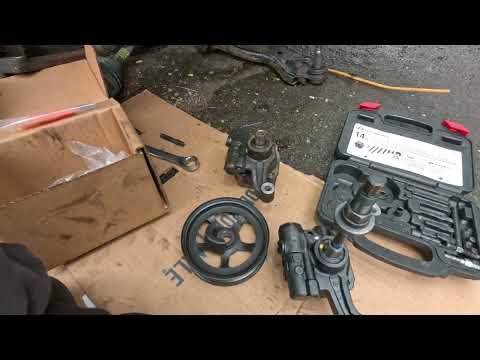
- Secure the old pump on the ground and use the power steering pump pulley puller/installer kit (specialty) to remove the pulley.
- A pulley puller/installer is a tool that presses the pulley off/on without damage.
- Use the same kit to press the pulley onto the new pump.
- Install the pulley until it matches the original pulley depth/alignment (compare to the old pump before removal).
- Tip: A misaligned pulley will squeal and shred belts.
Step 8: Install the new pump
- Set the pump into place and start all mounting bolts by hand.
- Tighten mounting bolts with a 13mm socket and 3/8" ratchet.
- Final-tighten with a 3/8" torque wrench: Torque to 25 Nm (18 ft-lbs).
Step 9: Reconnect the pressure line with a new seal
- Install the new O-ring/seal from the pressure line O-ring/seal kit.
- Thread the fitting in by hand first to avoid cross-threading.
- Tighten using an 18mm line wrench: Torque to 27 Nm (20 ft-lbs).
Step 10: Reconnect the return hose
- Push the return hose fully onto its nipple.
- Reposition the clamp with pliers (replace the clamp if it feels weak).
Step 11: Reinstall the serpentine belt
- Rotate the tensioner with a 15mm socket using a serpentine belt tool.
- Slip the belt back onto the power steering pump pulley and slowly release the tensioner.
- Visually check belt alignment on every pulley groove.
Step 12: Fill and bleed the power steering system (important)
- Fill the reservoir with GM-approved power steering fluid.
- With the front wheels still off the ground and engine OFF, turn the steering wheel lock-to-lock slowly 15–20 times.
- Top off fluid as the level drops.
- Start the engine and let it idle; do not hold the wheel against the stops.
- Turn lock-to-lock slowly 5–10 more times, watching for foam/bubbles.
- Shut off the engine, wait 5 minutes, then recheck and top off to the correct level.
Step 13: Reinstall removed components
- Reinstall the intake duct (if removed) and tighten clamps with a flathead screwdriver.
- Press the engine cover back into place.
✅ After Repair
- 🔍 With the engine idling, inspect the pressure fitting and return hose for leaks.
- 🛞 Lower the SUV, then road test in a parking lot with slow turns first.
- 🧪 Recheck fluid level after the test drive and again the next morning (small air bubbles can work out).
- 👂 If you hear whining, re-bleed with the front wheels off the ground.
💰 DIY vs Shop Cost
Shop Cost: $650-$1,050 (parts + labor)
DIY Cost: $180-$450 (parts only)
You Save: $470-$600 by doing it yourself!
Shop labor rates vary but typically run $100-$150/hour. This repair takes a shop approximately 3-5 hours.
🎯 Ready to get started?
HowToo makes it easy: same-day/2-day shipping on every part, plus all the tools and specialty tools you need! Check out the parts and tools sections below to add everything to your cart.