









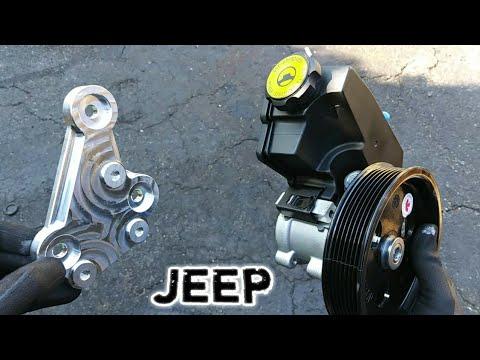




How to Replace the Power Steering Pump on a 2016-2021 Jeep Grand Cherokee (Engine: V8 5.7L)
Step-by-step DIY guide with tools, parts, fluid specs, torque specs, and bleeding tips
How to Replace the Power Steering Pump on a 2016-2021 Jeep Grand Cherokee (Engine: V8 5.7L)
Step-by-step DIY guide with tools, parts, fluid specs, torque specs, and bleeding tips for 2016, 2017, 2018, 2019, 2020, 2021


🔧 Grand Cherokee - Power Steering Pump Replacement
Your Grand Cherokee uses an engine-driven hydraulic power steering pump. Replacing it means removing the serpentine belt, disconnecting the power steering hoses, swapping the pump, refilling the system, and bleeding air from the steering system.
Difficulty Level: Intermediate | Estimated Time: 2.5-4 hours
⚠️ Safety & Precautions
- ⚠️ Let the engine cool completely before working near the belt drive and exhaust-side engine bay areas.
- ⚠️ Keep fingers, tools, and clothing away from the serpentine belt area.
- ⚠️ Power steering fluid is slippery and flammable; wipe spills right away.
- ⚠️ Support the front of your Grand Cherokee with jack stands before bleeding the steering system. Never rely on a floor jack alone.
- ⚠️ Disconnect the negative battery cable if your hands or tools will be close to the alternator power terminal.
- ⚠️ Do not start the engine until the power steering reservoir has fluid in it, or the new pump can be damaged.
🔧 Required Tools
You'll need the following tools for this repair:
- 10mm socket
- 13mm socket
- 15mm socket
- 18mm socket
- 3/8-inch ratchet
- 1/2-inch breaker bar
- Serpentine belt tool (specialty)
- Power steering pulley puller/installer kit (specialty)
- 18mm line wrench
- Slip-joint pliers
- Flat-blade screwdriver
- Torque wrench 10-100 ft-lbs
- Drain pan 2-quart minimum
- Fluid transfer syringe
- Fender cover
- Shop towels
- Floor jack rated 3-ton minimum
- Jack stands rated 3-ton minimum
- Wheel chocks
- Nitrile gloves
- Safety glasses
🔩 Required Parts
HowToo sells all the parts you need for this repair:
- Power steering pump - Qty: 1
- Power steering fluid meeting Mopar MS-11655 / ATF+4 specification - Qty: 2 quarts
- Power steering pressure hose sealing O-ring - Qty: 1
- Power steering return hose clamp - Qty: 1
- Serpentine belt - Qty: 1, if worn, cracked, or oil-soaked
📋 Before You Begin
- 📋 Park your Grand Cherokee on level ground, set the parking brake, and place wheel chocks behind the rear wheels.
- 📋 Open the hood and install a fender cover to protect the paint.
- 📋 A serpentine belt is the single long belt that drives the alternator, water pump, A/C compressor, and power steering pump.
- 📋 A line wrench wraps around more sides of a hose fitting than a normal open-end wrench, helping prevent rounded fittings.
- 📋 Use a fluid transfer syringe to remove as much old fluid as possible from the power steering reservoir before disconnecting hoses.
- 📋 If disconnecting the battery, use a 10mm socket to remove the negative battery cable and position it away from the battery post.
🔨 Step-by-Step Instructions
Follow these steps in order:
Step 1: Raise the Front Wheels
- Use a floor jack rated 3-ton minimum to lift the front of your Grand Cherokee at the approved front lifting point.
- Place jack stands rated 3-ton minimum under the front support points.
- Lower the vehicle gently onto the jack stands.
- Keep the front wheels just off the ground. This makes bleeding the system easier later.
Step 2: Remove Fluid From the Reservoir
- Put on safety glasses and nitrile gloves.
- Remove the power steering reservoir cap by hand.
- Use a fluid transfer syringe to pull old fluid from the reservoir.
- Drain the fluid into a drain pan 2-quart minimum.
- Less fluid now means less mess later.
Step 3: Remove the Serpentine Belt
- Before removing the belt, take a clear photo of the belt routing with your phone.
- Use a serpentine belt tool or 1/2-inch breaker bar on the belt tensioner.
- Rotate the tensioner to release belt tension.
- Slide the belt off the power steering pump pulley.
- Slowly release the tensioner. Do not let it snap back.
- If removing the belt fully, route it out by hand and inspect it for cracks, glazing, or fluid damage.
Step 4: Remove the Power Steering Pump Pulley
- Use the power steering pulley puller/installer kit on the pump pulley hub.
- A pulley puller is a specialty tool that pulls the pressed-on pulley straight off without bending it.
- Follow the puller kit setup for a pressed-on Chrysler-style power steering pulley.
- Turn the puller center bolt with the correct socket from the kit until the pulley comes off the pump shaft.
- Set the pulley aside where it will not be dropped or bent.
Step 5: Disconnect the Return Hose
- Place the drain pan under the power steering pump.
- Use slip-joint pliers to squeeze the return hose clamp.
- Slide the clamp back on the hose.
- Use a flat-blade screwdriver gently at the hose end only if the hose is stuck.
- Twist the hose by hand and pull it off the pump nipple.
- Plug or raise the hose end to reduce dripping.
Step 6: Disconnect the Pressure Hose
- Use an 18mm line wrench to loosen the high-pressure power steering hose fitting at the pump.
- Turn slowly so the fitting does not round off.
- Remove the hose fitting and allow fluid to drain into the drain pan.
- Remove and discard the old sealing O-ring from the pressure hose fitting.
- Do not reuse the old O-ring.
Step 7: Remove the Pump Mounting Bolts
- Use a 13mm socket or 15mm socket as fitted to remove the power steering pump mounting bolts through the pulley opening area.
- Support the pump with one hand while removing the last bolt.
- Lift the pump out of the bracket area.
- Compare the old pump and new pump before installation. Ports and mounting ears must match.
Step 8: Install the New Pump
- Position the new power steering pump into the bracket.
- Start all mounting bolts by hand first to avoid cross-threading.
- Use a 13mm socket or 15mm socket to snug the bolts evenly.
- Use a torque wrench to tighten the pump mounting bolts to Torque to 28 Nm (21 ft-lbs).
Step 9: Reconnect the Pressure Hose
- Install a new power steering pressure hose sealing O-ring on the hose fitting.
- Lubricate the O-ring with a small amount of clean power steering fluid using a gloved finger.
- Thread the fitting into the pump by hand first.
- Use an 18mm line wrench to tighten the fitting.
- Use a torque wrench with the correct adapter if available and tighten to Torque to 31 Nm (23 ft-lbs).
- If a torque adapter is not available, tighten snugly without over-tightening the aluminum pump housing.
Step 10: Reconnect the Return Hose
- Push the return hose fully onto the pump nipple by hand.
- Use slip-joint pliers to position the return hose clamp behind the raised bead on the nipple.
- Replace the clamp if it is weak, rusty, or distorted.
Step 11: Reinstall the Pulley
- Use the power steering pulley puller/installer kit in installer mode.
- Thread the installer into the pump shaft by hand.
- Use the correct socket from the kit to press the pulley onto the pump shaft.
- Install the pulley until the pulley face is aligned with the original belt path.
- Do not hammer the pulley onto the pump shaft.
- Hammering can ruin the new pump bearing.
Step 12: Reinstall the Serpentine Belt
- Route the serpentine belt according to your photo or the under-hood belt routing label.
- Use the serpentine belt tool or 1/2-inch breaker bar to rotate the tensioner.
- Slide the belt over the final pulley.
- Slowly release the tensioner.
- Check that the belt ribs sit fully in every pulley groove.
Step 13: Fill the Power Steering System
- Fill the reservoir with power steering fluid meeting Mopar MS-11655 / ATF+4 specification.
- Install the reservoir cap loosely for now.
- Wipe spilled fluid with shop towels.
Step 14: Bleed the System With Engine Off
- Keep the front wheels off the ground on jack stands.
- With the engine off, turn the steering wheel slowly from full left to full right 15-20 times.
- Do not hold the steering wheel hard against the stop.
- Check the reservoir often and add fluid as the level drops.
- This pushes trapped air out before the pump runs.
Step 15: Bleed the System With Engine Running
- If the battery was disconnected, use a 10mm socket to reconnect the negative battery cable.
- Start the engine and let it idle.
- Use safety glasses and watch the reservoir level. Add fluid if needed.
- Turn the steering wheel slowly left and right several times.
- Shut the engine off if the fluid foams heavily or the pump whines loudly.
- Let the fluid sit for 5 minutes, then repeat the bleeding process.
Step 16: Final Check and Lower the Vehicle
- Use a flashlight to inspect the pressure hose fitting, return hose, pump body, and reservoir area for leaks.
- Use shop towels to clean any spilled fluid.
- Use the floor jack rated 3-ton minimum to raise the front slightly.
- Remove the jack stands.
- Lower your Grand Cherokee to the ground.
- With the vehicle on the ground, recheck the fluid level and top off as needed.
✅ After Repair
- ✅ Start the engine and turn the steering wheel slowly both directions. Steering should feel smooth and quiet.
- ✅ Road test at low speed first. Avoid sharp full-lock turns for the first few minutes.
- ✅ Recheck the fluid level after the road test with the engine off.
- ✅ Inspect again for leaks around both hoses and the pump shaft area.
- ✅ If the pump still whines, air may remain in the system. Repeat the bleeding procedure after the fluid sits for 10-15 minutes.
- ✅ Dispose of used power steering fluid according to local hazardous-waste rules.
💰 DIY vs Shop Cost
Shop Cost: $550-$950 (parts + labor)
DIY Cost: $180-$450 (parts only)
You Save: $370-$500 by doing it yourself!
Shop labor rates vary but typically run $100-$150/hour. This repair takes a shop approximately 2-3 hours.
🎯 Ready to get started?
HowToo makes it easy: same-day/2-day shipping on every part, plus all the tools and specialty tools you need! Check out the parts and tools sections below to add everything to your cart.
Guide for Engine Water Pump replace for these Jeep vehicles
| Year Make Model | Sub Model | Engine | Body Style |
|---|---|---|---|
| 2021 Jeep Grand Cherokee | - | V8 5.7L | - |
| 2021 Jeep Grand Cherokee | - | V8 6.4L | - |
| 2020 Jeep Grand Cherokee | - | V8 5.7L | - |
| 2020 Jeep Grand Cherokee | - | V8 6.4L | - |
| 2019 Jeep Grand Cherokee | - | V8 5.7L | - |
| 2019 Jeep Grand Cherokee | - | V8 6.4L | - |
| 2018 Jeep Grand Cherokee | - | V8 5.7L | - |
| 2018 Jeep Grand Cherokee | - | V8 6.4L | - |
| 2017 Jeep Grand Cherokee | - | V8 5.7L | - |
| 2017 Jeep Grand Cherokee | - | V8 6.4L | - |
| 2016 Jeep Grand Cherokee | - | V8 5.7L | - |
| 2016 Jeep Grand Cherokee | - | V8 6.4L | - |