









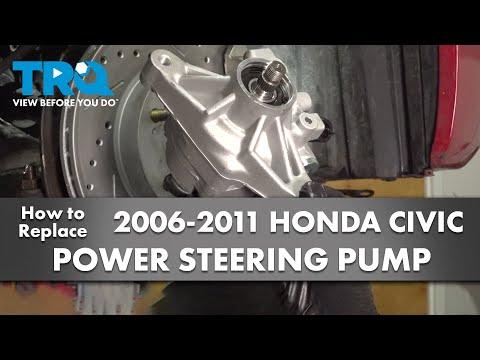







How to Replace the Power Steering Pump on a 2009 Honda Civic (DIY Guide)
Step-by-step instructions with tools, parts list, belt tensioning, bleeding procedure, and torque specs
How to Replace the Power Steering Pump on a 2009 Honda Civic (DIY Guide)
Step-by-step instructions with tools, parts list, belt tensioning, bleeding procedure, and torque specs


🔧 Civic - Power Steering Pump Replacement
Replacing the power steering pump means removing the drive belt, disconnecting the pressure and return lines, swapping the pump, then bleeding air out of the system. Doing the bleed correctly is key—air in the fluid can cause whining, foaming, and hard steering.
Difficulty Level: Intermediate | Estimated Time: 2-4 hours
⚠️ Safety & Precautions
- ⚠️ Support the car with jack stands on solid ground; never rely on a jack.
- ⚠️ Keep hands/loose clothing away from the belt path.
- ⚠️ Power steering fluid is slippery and flammable—wipe spills immediately.
- ⚠️ Do not hold the steering at full lock for more than 5 seconds (it can overheat the fluid).
- ⚠️ Battery disconnect is not required, but keep the key OFF while working.
🔧 Required Tools
You'll need the following tools for this repair:
- Floor jack (rated 3-ton minimum)
- Jack stands (rated 3-ton minimum)
- Wheel chocks
- Safety glasses
- Nitrile gloves
- Drain pan
- Shop rags
- Funnel
- Fluid suction pump (hand pump)
- 10mm socket
- 12mm socket
- 14mm socket
- 17mm line wrench
- 3/8" drive ratchet
- 6" extension (3/8" drive)
- Torque wrench (10–80 ft-lbs range)
- Flathead screwdriver
- Pliers
🔩 Required Parts
HowToo sells all the parts you need for this repair:
- Power steering pump - Qty: 1
- Power steering pump inlet O-ring / seal - Qty: 1
- Power steering high-pressure line O-ring / sealing washer (pump side, if equipped) - Qty: 1
- Power steering fluid (Honda/Acura compatible) - Qty: 2 quarts
- Serpentine/drive belt - Qty: 1 Replace if cracked or glazed
📋 Before You Begin
- Park on level ground, set the parking brake, and install wheel chocks behind the rear tires.
- Turn the steering wheel so the front wheels point straight.
- Use a fluid suction pump (hand pump) to remove as much old fluid as possible from the reservoir.
- Raise the front of the car with a floor jack and support it on jack stands so the front wheels can turn freely during bleeding.
🔨 Step-by-Step Instructions
Follow these steps in order:
Step 1: Get access to the pump and belt
- Open the hood and locate the pump (passenger side of the engine, driven by the belt).
- If access is tight, use a 10mm socket to remove the upper plastic covers as needed.
Step 2: Loosen belt tension and remove the belt from the pump
- Locate the pump adjustment hardware (pivot bolt + lock bolt + adjuster bolt on the pump bracket).
- Use a 14mm socket to loosen the pump pivot bolt (do not remove it).
- Use a 12mm socket to loosen the lock bolt on the adjuster.
- Use a 10mm socket (or the adjuster’s hex, if different) to back off the adjuster bolt until the belt is loose.
- Slip the belt off the power steering pump pulley by hand.
Step 3: Disconnect the return hose (low-pressure hose)
- Place a drain pan under the pump area.
- Use pliers to slide the spring clamp back on the return hose.
- Twist and pull the return hose off the pump nipple, then aim it into the drain pan.
- Plug the hose end with a clean rag to reduce dripping.
Step 4: Disconnect the high-pressure line
- Clean around the fitting with shop rags so dirt doesn’t enter the system.
- Use a 17mm line wrench to loosen the high-pressure line fitting at the pump (a line wrench grips more sides of the nut to reduce rounding).
- Once loose, finish unthreading by hand and catch fluid in the drain pan.
- Remove and discard the old sealing O-ring/washer if your replacement pump/line uses one.
Step 5: Remove the power steering pump from the bracket
- Remove the pump mounting bolts using a 12mm socket (quantity varies by bracket style).
- Lift the pump out carefully, keeping it upright to avoid spilling more fluid.
Step 6: Move any fittings/brackets to the new pump (if required)
- If your new pump does not include a pulley or bracket, transfer them from the old pump as applicable.
- Replace the pump inlet O-ring/seal with the new one before installing hoses.
Step 7: Install the new pump
- Position the new pump in the bracket and start the mounting bolts by hand.
- Tighten the pump mounting bolts with a torque wrench: Torque to 22 Nm (16 ft-lbs).
Step 8: Reconnect the high-pressure line
- Start the fitting by hand first (this prevents cross-threading).
- Tighten the high-pressure fitting using a 17mm line wrench: Torque to 29 Nm (21 ft-lbs).
Step 9: Reconnect the return hose
- Push the return hose fully onto the pump nipple.
- Use pliers to move the spring clamp back into its original position.
Step 10: Reinstall and tension the belt
- Route the belt back onto the pump pulley by hand.
- Use a 10mm socket to turn the adjuster bolt until the belt is properly tensioned.
- Tighten the adjuster lock bolt with a 12mm socket: Torque to 22 Nm (16 ft-lbs).
- Tighten the pump pivot bolt with a 14mm socket: Torque to 44 Nm (32 ft-lbs).
- Tip: Too-tight belts squeal and wear bearings.
Step 11: Fill and bleed the power steering system
- Fill the reservoir with Honda/Acura compatible power steering fluid using a funnel to the MAX line.
- With the engine OFF and front wheels in the air, slowly turn the steering wheel lock-to-lock about 15–20 times.
- Check the fluid level and top off as needed (don’t let it run low).
- Start the engine and let it idle. Do not rev it.
- Slowly turn lock-to-lock 5–10 more times, watching for foaming/bubbles in the reservoir.
- If fluid foams, shut the engine off and wait 10 minutes, then repeat until clear.
✅ After Repair
- Lower the car safely and do a short parking-lot test (slow turns both directions).
- Recheck the reservoir level and top off as needed after the test drive.
- Inspect for leaks at the high-pressure fitting and return hose clamp with a flashlight.
- Listen for pump whine; a small amount at first can mean trapped air—repeat the bleed if needed.
💰 DIY vs Shop Cost
Shop Cost: $450-$900 (parts + labor)
DIY Cost: $140-$350 (parts only)
You Save: $310-$550 by doing it yourself!
Shop labor rates vary but typically run $100-$150/hour. This repair takes a shop approximately 2-3 hours.
🎯 Ready to get started?
HowToo makes it easy: same-day/2-day shipping on every part, plus all the tools and specialty tools you need! Check out the parts and tools sections below to add everything to your cart.