















How to Replace the Power Steering Pump on a 2007 Toyota Corolla (DIY Guide)
Step-by-step instructions with required tools, parts list, fluid type, belt removal, bleeding steps, and torque specs
How to Replace the Power Steering Pump on a 2007 Toyota Corolla (DIY Guide)
Step-by-step instructions with required tools, parts list, fluid type, belt removal, bleeding steps, and torque specs


🔧 Corolla - Power Steering Pump Replacement
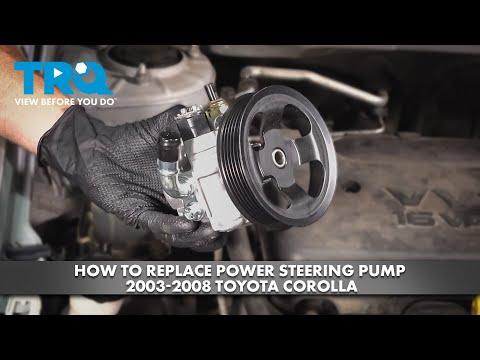
Replacing the power steering pump usually fixes whining, hard steering, or fluid leaks at the pump shaft/hoses. You’ll remove the drive belt, disconnect the hoses, swap the pump, then refill and bleed the system to push air out.
Difficulty Level: Intermediate | Estimated Time: 2-4 hours
⚠️ Safety & Precautions
- 🛑 Work on a cool engine; hot exhaust and fluid can burn you.
- 🛑 Support the car with jack stands on solid, level ground—never rely on a jack alone.
- 🛑 Power steering fluid is slippery and flammable—wipe spills immediately.
- 🛑 Keep hands clear of belts/pulleys; never run the engine with tools near the belt.
- 🛑 Battery disconnect is not required, but keep the key off and avoid shorting the alternator area with tools.
🔧 Required Tools
You'll need the following tools for this repair:
- Safety glasses
- Nitrile gloves
- Wheel chocks
- Floor jack (rated 2-ton minimum)
- Jack stands (rated 2-ton minimum)
- Drain pan (at least 2-quart)
- Shop rags
- 10mm socket
- 12mm socket
- 14mm socket
- 3/8" ratchet
- 3/8" torque wrench (10–80 ft-lbs range)
- Short extension (3")
- 10mm combination wrench
- 12mm combination wrench
- 14mm combination wrench
- 17mm flare nut wrench
- Flat-blade screwdriver
- Hose clamp pliers
- Funnel
- Hand fluid pump (specialty)
- Power steering pulley puller/installer kit (specialty)
🔩 Required Parts
HowToo sells all the parts you need for this repair:
- Power steering pump - Qty: 1
- Power steering pressure line sealing washers/O-rings (as applicable) - Qty: 1 set
- Power steering return hose clamp (if original is weak/rusted) - Qty: 1
- Power steering fluid (DEXRON III/Mercon ATF) - Qty: 2 quarts
- Serpentine/drive belt (optional if worn or oil-soaked) - Qty: 1
📋 Before You Begin
- 🧭 Park on level ground, set the parking brake, and center the steering wheel.
- 🧱 Chock the rear wheels with wheel chocks.
- ⬆️ Raise the front of the car with a floor jack and support it securely on jack stands so the front wheels can turn freely.
- 🧼 Clean around the pump and hose fittings with shop rags so dirt doesn’t get into the system.
- Flare nut wrench grips fittings without rounding.
🔨 Step-by-Step Instructions
Follow these steps in order:
Step 1: Relieve belt tension
- Use a 10mm socket or 10mm combination wrench to loosen the power steering pump lock bolt(s) (do not remove yet).
- Use a 12mm socket or 12mm combination wrench to turn the belt adjuster bolt and loosen the belt.
- Slip the belt off the power steering pump pulley by hand.
Step 2: Drain the reservoir and return hose
- Place a drain pan under the pump area.
- Use hose clamp pliers to move the return-hose clamp back on the hose.
- Twist and pull the return hose off the pump/reservoir nipple by hand; catch fluid in the drain pan.
- Plug the hose with a clean rag to slow dripping.
Step 3: Disconnect the high-pressure line (metal fitting)
- Use a 17mm flare nut wrench to loosen the high-pressure line fitting at the pump.
- Once loose, finish unthreading by hand and keep the line pointed upward to reduce spills.
- Remove and discard old sealing washers/O-rings (as applicable to your pump style).
Step 4: Remove the pump mounting bolts and take the pump out
- Use a 14mm socket with a 3/8" ratchet and short extension (3") to remove the pump mounting bolts.
- Lift the pump out carefully, watching for hoses/lines snagging.
Step 5: Transfer the pulley (only if your new pump does not include it)
- A pulley puller/installer prevents pump damage.
- Use a power steering pulley puller/installer kit (specialty) to remove the pulley from the old pump.
- Use the same pulley puller/installer kit (specialty) to press the pulley onto the new pump until it matches the old pulley position/alignment.
Step 6: Install the new pump
- Position the pump and hand-start the mounting bolts.
- Use a 14mm socket and 3/8" ratchet to snug bolts evenly.
- Use a 3/8" torque wrench to tighten the pump mounting bolts: Torque to 25 N·m (18 ft-lbs).
Step 7: Reconnect the high-pressure line and return hose
- Install new sealing washers/O-rings (from your pressure line sealing washers/O-rings set) as required.
- Thread the pressure fitting in by hand first to avoid cross-threading.
- Use a 17mm flare nut wrench to tighten the pressure fitting: Torque to 39 N·m (29 ft-lbs).
- Reinstall the return hose fully, then use hose clamp pliers to slide the clamp back into place.
Step 8: Reinstall and tension the belt
- Route the belt over the pulley by hand.
- Use a 12mm socket to turn the adjuster bolt until belt tension is correct (belt should not slip or squeal).
- Use a 10mm socket to tighten the lock bolt(s) you loosened earlier.
Step 9: Fill and bleed the power steering system
- Fill the reservoir using a funnel with power steering fluid (DEXRON III/Mercon ATF) to the “COLD” mark.
- With the front wheels still off the ground and the engine OFF, slowly turn the steering wheel lock-to-lock 10–15 times to push air out.
- Top off fluid as the level drops.
- Start the engine and let it idle; do not rev.
- Slowly turn lock-to-lock 5–10 more times, pausing briefly at each end (don’t hold it hard against the stop).
- Shut off the engine and recheck fluid level; adjust to the “HOT” mark once fully warmed up.
- Foamy fluid means air—keep bleeding.
✅ After Repair
- 🧪 With the engine idling, inspect for leaks at the pressure fitting and return hose.
- 🧪 Listen for pump whine; a little noise at first can be normal until all air is out.
- 🛞 Road test in a parking lot with gentle turns; recheck fluid level afterward.
- 🧼 Recheck belt tracking and tension; adjust if you hear squeal.
💰 DIY vs Shop Cost
Shop Cost: $450-$850 (parts + labor)
DIY Cost: $120-$350 (parts only)
You Save: $300-$500 by doing it yourself!
Shop labor rates vary but typically run $100-$150/hour. This repair takes a shop approximately 2-3 hours.
🎯 Ready to get started?
HowToo makes it easy: same-day/2-day shipping on every part, plus all the tools and specialty tools you need! Check out the parts and tools sections below to add everything to your cart.