








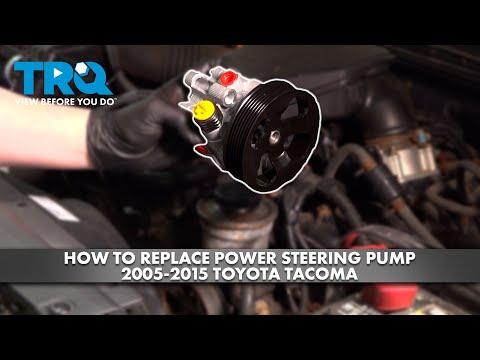





How to Replace the Power Steering Pump on a 2005-2021 Toyota Tacoma (Engine: V6 4.0L)
Step-by-step instructions with tools, parts, torque specs, and bleeding tips
How to Replace the Power Steering Pump on a 2005-2021 Toyota Tacoma (Engine: V6 4.0L)
Step-by-step instructions with tools, parts, torque specs, and bleeding tips for 2005, 2006, 2007, 2008, 2009, 2010, 2011, 2012, 2013, 2014, 2015, 2016, 2017, 2018, 2019, 2020, 2021


🔧 Tacoma - Power Steering Pump Replacement
This job removes the hydraulic power steering pump, transfers the pulley if needed, and installs the replacement pump with fresh fluid. On your Tacoma, access is tight but straightforward, and bleeding the system after installation is important to prevent noise and stiff steering.
Difficulty Level: Intermediate | Estimated Time: 2-4 hours
⚠️ Safety & Precautions
- Keep hands, tools, and clothing away from the belt and pulleys.
- Do not run the engine with the power steering reservoir empty.
- Use only the correct Toyota-approved power steering fluid.
- Battery disconnect is not required, but it is smart to disconnect the negative terminal if you will be working close to the belt for a long time.
- Dispose of used fluid properly.
🔧 Required Tools
You'll need the following tools for this repair:
- 10mm socket
- 12mm socket
- 14mm socket
- Ratchet
- Breaker bar
- Belt tensioner tool
- Torque wrench
- Drain pan
- Funnel
- Line wrench set
- Power steering pulley puller/installer (specialty)
- Floor jack (rated 3-ton minimum)
- Jack stands
- Safety glasses
- Gloves
- Shop rags
🔩 Required Parts
HowToo sells all the parts you need for this repair:
- Power steering pump - Qty: 1
- Power steering pump gasket or O-ring kit - Qty: 1
- Power steering fluid - Qty: 2 quarts
- Accessory drive belt - Qty: 1
- Power steering pump pulley - Qty: 1, if damaged during removal
📋 Before You Begin
- Park on level ground and set the parking brake.
- Let the engine cool fully before touching the belt or pump.
- Raise the front of the truck only if needed for access, then support it with jack stands.
- Have a drain pan ready before disconnecting any hose.
🔨 Step-by-Step Instructions
Follow these steps in order:
Step 1: Remove the engine cover and gain access
- Use your hands to remove the engine cover if equipped.
- Use a 10mm socket to remove any intake duct or brackets blocking access to the pump.
- Keep hardware organized.
Step 2: Remove the drive belt
- Use a belt tensioner tool or breaker bar to relieve tension on the accessory belt.
- Slip the belt off the power steering pump pulley and remove it from the engine bay.
- If the belt is cracked or glazed, replace it now.
Step 3: Drain the power steering system
- Place a drain pan under the pump.
- Use a line wrench set to loosen the pressure line fitting slowly.
- Let fluid drain from the hose and pump into the pan.
- Cap or wrap open lines with a clean rag to keep dirt out.
Step 4: Remove the pump
- Use a 12mm socket to remove the pump mounting bolts.
- Use a 14mm socket if any bracket bolts or support bolts are present on your setup.
- Remove the pump from the bracket carefully and pull it out of the engine bay.
Step 5: Transfer the pulley if needed
- If the replacement pump does not come with a pulley, use a power steering pulley puller/installer (specialty) to move the pulley to the new pump.
- Press the pulley on straight so it sits aligned with the belt path.
- Do not hammer the pulley.
Step 6: Install the new pump
- Install the new power steering pump gasket or O-ring kit on the pump connections.
- Position the pump in place and start all mounting bolts by hand.
- Use a 12mm socket to tighten the pump bolts evenly.
- Torque to 25 Nm (18 ft-lbs) for typical pump mounting bolts unless your replacement pump instructions specify otherwise.
Step 7: Reconnect the hydraulic line
- Use a line wrench set to reinstall the pressure line fitting.
- Tighten it snugly without over-tightening.
- Wipe off any spilled fluid.
Step 8: Reinstall the belt
- Route the belt correctly over all pulleys.
- Use the belt tensioner tool or breaker bar to relieve tension and slip the belt back on.
- Double-check belt routing before starting the engine.
Step 9: Refill and bleed the system
- Use a funnel to fill the reservoir with fresh power steering fluid.
- With the engine off, slowly turn the steering wheel from lock to lock 10-15 times.
- Check the fluid level and top off as needed.
- Start the engine and turn the wheel gently side to side a few more times.
- Watch for foaming, noise, or leaks.
Step 10: Reassemble and verify
- Reinstall any intake parts or brackets using a 10mm socket.
- Reinstall the engine cover if equipped.
- Confirm belt alignment and check all hose connections again.
✅ After Repair
- Start the engine and listen for whining or squealing.
- Turn the wheel fully left and right at idle and confirm smooth assist.
- Check the reservoir level after the test drive and top off if needed.
- Inspect for leaks around the pump, line fitting, and reservoir.
💰 DIY vs Shop Cost
Shop Cost: $650-$1,050 (parts + labor)
DIY Cost: $180-$420 (parts only)
You Save: $470-$630 by doing it yourself!
Shop labor rates vary but typically run $100-$150/hour. This repair takes a shop approximately 2-4 hours.
🎯 Ready to get started?
HowToo makes it easy: same-day/2-day shipping on every part, plus all the tools and specialty tools you need! Check out the parts and tools sections below to add everything to your cart.
Guide for Power Steering Pump replace for these Toyota vehicles
| Year Make Model | Sub Model | Engine | Body Style |
|---|---|---|---|
| 2021 Toyota Tacoma | - | Inline 4 2.7L | - |
| 2021 Toyota Tacoma | - | V6 3.5L | - |
| 2020 Toyota Tacoma | - | Inline 4 2.7L | - |
| 2020 Toyota Tacoma | - | V6 3.5L | - |
| 2019 Toyota Tacoma | - | Inline 4 2.7L | - |
| 2019 Toyota Tacoma | - | V6 3.5L | - |
| 2018 Toyota Tacoma | - | Inline 4 2.7L | - |
| 2018 Toyota Tacoma | - | V6 3.5L | - |
| 2017 Toyota Tacoma | - | Inline 4 2.7L | - |
| 2017 Toyota Tacoma | - | V6 3.5L | - |
| 2016 Toyota Tacoma | - | Inline 4 2.7L | - |
| 2016 Toyota Tacoma | - | V6 3.5L | - |
| 2015 Toyota Tacoma | - | Inline 4 2.7L | - |
| 2014 Toyota Tacoma | - | Inline 4 2.7L | - |
| 2013 Toyota Tacoma | - | Inline 4 2.7L | - |
| 2012 Toyota Tacoma | - | Inline 4 2.7L | - |
| 2011 Toyota Tacoma | - | Inline 4 2.7L | - |
| 2010 Toyota Tacoma | - | Inline 4 2.7L | - |
| 2009 Toyota Tacoma | - | Inline 4 2.7L | - |
| 2008 Toyota Tacoma | - | Inline 4 2.7L | - |
| 2007 Toyota Tacoma | - | Inline 4 2.7L | - |
| 2006 Toyota Tacoma | - | Inline 4 2.7L | - |
| 2005 Toyota Tacoma | - | Inline 4 2.7L | - |