









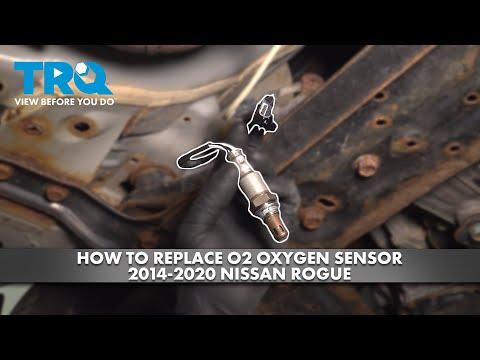







How to Replace the Oxygen Sensor on a 2020 Nissan Rogue
Step-by-step DIY guide for upstream and downstream O2 sensors with tools, parts, safety tips, and torque specs
How to Replace the Oxygen Sensor on a 2020 Nissan Rogue
Step-by-step DIY guide for upstream and downstream O2 sensors with tools, parts, safety tips, and torque specs


🔧 Rogue - Oxygen Sensor Replacement
Your Rogue has more than one oxygen sensor, and the exact steps and sensor location depend on which one you’re changing. Replacing the correct sensor is important to fix check-engine lights, poor fuel economy, and failed emissions.
Difficulty Level: Intermediate | Estimated Time: 1–2 hours per sensor
⚠️ Safety & Precautions
- ⚠️ Exhaust parts get extremely hot; only work on a cold engine and exhaust.
- ⚠️ Support the Rogue with jack stands if you need to go underneath; never rely on a jack alone.
- ⚠️ Disconnect the negative battery terminal before unplugging sensors to avoid shorts.
- ⚠️ Use an oxygen sensor socket to prevent rounding or breaking the sensor.
🔧 Required Tools
You'll need the following tools for this repair:
- 🧰 Floor jack (rated 3-ton minimum)
- 🧰 Jack stands (rated 3-ton minimum)
- 🧰 Wheel chocks
- 🧰 10mm socket
- 🧰 3/8" drive ratchet
- 🧰 3/8" drive extensions (3" and 6")
- 🧰 22mm oxygen sensor socket (slotted) (specialty)
- 🧰 1/2" drive breaker bar
- 🧰 1/2" to 3/8" adapter
- 🧰 Torque wrench 3/8" drive (5–75 ft-lbs range)
- 🧰 Flathead screwdriver (medium)
- 🧰 Trim clip removal tool
- 🧰 Penetrating oil spray
- 🧰 Shop rags
- 🧰 Mechanic gloves
- 🧰 Safety glasses
- 🧰 OBD2 scan tool (code reader) (specialty)
🔩 Required Parts
HowToo sells all the parts you need for this repair:
- 🔩 Upstream oxygen sensor (Bank 1 Sensor 1, A/F sensor, at exhaust manifold) - Qty: 1
- 🔩 Downstream oxygen sensor (Bank 1 Sensor 2, after catalytic converter) - Qty: 1
- 🔩 Anti-seize compound (sensor-safe, nickel-based) - Qty: 1 small tube
- 🔩 Dielectric grease - Qty: 1 small tube
- 🔩 Replacement plastic harness clips - Qty: 4–6
📋 Before You Begin
- Park the Rogue on level ground, engage the parking brake, and place wheel chocks behind the rear wheels.
- Let the engine and exhaust cool completely (at least 1–2 hours after driving).
- Open the hood and use a 10mm socket to loosen the negative battery terminal nut, then remove the cable and set it aside insulated.
- If you’ll be doing the downstream sensor, raise the front of the Rogue with a floor jack and support it on jack stands at the pinch welds or frame points.
🔨 Step-by-Step Instructions
Follow these steps in order:
Important first question: Are you replacing the upstream sensor (Bank 1 Sensor 1, near the engine) or the downstream sensor (Bank 1 Sensor 2, under the vehicle after the catalytic converter)? If you’re not sure, do you have the trouble code number (like P0138, P015B)?
I’ll outline both below; follow the one that matches your sensor.
Step 1: Identify which oxygen sensor to replace
- 🧰 Use the OBD2 scan tool to read the check-engine light code.
- P-codes like P0131, P015B usually mean the upstream sensor (Bank 1 Sensor 1).
- P-codes like P0138, P0140 usually point to the downstream sensor (Bank 1 Sensor 2).
- Match code description to sensor location.
UPSTREAM SENSOR (BANK 1 SENSOR 1) – at exhaust manifold, just behind engine
Step 2: Access the upstream oxygen sensor
- 🧰 Open the hood and locate the exhaust manifold at the back of the engine (toward the firewall).
- Locate the sensor screwed into the exhaust manifold or very close to it, with a wire leading to a connector on top/side of the engine.
- If needed, use a trim clip removal tool and flathead screwdriver to move plastic covers or harness clips out of the way.
Step 3: Unplug the upstream sensor connector
- 🧰 Follow the sensor wire to its connector on the engine harness.
- Press the locking tab with your fingers or a flathead screwdriver and gently separate the two halves of the connector.
- If the wire is held by plastic clips, release them with the trim clip removal tool.
- Do not pull on the wire itself.
Step 4: Loosen and remove the upstream sensor
- 🧰 Spray a little penetrating oil at the base of the sensor threads and let it soak 5–10 minutes.
- Slide the 22mm oxygen sensor socket over the sensor wire and onto the sensor hex.
- Attach a 3/8" ratchet or breaker bar with adapter and turn counterclockwise to loosen.
- Once loose, spin the sensor out by hand and remove it.
Step 5: Prepare and install the new upstream sensor
- 🧰 If the new sensor does not already have anti-seize on the threads, apply a very thin coat of anti-seize compound only to the threads, not the tip.
- Thread the new sensor into the manifold by hand to avoid cross-threading.
- Install the 22mm oxygen sensor socket and use a torque wrench to tighten to 35–40 Nm (26–30 ft-lbs).
- Hand-start threads before using tools.
Step 6: Reconnect the upstream sensor wiring
- 🧰 Apply a tiny amount of dielectric grease inside the connector seals if available.
- Plug the new sensor connector into the harness until it clicks.
- Re-secure the harness using existing clips or new plastic clips, keeping the wire away from hot exhaust or moving parts.
DOWNSTREAM SENSOR (BANK 1 SENSOR 2) – after catalytic converter, under vehicle
Step 7: Access the downstream oxygen sensor
- 🧰 With the Rogue safely on jack stands, slide under from the front or side.
- Locate the catalytic converter along the exhaust. The downstream sensor is screwed into the exhaust pipe after the converter.
- Follow the sensor wire up to find its connector clipped to the body or a bracket.
Step 8: Unplug the downstream sensor connector
- 🧰 Use a flathead screwdriver to gently lift the locking tab on the connector and pull it apart.
- Use the trim clip removal tool to release any clips holding the wire to the underbody.
Step 9: Remove the downstream sensor
- 🧰 Spray penetrating oil on the sensor threads and let sit 5–10 minutes.
- Install the 22mm oxygen sensor socket over the sensor and use the breaker bar to crack it loose counterclockwise.
- Once loose, unscrew it fully by hand and remove it.
Step 10: Install the new downstream sensor
- 🧰 Lightly coat the threads with anti-seize compound if not pre-coated (avoid the tip).
- Thread the new sensor by hand into the exhaust pipe.
- Use the 22mm oxygen sensor socket and torque wrench to tighten to 35–40 Nm (26–30 ft-lbs).
- Route the wire the same way as original, away from hot exhaust.
Step 11: Reconnect the downstream sensor wiring
- 🧰 Apply a small amount of dielectric grease to the connector if available.
- Plug the connector halves together until they click.
- Reinstall any harness clips to hold the wire securely.
Step 12: Reassemble and reconnect battery
- 🧰 If the Rogue is on jack stands, use the floor jack to lift slightly, remove the stands, and lower the vehicle.
- Reinstall any covers or clips you removed earlier.
- Reconnect the negative battery terminal and tighten the nut with a 10mm socket. Torque to 5–7 Nm (4–5 ft-lbs) (snug, not overtight).
✅ After Repair
- 🔍 Use the OBD2 scan tool to clear stored codes and reset the check-engine light.
- 🚗 Start the engine and let it idle for a few minutes; check for exhaust leaks, warning lights, or strange smells.
- 🚙 Take a short test drive with some city and highway speeds so the engine computer can relearn fuel trims.
- 📈 Re-scan for codes after the drive to confirm none have returned.
💰 DIY vs Shop Cost
Shop Cost: $300–$500 per sensor (parts + labor)
DIY Cost: $80–$160 per sensor (parts only)
You Save: ~$220–$340 per sensor by doing it yourself!
Shop labor rates vary but typically run $100–$150/hour. This repair takes a shop approximately 0.8–1.0 hours per sensor.
🎯 Ready to get started?
HowToo makes it easy: same-day/2-day shipping on every part, plus all the tools and specialty tools you need! Check out the parts and tools sections above to add everything to your cart.