









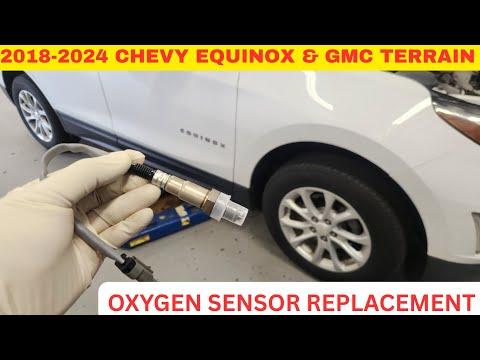






How to Replace the Oxygen Sensor on a 2020 Chevrolet Equinox
Step-by-step DIY O2 sensor replacement with tools, parts list, torque specs, safety tips, and code clearing instructions
How to Replace the Oxygen Sensor on a 2020 Chevrolet Equinox
Step-by-step DIY O2 sensor replacement with tools, parts list, torque specs, safety tips, and code clearing instructions


🔧 Equinox - Oxygen Sensor Replacement
You have two oxygen sensors on your Equinox: one before the catalytic converter (upstream) and one after it (downstream). Replacing them is similar, but access is a bit different for each.
Difficulty Level: Intermediate | Estimated Time: 1–2 hours per sensor
⚠️ Safety & Precautions
- 🛑 Work only on a completely cold engine and exhaust. The exhaust pipe and turbo can stay hot for a long time after driving.
- 🛑 If you need to raise the front of the Equinox, always use a floor jack and jack stands. Never work under a car supported only by a jack.
- 🛑 Keep the battery negative terminal disconnected if your hands will be near the starter or main engine harness to reduce risk of short circuits.
- 🛑 Do not pull on the oxygen sensor wiring. Only turn the metal hex part of the sensor.
- 🛑 Avoid breathing exhaust fumes if you need to run the engine during testing. Work in a well-ventilated area.
🔧 Required Tools
You'll need the following tools for this repair:
- 🧰 Floor jack (rated 3-ton minimum)
- 🧰 Jack stands (rated 3-ton minimum)
- 🧰 Wheel chocks
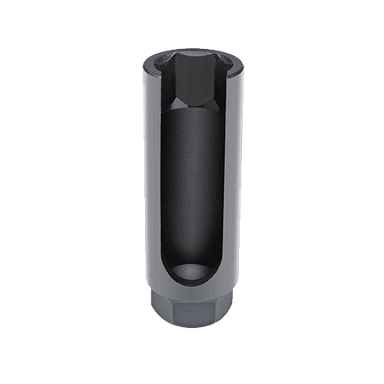
- 🧰 Oxygen sensor socket 7/8" (22mm) (specialty)
- 🧰 3/8" drive ratchet
- 🧰 3/8" drive torque wrench (10–80 ft-lbs range)
- 🧰 3/8" drive extension 6"
- 🧰 Flathead screwdriver medium
- 🧰 Needle-nose pliers
- 🧰 Trim clip removal tool (specialty)
- 🧰 10mm socket
- 🧰 10mm combination wrench
- 🧰 Work light or flashlight
- 🧰 Mechanic gloves
- 🧰 Safety glasses
- 🧰 OBD2 scan tool (basic code reader)
- 🧰 Anti-seize compound for high temperature
- 🧰 Penetrating oil spray
- 🧰 Shop rags
🔩 Required Parts
HowToo sells all the parts you need for this repair:
- 🔩 Upstream oxygen sensor (Bank 1 Sensor 1) - Qty: 1
- 🔩 Downstream oxygen sensor (Bank 1 Sensor 2) - Qty: 1
- 🔩 Replacement plastic harness clips - Qty: 4–6
- 🔩 Dielectric grease for electrical connectors - Qty: 1 small tube
- 🔩 Anti-seize compound (high-temp, nickel-based) - Qty: 1 small tube
📋 Before You Begin
- Park the Equinox on level ground, shift to PARK, and set the parking brake.
- Let the engine and exhaust cool for at least 1–2 hours if it was driven.
- Open the hood and locate the battery. Use a 10mm socket to loosen the negative terminal and remove it from the post. Wrap it with a rag so it cannot spring back.
- If you will work underneath, place wheel chocks behind the rear wheels, raise the front with a floor jack at the front jacking point, and support the vehicle on jack stands at the pinch welds.
- Have your OBD2 scan tool ready so you can clear codes after replacement.
🔨 Step-by-Step Instructions
Follow these steps in order:
Step 1: Understand which sensor you are replacing
- 🧰 Check your trouble code with the OBD2 scan tool. On your Equinox:
- Bank 1 Sensor 1 (upstream) is before the catalytic converter, near the turbo/downpipe area.
- Bank 1 Sensor 2 (downstream) is after the catalytic converter, further down the exhaust pipe.
- 🧰 If your scan tool says something like P0131 / P0132 / P0133 / P015A, this is usually the upstream sensor. Codes like P0137 / P0140 / P0141 often point to the downstream sensor.
- If unsure, replace only the sensor mentioned in your code.
Step 2: Locate the upstream sensor (Bank 1 Sensor 1)
- 🧰 Open the hood and stand at the front of the Equinox.
- 🧰 Look at the rear of the engine (toward the firewall). You will see the turbocharger and a pipe going down—that is the exhaust downpipe.
- 🧰 The upstream sensor is screwed into this pipe near the top. It has a wire leading to a connector clipped to brackets.
- Use the work light to see the sensor clearly.
Step 3: Locate the downstream sensor (Bank 1 Sensor 2)
- 🧰 Safely raise the front of the Equinox with the floor jack and support it on jack stands if you have not already.
- 🧰 Slide under the front, slightly toward the center. The catalytic converter is a larger “bulge” in the exhaust pipe.
- 🧰 The downstream sensor is screwed into the exhaust pipe just after the catalytic converter. It also has a wire leading up to a connector clipped to the body.
Step 4: Unplug the sensor electrical connector
- 🧰 Follow the oxygen sensor wire to its plastic connector.
- 🧰 Use a trim clip removal tool or flathead screwdriver to gently release the harness clips from the metal brackets or plastic tabs.
- 🧰 Use needle-nose pliers if needed to pinch any locking tabs on clips.
- 🧰 At the connector, press the locking tab with your thumb and pull the two halves apart. Do not pull on the wires.
- Remember exact routing so new wire goes the same way.
Step 5: Loosen the old sensor
- 🧰 Spray a small amount of penetrating oil around the base (threads) of the sensor where it screws into the exhaust. Let it sit 5–10 minutes.
- 🧰 Slide the wire of the sensor into the slot of the oxygen sensor socket 7/8" (22mm). This special socket is cut so the wire can pass through.
- 🧰 Attach the 3/8" drive ratchet and, if needed, a 6" extension to reach the sensor.
- 🧰 Turn the ratchet counterclockwise to break the sensor loose. It may be tight at first.
- If it feels like it might strip, add more penetrating oil and wait.
Step 6: Remove the old sensor completely
- 🧰 Once the sensor is cracked loose, keep turning it counterclockwise with the oxygen sensor socket or by hand if it’s loose enough.
- 🧰 Carefully pull the sensor out of the exhaust bung (the threaded hole in the exhaust pipe).
- 🧰 Wipe around the bung threads with a shop rag to remove rust or debris.
Step 7: Prepare the new sensor
- 🧰 Check the new sensor: make sure the connector style and wire length match the old sensor.
- 🧰 Many new sensors already have anti-seize on the threads (a silver or gray paste). If so, do not add more.
- 🧰 If the threads are bare, apply a very thin layer of high-temp anti-seize compound to the threads only. Do not get any on the tip of the sensor.
- 🧰 Put a tiny dab of dielectric grease on the connector’s rubber seal area to help keep out moisture.
Step 8: Install the new sensor
- 🧰 Carefully start the new sensor by hand into the exhaust bung. Turn it clockwise a few turns with your fingers to avoid cross-threading.
- 🧰 Once hand-tight, slide the wire through the oxygen sensor socket 7/8" (22mm) and fit the socket over the sensor hex.
- 🧰 Attach the 3/8" drive torque wrench and tighten the sensor.
- 🧰 Torque the sensor to 40 Nm (30 ft-lbs).
- Stop as soon as the torque wrench clicks.
Step 9: Route and reconnect the wiring
- 🧰 Route the sensor wire along the same path as the old one. Keep it away from hot exhaust parts and moving parts like the drive axles.
- 🧰 Use the original clips, or new harness clips, and press them into their holes or brackets by hand or with the trim clip removal tool.
- 🧰 Plug the connector halves together until you hear or feel a click.
- Loose wiring can melt on the exhaust—double-check routing.
Step 10: Reconnect battery and lower the vehicle
- 🧰 If you raised the Equinox, remove tools and stands from underneath.
- 🧰 Use the floor jack to lift the vehicle slightly and remove the jack stands, then lower the car to the ground.
- 🧰 Reattach the battery negative terminal. Use a 10mm socket or 10mm combination wrench to tighten the clamp. Do not overtighten.
Step 11: Clear codes and check for proper operation
- 🧰 Plug your OBD2 scan tool into the OBD port under the dash.
- 🧰 Turn the ignition to ON (engine not running) and use the scan tool menu to clear the stored codes. Follow the tool’s prompts.
- 🧰 Start the engine and let it idle for a few minutes. Watch that the check engine light stays off.
- 🧰 Take a short drive (10–15 minutes) with some city and some steady-speed driving, then re-check for codes.
✅ After Repair
- 🧪 Make sure there are no exhaust leaks or new rattling sounds around where the sensor is installed.
- 🧪 Monitor fuel economy and drivability over the next few days. A bad oxygen sensor can cause poor mileage and rough running; those should improve.
- 🧪 If the check engine light returns with the same code, re-check:
- That the correct sensor (upstream vs downstream) was replaced.
- The wiring and connectors for damage or melting.
- For any blown fuses related to the sensor heater circuit.
- 🧪 Keep your scan tool handy and note any new codes if they appear.
💰 DIY vs Shop Cost
Shop Cost: $250–$450 per sensor (parts + labor)
DIY Cost: $80–$180 per sensor (parts only)
You Save: $170–$270 per sensor by doing it yourself!
Shop labor rates typically run $100–$150/hour. This repair takes a shop approximately 0.8–1.0 hours per sensor.
🎯 Ready to get started?
HowToo makes it easy: same-day/2-day shipping on every part, plus all the tools and specialty tools you need! Check out the parts and tools sections above to add everything to your cart.