














How to Replace the Oxygen Sensor on a 2012-2021 Jeep Grand Cherokee 5.7L V8 (Trim: Limited)
Step-by-step O2 sensor repair guide with tools, parts, torque specs, and safety tips
How to Replace the Oxygen Sensor on a 2012-2021 Jeep Grand Cherokee 5.7L V8 (Trim: Limited)
Step-by-step O2 sensor repair guide with tools, parts, torque specs, and safety tips for 2012, 2013, 2014, 2015, 2016, 2017, 2018, 2019, 2020


🔧 Grand Cherokee - Oxygen Sensor Replacement
Replacing an oxygen sensor on your Grand Cherokee means unplugging the old exhaust sensor, unscrewing it from the exhaust pipe, and installing a new one. Oxygen sensors help the engine computer adjust fuel mixture, so a failed sensor can cause a check engine light, poor fuel economy, rough running, or failed emissions testing.
Assumption: This guide covers the common upstream or downstream heated oxygen sensors on the 5.7L V8 exhaust system. Use your scan code or sensor location to replace the correct one.
Difficulty Level: Beginner to Intermediate | Estimated Time: 1-2 hours
⚠️ Safety & Precautions
- ⚠️ Let the exhaust cool fully before touching it. Oxygen sensors thread into the exhaust and can cause severe burns when hot.
- ⚠️ Work on level ground and support your Grand Cherokee with jack stands. Never rely on a jack alone.
- ⚠️ Disconnect the negative battery cable before unplugging oxygen sensor wiring to reduce the chance of electrical shorting.
- ⚠️ Do not twist or stretch the oxygen sensor wiring harness. Damaged wiring can cause repeat fault codes.
- ⚠️ Upstream sensors are before the catalytic converters. Downstream sensors are after the catalytic converters.
🔧 Required Tools
You'll need the following tools for this repair:
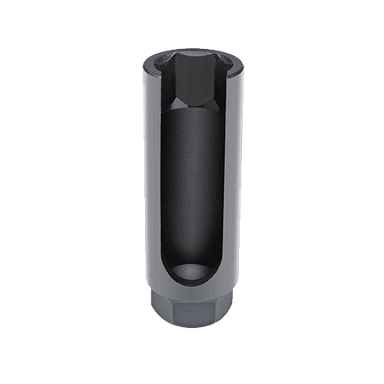
- 7/8 inch oxygen sensor socket (specialty)
- 3/8 inch drive ratchet
- 3/8 inch drive extension set
- 10mm socket
- Torque wrench 10-100 ft-lbs
- Trim clip removal tool
- Flat-head screwdriver
- Floor jack rated 3-ton minimum
- Jack stands rated 3-ton minimum
- Wheel chocks
- Penetrating oil
- Mechanic gloves
- Safety glasses
- OBD2 scan tool
🔩 Required Parts
HowToo sells all the parts you need for this repair:
- Heated oxygen sensor - Qty: 1 per failed sensor
- Anti-seize compound safe for oxygen sensors - Qty: 1 small packet, if not pre-applied
📋 Before You Begin
- Park your Grand Cherokee on a flat surface, shift to Park, and apply the parking brake.
- Place wheel chocks behind the rear wheels if lifting the front, or in front of the front wheels if lifting the rear.
- Use the OBD2 scan tool to read the stored fault code before replacing the sensor. Common codes include P0132, P0133, P0138, P0141, P0152, P0153, P0158, or P0161.
- Identify the sensor location:
- Bank 1 is the engine side with cylinder 1.
- Bank 2 is the opposite engine side.
- Sensor 1 is upstream, before the catalytic converter.
- Sensor 2 is downstream, after the catalytic converter.
- An oxygen sensor socket is a slotted 7/8 inch socket that fits over the sensor wire while gripping the sensor hex.
- If the exhaust is cold, spray penetrating oil on the sensor threads and let it soak for 10-15 minutes.
🔨 Step-by-Step Instructions
Follow these steps in order:
Step 1: Disconnect the Battery
- Open the hood.
- Use a 10mm socket and 3/8 inch drive ratchet to loosen the negative battery cable clamp.
- Move the negative cable aside so it cannot spring back onto the terminal.
- Tip: Negative is marked with a minus sign.
Step 2: Raise and Support the Vehicle
- Put on safety glasses and mechanic gloves.
- Use the floor jack rated 3-ton minimum to raise your Grand Cherokee high enough to safely access the exhaust.
- Place jack stands rated 3-ton minimum under solid frame or approved lift points.
- Gently lower the vehicle onto the jack stands.
- Shake the vehicle lightly by hand to confirm it is stable before going underneath.
Step 3: Locate the Correct Oxygen Sensor
- Use the OBD2 scan tool code information to match the failed sensor position.
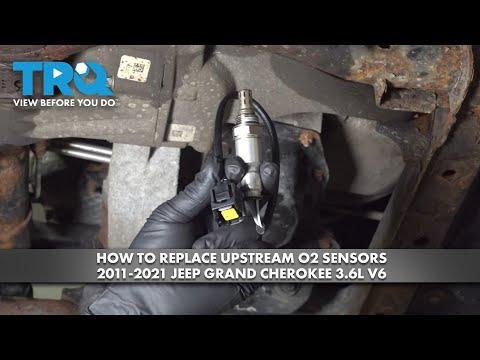
- Look for the oxygen sensor threaded into the exhaust pipe or catalytic converter area.
- Follow the sensor wire to its electrical connector clipped to the body or transmission-area bracket.
- Use a trim clip removal tool if you need to release a harness retainer from a bracket.
- Tip: Replace only the coded sensor.
Step 4: Unplug the Oxygen Sensor Connector
- Use your fingers to press the connector lock tab and separate the connector.
- If the lock tab is stiff, gently use a flat-head screwdriver to lift the tab while pulling the connector apart.
- Do not pull on the wires. Pull only on the plastic connector body.
- Free the sensor wire from any clips using the trim clip removal tool.
Step 5: Remove the Old Oxygen Sensor
- Slide the sensor wire through the slot in the 7/8 inch oxygen sensor socket.
- Attach the 3/8 inch drive ratchet and, if needed, a 3/8 inch drive extension.
- Turn the sensor counterclockwise to loosen it.
- If it is stuck, apply more penetrating oil and wait a few minutes before trying again.
- Remove the sensor by hand once loose.
- Tip: Slow steady force works best.
Step 6: Prepare the New Oxygen Sensor
- Compare the new heated oxygen sensor to the old sensor. The connector, wire length, and thread size should match.
- If anti-seize is not already on the threads, apply a very small amount of oxygen-sensor-safe anti-seize compound to the threads only.
- Keep anti-seize away from the sensor tip and vent holes.
Step 7: Install the New Oxygen Sensor
- Thread the new sensor into the exhaust by hand first to avoid cross-threading.
- Use the 7/8 inch oxygen sensor socket with the torque wrench 10-100 ft-lbs to tighten it.
- Torque to 41 Nm (30 ft-lbs).
- Route the sensor wire the same way as the original wiring.
- Keep the wire away from the exhaust pipe, driveshaft, and sharp edges.
Step 8: Reconnect the Sensor Wiring
- Push the oxygen sensor connector together by hand until it clicks.
- Use the trim clip removal tool if needed to reinstall harness clips into their brackets.
- Confirm the wire has slack for engine movement but cannot touch hot exhaust parts.
Step 9: Lower the Vehicle
- Use the floor jack rated 3-ton minimum to raise the vehicle slightly off the jack stands.
- Remove the jack stands rated 3-ton minimum.
- Lower your Grand Cherokee slowly to the ground.
- Remove the wheel chocks.
Step 10: Reconnect the Battery
- Place the negative battery cable back onto the battery terminal.
- Use the 10mm socket and 3/8 inch drive ratchet to snug the clamp.
- Do not overtighten the battery terminal clamp.
Step 11: Clear Codes and Check Operation
- Use the OBD2 scan tool to clear the oxygen sensor fault code.
- Start the engine and let it idle.
- Listen for exhaust leaks near the replaced sensor.
- Use the OBD2 scan tool to confirm the sensor begins reporting normally as the exhaust warms up.
✅ After Repair
- Drive your Grand Cherokee for 10-20 minutes, including steady cruising and light acceleration.
- Recheck for a check engine light after the drive.
- If the same code returns, inspect the wiring, connector pins, exhaust leaks, and related fuel-trim codes before replacing more parts.
- Some emissions readiness monitors may need several drive cycles before showing “ready.”
💰 DIY vs Shop Cost
Shop Cost: $220-$450 per sensor (parts + labor)
DIY Cost: $60-$180 per sensor (parts only)
You Save: $160-$270 by doing it yourself!
Shop labor rates vary but typically run $100-$150/hour. This repair takes a shop approximately 0.7-1.2 hours.
🎯 Ready to get started?
HowToo makes it easy: same-day/2-day shipping on every part, plus all the tools and specialty tools you need! Check out the parts and tools sections below to add everything to your cart.
Guide for Oxygen Sensor replace for these Jeep vehicles
| Year Make Model | Sub Model | Engine | Body Style |
|---|---|---|---|
| 2021 Jeep Grand Cherokee | Limited | - | - |
| 2021 Jeep Grand Cherokee | Overland | - | - |
| 2021 Jeep Grand Cherokee | SRT | - | - |
| 2021 Jeep Grand Cherokee | Summit | - | - |
| 2021 Jeep Grand Cherokee | Trailhawk | - | - |
| 2021 Jeep Grand Cherokee | High Altitude | - | - |
| 2021 Jeep Grand Cherokee | Trackhawk | - | - |
| 2021 Jeep Grand Cherokee | Limited X | - | - |
| 2021 Jeep Grand Cherokee | 80th Anniversary | - | - |
| 2021 Jeep Grand Cherokee | Laredo E | - | - |
| 2021 Jeep Grand Cherokee | Laredo X | - | - |
| 2020 Jeep Grand Cherokee | Laredo | - | - |
| 2020 Jeep Grand Cherokee | Limited | - | - |
| 2020 Jeep Grand Cherokee | Overland | - | - |
| 2020 Jeep Grand Cherokee | SRT | - | - |
| 2020 Jeep Grand Cherokee | Summit | - | - |
| 2020 Jeep Grand Cherokee | Trailhawk | - | - |
| 2020 Jeep Grand Cherokee | Altitude | - | - |
| 2020 Jeep Grand Cherokee | High Altitude | - | - |
| 2020 Jeep Grand Cherokee | Trackhawk | - | - |
| 2020 Jeep Grand Cherokee | Limited X | - | - |
| 2020 Jeep Grand Cherokee | Upland | - | - |
| 2019 Jeep Grand Cherokee | Laredo | - | - |
| 2019 Jeep Grand Cherokee | Limited | - | - |
| 2019 Jeep Grand Cherokee | Overland | - | - |
| 2019 Jeep Grand Cherokee | SRT | - | - |
| 2019 Jeep Grand Cherokee | Summit | - | - |
| 2019 Jeep Grand Cherokee | Trailhawk | - | - |
| 2019 Jeep Grand Cherokee | Altitude | - | - |
| 2019 Jeep Grand Cherokee | High Altitude | - | - |
| 2019 Jeep Grand Cherokee | Trackhawk | - | - |
| 2019 Jeep Grand Cherokee | Limited X | - | - |
| 2019 Jeep Grand Cherokee | Upland | - | - |
| 2018 Jeep Grand Cherokee | Laredo | - | - |
| 2018 Jeep Grand Cherokee | Limited | - | - |
| 2018 Jeep Grand Cherokee | Overland | - | - |
| 2018 Jeep Grand Cherokee | SRT | - | - |
| 2018 Jeep Grand Cherokee | Summit | - | - |
| 2018 Jeep Grand Cherokee | Trailhawk | - | - |
| 2018 Jeep Grand Cherokee | Altitude | - | - |
| 2018 Jeep Grand Cherokee | High Altitude | - | - |
| 2018 Jeep Grand Cherokee | Trackhawk | - | - |
| 2017 Jeep Grand Cherokee | Laredo | - | - |
| 2017 Jeep Grand Cherokee | Limited | - | - |
| 2017 Jeep Grand Cherokee | Overland | - | - |
| 2017 Jeep Grand Cherokee | SRT | - | - |
| 2017 Jeep Grand Cherokee | Summit | - | - |
| 2017 Jeep Grand Cherokee | Trailhawk | - | - |
| 2016 Jeep Grand Cherokee | Laredo | - | - |
| 2016 Jeep Grand Cherokee | Limited | - | - |
| 2016 Jeep Grand Cherokee | Overland | - | - |
| 2016 Jeep Grand Cherokee | SRT | - | - |
| 2016 Jeep Grand Cherokee | Summit | - | - |
| 2015 Jeep Grand Cherokee | Laredo | - | - |
| 2015 Jeep Grand Cherokee | Limited | - | - |
| 2015 Jeep Grand Cherokee | Overland | - | - |
| 2015 Jeep Grand Cherokee | SRT | - | - |
| 2015 Jeep Grand Cherokee | Summit | - | - |
| 2014 Jeep Grand Cherokee | Laredo | - | - |
| 2014 Jeep Grand Cherokee | Limited | - | - |
| 2014 Jeep Grand Cherokee | Overland | - | - |
| 2014 Jeep Grand Cherokee | SRT | - | - |
| 2014 Jeep Grand Cherokee | Summit | - | - |
| 2013 Jeep Grand Cherokee | Laredo | - | - |
| 2013 Jeep Grand Cherokee | Limited | - | - |
| 2013 Jeep Grand Cherokee | Overland | - | - |
| 2012 Jeep Grand Cherokee | Laredo | - | - |
| 2012 Jeep Grand Cherokee | Limited | - | - |
| 2012 Jeep Grand Cherokee | Overland | - | - |