















How to Replace the Outer Tie Rod End on a 2022 Ford Explorer
Step-by-step DIY repair guide with required tools, parts, torque specs, safety tips, and cost savings
How to Replace the Outer Tie Rod End on a 2022 Ford Explorer
Step-by-step DIY repair guide with required tools, parts, torque specs, safety tips, and cost savings


🔧 Explorer - Tie Rod End Replacement
You’ll be replacing a worn tie rod end on your Explorer, which connects the steering rack to the front wheel and keeps the wheel pointed where you steer. A bad tie rod can cause loose steering, uneven tire wear, and clunking noises.
Difficulty Level: Intermediate | Estimated Time: 1.5–2.5 hours (per side)
⚠️ Safety & Precautions
- ⚠️ Always support the vehicle with jack stands; never rely on a floor jack alone.
- ⚠️ You will be working near the front suspension and brake components; keep hands clear when steering or moving parts.
- ⚠️ After any steering work, a professional wheel alignment is required to avoid rapid tire wear and poor handling.
- ⚠️ Wear safety glasses and mechanic gloves to protect from rust, dirt, and sharp edges.
- ⚠️ Do not let the vehicle roll: park on level ground, set the parking brake, and chock the rear wheels.
🔧 Required Tools
You'll need the following tools for this repair:
- 🔧 Floor jack (rated 3-ton minimum)
- 🔧 Jack stands (rated 3-ton minimum, pair)
- 🔧 Wheel chocks
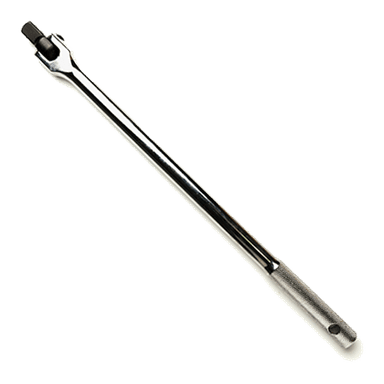
- 🔧 Breaker bar 1/2" drive
- 🔧 Torque wrench 1/2" drive (10–200 Nm range)
- 🔧 Socket set metric 10–24mm
- 🔧 21mm socket
- 🔧 18mm socket
- 🔧 18mm combination wrench
- 🔧 Adjustable wrench 12"
- 🔧 Needle-nose pliers
- 🔧 Tie rod end puller (ball joint separator, specialty)
- 🔧 Paint marker or permanent marker
- 🔧 Penetrating oil spray
- 🔧 Wire brush small
- 🔧 Flathead screwdriver medium
- 🔧 Hammer 16oz
- 🔧 Measuring tape (metric)
- 🔧 Shop rags
- 🔧 Safety glasses
- 🔧 Mechanic gloves
🔩 Required Parts
HowToo sells all the parts you need for this repair:
- 🔩 Front outer tie rod end (left or right, as needed) - Qty: 1
- 🔩 New tie rod end nut - Qty: 1
- 🔩 New tie rod end jam nut - Qty: 1
- 🔩 New cotter pin (if your replacement uses one) - Qty: 1
- 🔩 Anti-seize compound - Qty: small tube
- 🔩 Rust penetrant - Qty: 1 can
📋 Before You Begin
- 🧾 Park the Explorer on level ground, set the parking brake, and place wheel chocks behind the rear wheels.
- 🧾 Loosen the front wheel lug nuts slightly with the 21mm socket and breaker bar while the vehicle is still on the ground.
- 🧾 No battery disconnect or scan tool steps are required for an outer tie rod end replacement.
- 🧾 Spray penetrating oil on the outer tie rod end threads and on the tie rod end stud nut 10–15 minutes before starting.
🔨 Step-by-Step Instructions
Follow these steps in order:
Step 1: Lift and support the front of the vehicle
- Use the floor jack under the front crossmember (center front lift point) to raise the front of your Explorer.
- Place jack stands under the factory pinch weld points or frame rails on both sides; lower the vehicle gently onto the stands.
- Use the 21mm socket and breaker bar to remove the front wheel lug nuts and take off the wheel.
- Give the vehicle a firm push; it must feel solid.
Step 2: Identify the outer tie rod end
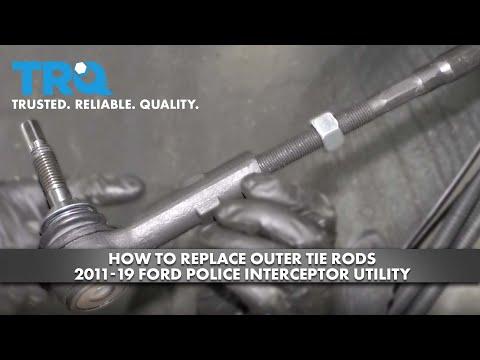
- The outer tie rod end is the small joint that connects the steering tie rod to the steering knuckle (where the wheel hub and brake rotor are).
- It has a threaded section that screws onto the inner tie rod and a stud that passes through the steering knuckle.
- Use the wire brush to clean dirt from the threads and the area around the jam nut.
Step 3: Mark current alignment position
- Use the paint marker to draw a line across the outer tie rod and inner tie rod, right at the jam nut. This helps keep toe close to original.
- Alternatively, use the measuring tape to measure from a fixed point on the inner tie rod to the center of the tie rod end and note the distance.
- This does not replace a real alignment.
Step 4: Loosen the tie rod jam nut
- The jam nut is the nut behind the outer tie rod end on the threaded rod.
- Use the 18mm combination wrench or adjustable wrench to break the jam nut loose by turning it about 1/2 turn counterclockwise.
- If it is stuck, apply more penetrating oil and give it a few minutes; you can gently tap the wrench with the hammer to help break it free.
- Do not move it too far; just loosen.
Step 5: Remove the tie rod end nut from the steering knuckle
- If your tie rod end has a cotter pin, use needle-nose pliers to straighten the bent ends and pull the pin out.
- Use the 18mm socket and breaker bar to remove the nut securing the tie rod end stud to the steering knuckle.
- Keep the nut; compare it to the new one. You will use the new nut for reassembly.
Step 6: Separate the tie rod end from the steering knuckle
- Install the tie rod end puller (specialty) over the joint: the forked end around the knuckle and the forcing screw on the stud.
- Use the socket set or wrench that matches the puller screw to tighten it until the joint pops free from the knuckle.
- If you don’t have a puller, leave the nut threaded on a few turns and tap the side of the knuckle near the stud with the hammer until it pops loose. Do not hit the stud directly.
- The “pop” can be loud; this is normal.
Step 7: Unscrew and remove the old tie rod end
- With the stud free from the knuckle, use your hand to unscrew the tie rod end from the inner tie rod shaft, counting the exact number of turns until it comes off.
- Write down the number of turns; you will install the new tie rod end with the same number of turns.
- Leave the loosened jam nut in roughly the same position on the inner tie rod.
Step 8: Prepare and install the new tie rod end
- Apply a small amount of anti-seize compound to the inner tie rod threads with a shop rag. This helps future removal.
- Screw the new outer tie rod end onto the inner tie rod by hand, counting the same number of turns you recorded when removing the old one.
- Align the new tie rod end so the stud lines up with the hole in the steering knuckle.
Step 9: Attach the new tie rod end to the steering knuckle
- Insert the new tie rod end stud into the steering knuckle hole.
- Install the new tie rod end nut by hand, then tighten with the 18mm socket and torque wrench.
- Torque the tie rod end stud nut to 70 Nm (52 ft-lbs). If the nut uses a cotter pin and the hole does not line up, tighten slightly more until it does.
- Install a new cotter pin (if used) using needle-nose pliers, bending the ends over the nut.
Step 10: Tighten the jam nut
- Hold the new tie rod end with the adjustable wrench so it does not twist.
- Use the 18mm combination wrench to tighten the jam nut against the back of the tie rod end.
- Torque the jam nut to approximately 55 Nm (41 ft-lbs).
- Check that your paint marks are close; small differences are okay since alignment is still required.
Step 11: Reinstall the wheel
- Put the wheel back on the hub and start all lug nuts by hand.
- Use the 21mm socket to snug the lug nuts in a star pattern while the vehicle is still on jack stands.
- Use the floor jack to lift the vehicle slightly, remove the jack stands, and lower the vehicle to the ground.
- Torque the lug nuts to 190 Nm (140 ft-lbs) in a star pattern with the torque wrench and 21mm socket.
Step 12: Repeat on the other side (if replacing both)
- If you are replacing both left and right tie rod ends, repeat all steps on the other side.
- Always replace steering parts in pairs when possible.
✅ After Repair
- ✅ Start the engine and gently turn the steering wheel from lock to lock while the vehicle is stationary to ensure smooth motion and no binding.
- ✅ Take a short, low-speed test drive (under 40 km/h) to feel for normal steering and no clunks or pulling.
- ✅ Inspect the new tie rod ends and jam nuts after the test drive to confirm they are still tight and seated properly.
- ✅ Schedule a professional wheel alignment as soon as possible; this is critical to prevent rapid tire wear and to keep the Explorer tracking straight.
💰 DIY vs Shop Cost
Shop Cost: $250–$400 (parts + labor for one side)
DIY Cost: $60–$120 (parts only for one side)
You Save: $190–$280 by doing it yourself!
Shop labor rates vary but typically run $100–$150/hour. This repair takes a shop approximately 1.0–1.5 hours per side.
🎯 Ready to get started?
HowToo makes it easy: same-day/2-day shipping on every part, plus all the tools and specialty tools you need! Check out the parts and tools sections above to add everything to your cart.