









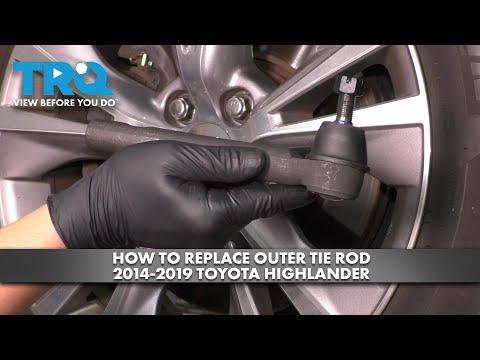






How to Replace the Outer Tie Rod End on a 2019 Toyota Highlander
Step-by-step front steering repair guide with tools, parts, torque specs, and alignment tips for 2008, 2009, 2010, 2011, 2012, 2013, 2014, 2015, 2016, 2017, 2018, 2019
How to Replace the Outer Tie Rod End on a 2019 Toyota Highlander
Step-by-step front steering repair guide with tools, parts, torque specs, and alignment tips for 2008, 2009, 2010, 2011, 2012, 2013, 2014, 2015, 2016, 2017, 2018, 2019


🔧 Highlander - Outer Tie Rod End Replacement
This repair replaces a worn outer tie rod end, which connects the steering rack to the front wheel knuckle. A bad tie rod end can cause loose steering, clunking, uneven tire wear, or poor alignment.
Difficulty Level: Intermediate | Estimated Time: 1-2 hours per side
Assumption: This guide covers the front outer tie rod end on your Highlander.
⚠️ Safety & Precautions
- ⚠️ Always support your Highlander with jack stands before working underneath or near a wheel.
- ⚠️ Do not rely on a floor jack alone. A floor jack lifts the vehicle; jack stands safely hold it up.
- ⚠️ Wear safety glasses and gloves. Rust and dirt can fall when loosening steering parts.
- ⚠️ Count the turns when removing the old tie rod end. This helps keep the alignment close enough to drive to an alignment shop.
- ⚠️ A professional wheel alignment is required after this repair to prevent tire wear and steering pull.
- ⚠️ Battery disconnect is not required for this repair.
🔧 Required Tools
You'll need the following tools for this repair:
- 21mm lug nut socket
- 1/2-inch drive breaker bar
- 1/2-inch drive torque wrench
- 3/8-inch drive ratchet
- 17mm wrench
- 19mm wrench
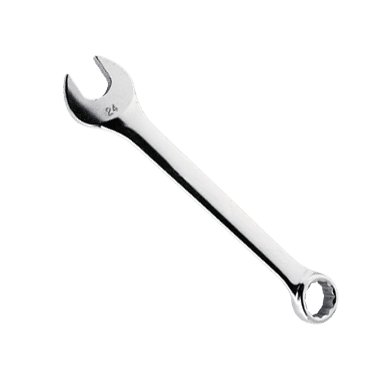
- 22mm wrench
- 19mm socket
- Needle-nose pliers
- Tie rod end puller (specialty)
- Ball joint separator fork (specialty)
- Hammer 16 oz
- Paint marker
- Tape measure
- Floor jack rated 3-ton minimum
- Jack stands rated 3-ton minimum
- Wheel chocks
- Penetrating oil spray
- Mechanic gloves
- Safety glasses
🔩 Required Parts
HowToo sells all the parts you need for this repair:
- Front outer tie rod end - Qty: 1 per side
- Front outer tie rod end cotter pin - Qty: 1 per side
- Front outer tie rod end castle nut - Qty: 1 per side if not included
- Wheel alignment service - Qty: 1
📋 Before You Begin
- Park your Highlander on level ground.
- Set the parking brake.
- Place wheel chocks behind the rear wheels.
- Straighten the steering wheel before lifting the vehicle.
- Spray penetrating oil on the tie rod jam nut and tie rod end stud nut. Let it soak for 5-10 minutes.
- A jam nut is the lock nut on the inner tie rod that holds the outer tie rod end in place.
- A castle nut is a slotted nut that uses a cotter pin to keep it from loosening.
🔨 Step-by-Step Instructions
Follow these steps in order:
Step 1: Loosen the Front Wheel Lug Nuts
- Use a 21mm lug nut socket and 1/2-inch drive breaker bar to loosen the lug nuts on the side you are repairing.
- Only loosen them about 1/2 turn while the tire is still on the ground.
- Loose first, lift second.
Step 2: Raise and Support the Front of the Highlander
- Use a floor jack rated 3-ton minimum to lift the front of your Highlander at the front center jacking point.
- Place jack stands rated 3-ton minimum under the approved front support points.
- Slowly lower the vehicle onto the jack stands.
- Gently shake the vehicle by hand to confirm it is stable before removing the wheel.
Step 3: Remove the Front Wheel
- Use a 21mm lug nut socket to remove the loosened lug nuts.
- Remove the wheel and set it flat under the vehicle as an extra safety backup.
Step 4: Mark and Measure the Tie Rod Position
- Use a paint marker to mark the exposed threads where the outer tie rod end meets the jam nut.
- Use a tape measure to measure from the center of the tie rod end stud to a fixed point on the inner tie rod.
- Write down the measurement.
- This helps keep the steering close enough for a short drive to the alignment shop.
- Alignment is still required.
Step 5: Loosen the Jam Nut
- Hold the outer tie rod end with a 19mm wrench if needed.
- Use a 22mm wrench to loosen the jam nut by turning it slightly away from the outer tie rod end.
- Do not spin the jam nut far down the threads. Just break it loose.
Step 6: Remove the Cotter Pin
- Use needle-nose pliers to straighten and pull out the cotter pin from the tie rod end stud.
- If the cotter pin is rusty, use the needle-nose pliers to work it back and forth until it comes out.
- Discard the old cotter pin. Do not reuse it.
Step 7: Remove the Castle Nut
- Use a 19mm socket and 3/8-inch drive ratchet to remove the castle nut from the tie rod end stud.
- If the stud spins, press down on the tie rod end by hand while loosening the nut with the 19mm socket.
Step 8: Separate the Tie Rod End from the Steering Knuckle
- Install the tie rod end puller over the tie rod end stud and steering knuckle.
- Tighten the puller with the correct wrench from your puller kit until the stud pops free.
- If using a ball joint separator fork, place it between the tie rod end and knuckle, then tap it with a hammer 16 oz.
- The separator fork may damage the old boot, which is acceptable because the tie rod end is being replaced.
- The pop sound is normal.
Step 9: Remove the Old Outer Tie Rod End
- Use your hand to unscrew the outer tie rod end from the inner tie rod.
- Count the exact number of turns it takes to remove it.
- Write down the turn count.
- Keep the jam nut in the same position as much as possible.
Step 10: Install the New Outer Tie Rod End
- Thread the new outer tie rod end onto the inner tie rod by hand.
- Use the same number of turns you counted during removal.
- Line it up with your paint marker mark and measurement from the tape measure.
- Make sure the tie rod end points downward into the steering knuckle hole.
Step 11: Seat the Tie Rod End Stud
- Insert the new tie rod end stud into the steering knuckle.
- Install the castle nut by hand first to avoid cross-threading.
- Use a 19mm socket and 1/2-inch drive torque wrench to tighten the nut.
- Torque to 49 Nm (36 ft-lbs).
- If the cotter pin hole does not line up, tighten the nut slightly more until the hole lines up. Do not loosen the nut to align the hole.
Step 12: Install the New Cotter Pin
- Slide the new cotter pin through the hole in the tie rod end stud.
- Use needle-nose pliers to bend the cotter pin ends around the castle nut.
- This locks the nut in place.
Step 13: Tighten the Jam Nut
- Use a 19mm wrench to hold the new outer tie rod end steady.
- Use a 22mm wrench to tighten the jam nut against the new tie rod end.
- Torque to 74 Nm (55 ft-lbs).
- If using hand wrenches only, tighten it firmly without twisting the inner tie rod boot.
Step 14: Reinstall the Wheel
- Place the wheel back onto the hub.
- Thread the lug nuts by hand first.
- Use a 21mm lug nut socket and 3/8-inch drive ratchet to snug the lug nuts in a star pattern.
Step 15: Lower the Vehicle and Torque the Lug Nuts
- Use the floor jack rated 3-ton minimum to lift the vehicle slightly off the jack stands.
- Remove the jack stands rated 3-ton minimum.
- Lower your Highlander to the ground.
- Use a 21mm lug nut socket and 1/2-inch drive torque wrench to tighten the lug nuts in a star pattern.
- Torque to 103 Nm (76 ft-lbs).
✅ After Repair
- ✅ Turn the steering wheel left and right while parked. Listen for binding, popping, or scraping.
- ✅ Take a slow test drive around the block. Keep speed low if the steering wheel is off-center.
- ✅ Get a professional wheel alignment as soon as possible.
- ✅ After 25-50 miles, recheck the wheel lug nut torque with a 21mm lug nut socket and 1/2-inch drive torque wrench.
- ✅ If your Highlander pulls hard, the steering wheel is crooked, or the tires squeal, do not keep driving except to reach an alignment shop safely.
💰 DIY vs Shop Cost
Shop Cost: $250-$450 per side including parts, labor, and basic alignment adjustment
DIY Cost: $35-$90 per side for parts only
You Save: $160-$320 by doing it yourself!
Shop labor rates vary but typically run $100-$150/hour. This repair takes a shop approximately 0.8-1.3 hours per side, plus alignment time.
🎯 Ready to get started?
HowToo makes it easy: same-day/2-day shipping on every part, plus all the tools and specialty tools you need! Check out the parts and tools sections below to add everything to your cart.