









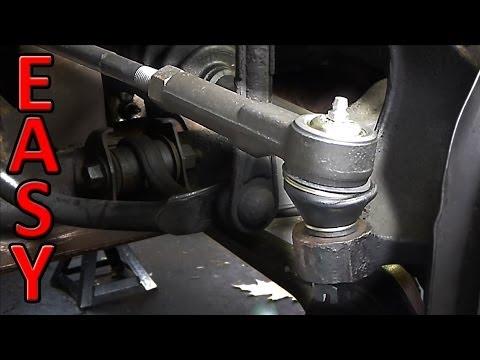







How to Replace the Outer Tie Rod End on a 2018 Hyundai Kona (DIY Guide)
Step-by-step instructions with required tools/parts, torque specs, safety tips, and alignment checklist
How to Replace the Outer Tie Rod End on a 2018 Hyundai Kona (DIY Guide)
Step-by-step instructions with required tools/parts, torque specs, safety tips, and alignment checklist


🔧 Kona - Outer Tie Rod End Replacement
Your tie rod end connects the steering rack to the steering knuckle, so replacing it restores tight, accurate steering and helps prevent uneven tire wear. The key is keeping the new part installed at the same length as the old one, then getting a proper alignment afterward.
Difficulty Level: Intermediate | Estimated Time: 1.5-3.0 hours
⚠️ Safety & Precautions
- 🛑 Support your Kona on jack stands before working underneath.
- 🧤 Wear eye protection when separating the joint; rust can pop loose.
- 🔥 Don’t work near hot brakes/rotors if you just drove.
- 🔧 Do not reuse the cotter pin; always install a new one.
- 📏 Plan on an alignment after this repair to protect your tires.
🔧 Required Tools
You'll need the following tools for this repair:
- Floor jack (rated 3-ton minimum)
- Jack stands (rated 3-ton minimum)
- Wheel chocks
- Safety glasses
- Nitrile gloves
- Breaker bar 1/2"
- Torque wrench 10-200 Nm
- Socket set 10mm-22mm
- Wrench set 10mm-22mm
- Pliers
- Side cutters
- Hammer 16 oz
- Ball joint separator (specialty)
- Wire brush
- Penetrating oil
- Paint marker
- Tape measure
🔩 Required Parts
HowToo sells all the parts you need for this repair:
- Outer tie rod end - Qty: 1
- Cotter pin - Qty: 1
- Jam nut - Qty: 1
📋 Before You Begin
- Park on level ground, turn the steering wheel straight, and set the parking brake.
- Place wheel chocks behind the rear wheels.
- Loosen the front wheel lug nuts 1/2 turn using a breaker bar and the correct socket before lifting.
- Spray penetrating oil on the tie rod end jam nut and the tie rod end stud nut; let it soak 5–10 minutes.
- Use a paint marker to mark the tie rod threads and the jam nut position. These marks help keep alignment close.
🔨 Step-by-Step Instructions
Follow these steps in order:
Step 1: Lift and remove the front wheel
- Use a floor jack (rated 3-ton minimum) to lift the front corner you’re working on.
- Set the vehicle down securely on jack stands (rated 3-ton minimum).
- Remove the lug nuts using the correct socket and take the wheel off.
Step 2: Locate the outer tie rod end
- The outer tie rod end is the joint that connects the tie rod to the steering knuckle at the back side of the wheel area.
- Clean the exposed threads with a wire brush so the jam nut can turn.
Step 3: Measure and mark for a close “same length” install
- Use a tape measure and record the distance from the center of the tie rod end stud to the jam nut face (or take a clear photo).
- Also count turns: when you remove the old tie rod end later, count each full turn out loud.
Step 4: Remove the cotter pin from the tie rod end stud
- Straighten the cotter pin with pliers.
- Pull it out using pliers (or cut and remove with side cutters if it breaks).
Step 5: Remove the tie rod end nut from the steering knuckle
- Use the correct size socket and breaker bar to remove the nut on the tie rod end stud.
- If the stud spins, hold the stud with the correct wrench while loosening the nut with a socket.
Step 6: Separate the tie rod end from the steering knuckle
- Install a ball joint separator (specialty) (this tool “pops” the tapered joint loose) between the knuckle and the tie rod end.
- Operate the separator per its design using the correct wrench/socket until the joint releases.
- If needed, tap the knuckle boss (not the stud threads) with a hammer 16 oz to help it release.
Step 7: Loosen the jam nut
- Hold the inner tie rod with the correct size wrench.
- Use another wrench to loosen the jam nut (turn it counterclockwise).
- Back the jam nut away a few turns, but keep it on the threads.
Step 8: Remove the old outer tie rod end
- Unscrew the tie rod end off the inner tie rod by hand, counting the exact number of turns.
- Write the number down (example: 17.5 turns).
Step 9: Install the new outer tie rod end
- Thread the new tie rod end on by hand the same number of turns you counted during removal.
- Line up your paint marks and your measurement from Step 3 to get it as close as possible.
- Snug the jam nut up to the tie rod end by hand.
Step 10: Seat the stud into the steering knuckle and tighten
- Insert the tie rod end stud into the steering knuckle.
- Install the new nut and tighten using the correct socket.
- Torque to 49 Nm (36 ft-lbs) using a torque wrench 10-200 Nm.
- If the cotter pin hole does not line up after torquing, tighten the nut slightly more until the slots/hole align. Never loosen to align.
Step 11: Install a new cotter pin
- Slide the new cotter pin through the stud hole using pliers.
- Bend the legs over using pliers so it can’t back out.
Step 12: Tighten the jam nut
- Hold the tie rod end with the correct wrench so it doesn’t twist.
- Tighten the jam nut using another wrench.
- Torque to 65 Nm (48 ft-lbs) using a torque wrench 10-200 Nm.
Step 13: Reinstall the wheel
- Reinstall the wheel and hand-thread the lug nuts.
- Lower the vehicle off the jack stands (rated 3-ton minimum) using the floor jack (rated 3-ton minimum).
- Torque to 90 Nm (66 ft-lbs) in a star pattern using a torque wrench 10-200 Nm.
✅ After Repair
- Start your Kona and turn the steering wheel lock-to-lock to confirm smooth movement and no binding/noise.
- Road test at low speed first; steering wheel should stay close to centered.
- Get a professional 4-wheel alignment as soon as possible (tie rod changes affect toe and tire wear).
- Recheck the jam nut area after a short drive for any looseness or movement.
💰 DIY vs Shop Cost
Shop Cost: $250-$450 (parts + labor)
DIY Cost: $35-$120 (parts only)
You Save: $130-$415 by doing it yourself!
Shop labor rates vary but typically run $100-$150/hour. This repair takes a shop approximately 1.0-1.5 hours.
🎯 Ready to get started?
HowToo makes it easy: same-day/2-day shipping on every part, plus all the tools and specialty tools you need! Check out the parts and tools sections below to add everything to your cart.