









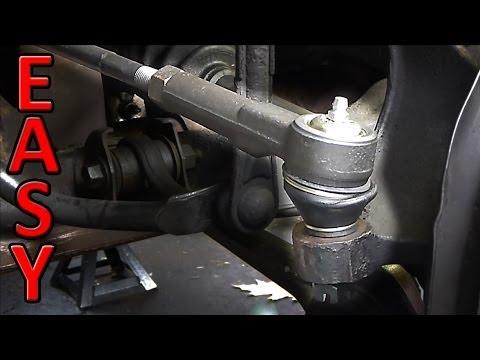







How to Replace the Outer Tie Rod End on a 2015-2019 Toyota Yaris
Step-by-step instructions with tools, parts, torque specs, and alignment tips
How to Replace the Outer Tie Rod End on a 2015-2019 Toyota Yaris
Step-by-step instructions with tools, parts, torque specs, and alignment tips for 2015, 2016, 2017, 2018, 2019


🔧 Tie Rod End - Replacement
The outer tie rod end connects the steering rack to the front wheel knuckle. Replacing it restores steering feel and removes looseness or clunks, but the toe angle will change, so a professional wheel alignment is required after the repair.
Difficulty Level: Intermediate | Estimated Time: 1.5-2.5 hours
⚠️ Safety & Precautions
- Work on one side at a time so you can compare the old and new parts.
- Support the car with jack stands; never rely on a floor jack alone.
- Keep hands clear of the steering knuckle while separating the tie rod end.
- Do not drive far after replacement until the alignment is done.
- No battery disconnect is required for this repair.
🔧 Required Tools
You'll need the following tools for this repair:
- Floor jack (rated 3-ton minimum)
- Jack stands (rated for vehicle weight)
- Wheel chocks
- Safety glasses
- Mechanic gloves
- 19mm socket
- 21mm socket
- 14mm wrench
- 19mm wrench
- Torque wrench
- Ball joint separator (specialty)
- Side cutters
- Paint marker
- Measuring tape
🔩 Required Parts
HowToo sells all the parts you need for this repair:
- Outer tie rod end - Qty: 1
- Self-locking nut - Qty: 1
- Cotter pin - Qty: 1
- Grease - Qty: 1
📋 Before You Begin
- Park on level ground and set the parking brake.
- Center the steering wheel before lifting the car.
- Loosen the front lug nuts slightly before lifting.
- Mark the old tie rod end position so the new one starts close to the same length.
🔨 Step-by-Step Instructions
Follow these steps in order:
Step 1: Lift and secure the front corner
- Use the floor jack to lift the front of your Yaris at the proper jacking point.
- Place jack stands under the vehicle and lower it onto them.
- Remove the wheel with the 19mm socket.
Step 2: Measure the old tie rod length
- Use a paint marker to mark the jam nut position on the inner tie rod.
- Use a measuring tape to measure from the jam nut to the center of the tie rod end stud.
- Keep the new part close to the old length.
Step 3: Remove the cotter pin and castle nut
- Use side cutters to remove the cotter pin from the tie rod end stud.
- Use the 19mm socket to remove the castle nut.
- If the stud spins, hold it with the 14mm wrench on the stud end if equipped, or keep upward pressure on the joint while loosening.
Step 4: Separate the tie rod end from the knuckle
- Use the ball joint separator (specialty) to pop the tie rod end taper out of the steering knuckle.
- Do not hammer directly on the stud threads.
- Protect the rubber boot from tearing.
Step 5: Remove the outer tie rod end
- Use the 19mm wrench to loosen the jam nut if it is still tight.
- Count the turns while removing the old tie rod end from the inner tie rod.
- Remove it completely and compare the new part length.
Step 6: Install the new tie rod end
- Thread the new tie rod end onto the inner tie rod the same number of turns you counted.
- Install the stud into the steering knuckle.
- Install the new self-locking nut and tighten it with the 19mm socket.
- Torque to 49 Nm (36 ft-lbs).
Step 7: Tighten the jam nut
- Hold the tie rod end in place and tighten the jam nut with the 19mm wrench.
- Torque to 55 Nm (41 ft-lbs).
- Install a new cotter pin if the design uses one, and bend the ends over with side cutters.
Step 8: Reinstall the wheel
- Put the wheel back on and hand-start the lug nuts.
- Lower the car with the floor jack.
- Tighten the lug nuts with the 19mm socket.
- Torque to 103 Nm (76 ft-lbs).
✅ After Repair
- Start the car and turn the steering wheel lock-to-lock to check for smooth movement.
- Look for any looseness, binding, or boot damage.
- Drive slowly to confirm the steering wheel is centered.
- Get a front-end alignment as soon as possible.
💰 DIY vs Shop Cost
Shop Cost: $180-$320 (parts + labor)
DIY Cost: $35-$90 (parts only)
You Save: $145-$230 by doing it yourself!
Shop labor rates vary but typically run $100-$150/hour. This repair takes a shop approximately 1.0-1.5 hours.
🎯 Ready to get started?
HowToo makes it easy: same-day/2-day shipping on every part, plus all the tools and specialty tools you need! Check out the parts and tools sections below to add everything to your cart.