









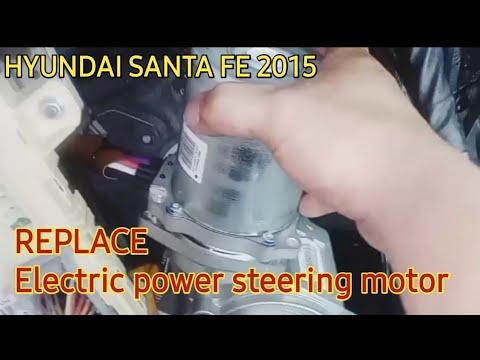





How to Replace the MDPS Electric Power Steering Motor on a 2016 Hyundai Sonata
Step-by-step EPS troubleshooting and repair with tools, parts list, safety tips, and steering angle sensor calibration
How to Replace the MDPS Electric Power Steering Motor on a 2016 Hyundai Sonata
Step-by-step EPS troubleshooting and repair with tools, parts list, safety tips, and steering angle sensor calibration


🔧 Sonata - Steering Assist (MDPS) Motor Replacement
Your Sonata uses an electric power steering system (Hyundai MDPS), so it does not have a hydraulic power steering pump or fluid to replace. If your steering is heavy or noisy, the common “pump-like” culprit is the MDPS motor/gear unit on the steering column (or, less commonly, the steering rack itself).
Assumption: You meant the electric steering assist motor/gear on the steering column (not a hydraulic pump).
Difficulty Level: Advanced | Estimated Time: 2.5-4.5 hours
⚠️ Safety & Precautions
- ⚠️ Disconnect the negative battery cable and wait 10 minutes before working near the steering column (airbag system capacitors must discharge).
- ⚠️ Keep the front wheels pointed straight and do not rotate the steering wheel with the steering shaft disconnected (protects the clock spring, the ribbon cable for the airbag).
- ⚠️ Support the steering column when unbolting it so it doesn’t drop and damage wiring.
- ⚠️ After replacement, the car may need steering angle sensor calibration and a DTC scan/clear.
- ⚠️ If any SRS/airbag connectors are disturbed, do not reconnect the battery until everything is fully reassembled.
🔧 Required Tools
You'll need the following tools for this repair:
- Safety glasses
- Mechanic gloves
- 10mm socket
- 12mm socket
- 14mm socket
- 3/8" ratchet
- 3/8" torque wrench
- Short extension set (3/8")
- Trim removal tool set
- Phillips screwdriver #2
- Flat screwdriver
- Needle-nose pliers
- Paint marker
- Scan tool capable of SAS calibration (specialty)
- Work light
🔩 Required Parts
HowToo sells all the parts you need for this repair:
- MDPS steering assist motor/gear assembly - Qty: 1
- Steering column coupler (flex coupler) - Qty: 1
- Steering column/motor mounting bolts (recommended replace if required by Hyundai) - Qty: 1 set
- Trim panel clips (assorted) - Qty: 1 set
📋 Before You Begin
- Park on level ground, set the parking brake, and center the steering wheel so the front wheels are straight.
- Write down radio presets if you want (battery will be disconnected).
- Use a 10mm socket to disconnect the negative battery terminal, then wait 10 minutes.
- Set your work area up so you can fully open the driver door and move the seat back.
🔨 Step-by-Step Instructions
Follow these steps in order:
Step 1: Remove the lower dash panels
- Use a trim removal tool to gently pry off the driver-side lower dash trim pieces.
- Use a Phillips screwdriver #2 and/or 10mm socket to remove any screws/bolts holding the knee bolster and lower cover.
- Disconnect any electrical connectors (OBD port illumination, trunk/fuel release switches, etc.) using a flat screwdriver to release tabs if needed.
Step 2: Remove the steering column shrouds
- Use a Phillips screwdriver #2 to remove the screws from the lower steering column cover.
- Separate the upper and lower covers carefully by hand.
Step 3: Mark the steering shaft relationship
- Use a paint marker to mark alignment between the intermediate shaft and the column input shaft.
- This helps keep the steering wheel centered.
Step 4: Disconnect the intermediate steering shaft
- Locate the steering coupler pinch bolt at the column connection.
- Use a 12mm or 14mm socket (varies by hardware) with a 3/8" ratchet to remove the pinch bolt.
- Slide the intermediate shaft off the column splines. If it’s stuck, use needle-nose pliers to help move the joint and a light wiggle by hand (do not hammer the shaft).
- Torque to OEM spec (refer to Hyundai service manual) when reinstalling the pinch bolt.
Step 5: Unplug MDPS electrical connectors
- Find the MDPS motor/gear unit on the steering column (aluminum housing with electrical connectors).
- Release connector locks and unplug using your fingers or a flat screwdriver very gently.
Step 6: Remove the MDPS motor/gear unit from the column
- Support the steering column with one hand (or a stable support) so it doesn’t drop.
- Use a 12mm socket with a 3/8" ratchet and short extension to remove the MDPS mounting bolts.
- Carefully separate the MDPS unit from the column.
- Torque to OEM spec (refer to Hyundai service manual) when reinstalling the mounting bolts.
Step 7: Replace the steering column coupler (recommended while you’re here)
- The coupler is the small flexible joint that can cause clunking/play; it’s common wear on Hyundai MDPS systems.
- Remove the old coupler by hand once the housing is open/accessible (some units use small fasteners—use the correct Phillips screwdriver #2 or 10mm socket as equipped).
- Install the new coupler fully seated in the same orientation.
Step 8: Install the replacement MDPS motor/gear unit
- Position the MDPS unit onto the column carefully so gears/splines engage without forcing.
- Install bolts by hand first to avoid cross-threading, then tighten using a 12mm socket.
- Torque to OEM spec (refer to Hyundai service manual).
- Reconnect all MDPS electrical connectors until the locks click.
Step 9: Reconnect the intermediate steering shaft
- Align your paint marks and slide the shaft back onto the splines.
- Install the pinch bolt using a 12mm or 14mm socket.
- Torque to OEM spec (refer to Hyundai service manual).
Step 10: Reassemble trim and reconnect the battery
- Reinstall steering column covers using a Phillips screwdriver #2.
- Reinstall lower dash panels using the 10mm socket and trim removal tool as needed.
- Reconnect the negative battery terminal using a 10mm socket.
✅ After Repair
- Turn the key ON and verify the EPS warning light goes out after the bulb check.
- Use a scan tool capable of SAS calibration (specialty) to perform Steering Angle Sensor calibration if the wheel is off-center or any codes return.
- Road test at low speed first: verify smooth assist, no clunks, and the wheel returns to center normally.
- Recheck for any warning lights and scan for stored codes after the test drive.
💰 DIY vs Shop Cost
Shop Cost: $900-$1,800 (parts + labor)
DIY Cost: $250-$900 (parts only)
You Save: $650-$900 by doing it yourself!
Shop labor rates vary but typically run $100-$150/hour. This repair takes a shop approximately 2.5-4.5 hours.
🎯 Ready to get started?
HowToo makes it easy: same-day/2-day shipping on every part, plus all the tools and specialty tools you need! Check out the parts and tools sections below to add everything to your cart.