









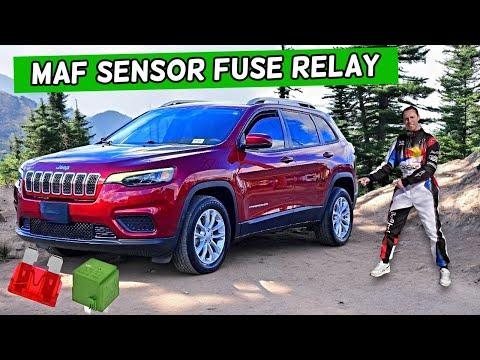






How to Replace the Mass Air Flow (MAF) Sensor on a 2014-2019 Jeep Grand Cherokee (Engine: V6 3.6L)
Step-by-step MAF sensor swap with required tools/parts, O-ring tips, and code-clearing checks
How to Replace the Mass Air Flow (MAF) Sensor on a 2014-2019 Jeep Grand Cherokee (Engine: V6 3.6L)
Step-by-step MAF sensor swap with required tools/parts, O-ring tips, and code-clearing checks for 2014, 2015, 2016, 2017, 2018, 2019


🔧 Grand Cherokee - Mass Air Flow (MAF) Sensor Replacement
On your Grand Cherokee diesel, the “MAF sensor” is usually mounted in the air intake duct right after the air filter box. Replacing it is typically a quick bolt-on job, but it’s important to avoid damaging the sensor element and to make sure the seal is seated to prevent air leaks.
Difficulty Level: Beginner | Estimated Time: 0.3-0.8 hours
⚠️ Safety & Precautions
- ⚠️ Work on a cool engine; intake parts can be hot.
- ⚠️ Turn ignition fully OFF and keep the key/fob away from the vehicle while unplugging sensors.
- ⚠️ Don’t touch the MAF sensing element; it’s fragile.
- ⚠️ If you disconnect the battery: use the correct procedure and don’t let the wrench touch body metal.
🔧 Required Tools
You'll need the following tools for this repair:
- 10mm socket
- 1/4" ratchet
- 3" extension
- Torx T20 bit
- Torx T25 bit
- Small flat trim tool
- Flashlight
- Nitrile gloves
- Safety glasses
- Scan tool capable of clearing codes (specialty)
🔩 Required Parts
HowToo sells all the parts you need for this repair:
- Mass air flow (MAF) sensor - Qty: 1
- MAF sensor O-ring/seal (if not included) - Qty: 1
- Dielectric grease (optional) - Qty: 1
📋 Before You Begin
- Park on level ground, shift to Park, and set the parking brake.
- Open the hood and locate the air filter box and the intake duct coming out of it.
- If you choose to disconnect the battery: use a 10mm socket to remove the negative terminal and isolate it so it can’t spring back.
- Quick check so we replace the right part: the MAF is typically on the air intake tube near the air box. If your sensor is instead on the intake manifold/charge pipe, that’s commonly a MAP/boost sensor (different part). The steps below include both paths.
🔨 Step-by-Step Instructions
Follow these steps in order:
Step 1: Find the sensor you’re replacing
- Use a flashlight to look at the plastic intake duct coming out of the air filter box.
- MAF clue: usually a small sensor inserted into the duct with a 4–5 wire electrical connector.
- MAP/boost clue: usually screwed into a charge pipe or intake manifold area, often with an O-ring.
Step 2: Unplug the electrical connector
- Put on nitrile gloves and safety glasses.
- Use a small flat trim tool to gently lift the connector lock (if equipped), then press the release tab and pull the connector straight off.
- Don’t pull on the wires.
Step 3A: Remove the MAF sensor (air duct-mounted)
- If the sensor is on the air duct: use a Torx T20 bit or Torx T25 bit with a 1/4" ratchet and 3" extension to remove the two retaining screws.
- Carefully wiggle and pull the sensor straight out of the duct.
- Inspect the O-ring/seal on the sensor: if it’s cut, flat, or missing, replace it.
Step 3B: Remove the MAP/boost sensor (if that’s what you actually have)
- If the sensor is on a charge pipe/manifold: use a 10mm socket with a 1/4" ratchet and 3" extension to remove the retaining bolt(s) (fastener style varies by location).
- Pull the sensor straight out; it will usually have an O-ring seal.
- Make sure the old O-ring comes out with the sensor (don’t leave it stuck in the bore).
Step 4: Install the new sensor
- Lightly seat the new O-ring/seal (use clean engine oil on your fingertip if needed).
- Insert the sensor straight in—no twisting force on the plastic body.
- Reinstall the fasteners using the same tool you removed them with (Torx T20/T25 bit or 10mm socket).
- Torque: if you have OEM torque info available for your exact fastener, use it. Otherwise tighten evenly until snug—do not overtighten the plastic housing.
Step 5: Reconnect the connector and recheck your work
- Apply a tiny amount of dielectric grease (optional) to the connector seal (dielectric grease helps keep moisture out).
- Push the connector on until it clicks, then re-engage the lock (if equipped).
- Use a flashlight to confirm the sensor is fully seated and no tools are left in the engine bay.
Step 6: Clear codes (recommended) and verify the fix
- If you had a check-engine light, use a scan tool capable of clearing codes (specialty) to clear the fault(s).
- Start the engine and let it idle for 1–2 minutes.
- Watch for rough idle, new warning lights, or intake hissing (air leak).
✅ After Repair
- Test drive 10–15 minutes with gentle throttle, then recheck for warning lights.
- If the light comes back, rescan with your scan tool capable of clearing codes (specialty) and note the exact code(s) (P0101/P0102 style codes often point to air leaks, wiring, or the wrong sensor type).
- Recheck that the air filter box is closed properly and the intake duct clamps are tight (unmetered air can mimic a bad MAF).
💰 DIY vs Shop Cost
Shop Cost: $180-$450 (parts + labor)
DIY Cost: $70-$250 (parts only)
You Save: $110-$200 by doing it yourself!
Shop labor rates vary but typically run $100-$150/hour. This repair takes a shop approximately 0.5-1.0 hours.
🎯 Ready to get started?
HowToo makes it easy: same-day/2-day shipping on every part, plus all the tools and specialty tools you need! Check out the parts and tools sections below to add everything to your cart.
Guide for Mass Air Flow Sensor replace for these Jeep vehicles
| Year Make Model | Sub Model | Engine | Body Style |
|---|---|---|---|
| 2019 Jeep Grand Cherokee | - | V6 3.0L | - |
| 2018 Jeep Grand Cherokee | - | V6 3.0L | - |
| 2017 Jeep Grand Cherokee | - | V6 3.0L | - |
| 2016 Jeep Grand Cherokee | - | V6 3.0L | - |
| 2015 Jeep Grand Cherokee | - | V6 3.0L | - |
| 2014 Jeep Grand Cherokee | - | V6 3.0L | - |