









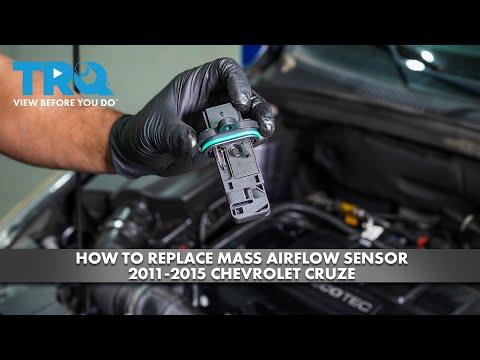







How to Replace the Mass Air Flow (MAF) Sensor on a 2012-2019 Chevrolet Cruze (Engine: Inline 4 1.4L)
Step-by-step DIY instructions with tools, parts list, safety tips, and torque spec (18 in-lbs / 2 Nm)
How to Replace the Mass Air Flow (MAF) Sensor on a 2012-2019 Chevrolet Cruze (Engine: Inline 4 1.4L)
Step-by-step DIY instructions with tools, parts list, safety tips, and torque spec (18 in-lbs / 2 Nm) for 2012, 2013, 2014, 2015


🔧 Cruze - Mass Air Flow (MAF) Sensor Replacement
The MAF sensor measures how much air is entering your Cruze’s engine so the computer can add the right amount of fuel. If it’s failed or contaminated, you can get rough idle, hesitation, poor fuel economy, or a check-engine light.
Difficulty Level: Beginner | Estimated Time: 0.5-1.0 hours
⚠️ Safety & Precautions
- ⚠️ Let the engine cool before working near the turbo/air pipes.
- ⚠️ Do not touch the MAF sensing element (it’s very delicate).
- ⚠️ If you disconnect the battery, you may lose radio presets.
- ⚠️ Keep dirt out of the intake tube (stuff a clean rag in the opening).
🔧 Required Tools
You'll need the following tools for this repair:
- Safety glasses
- Nitrile gloves
- 10mm socket
- 1/4" ratchet
- 6" extension (1/4" drive)
- Torx T20 bit
- Small flathead screwdriver
- Flashlight
- OBD2 scan tool
🔩 Required Parts
HowToo sells all the parts you need for this repair:
- Mass air flow (MAF) sensor - Qty: 1
- MAF sensor O-ring/seal (if not included) - Qty: 1
📋 Before You Begin
- Park on level ground and shut the engine off.
- Open the hood and remove any loose jewelry or clothing strings.
- Assumption: Your Cruze uses a Torx T20 fastener on the MAF sensor (common on this setup). If your screw head is different, match the Torx size that fits snugly.
- If you choose to disconnect the battery: use a 10mm socket to remove the negative terminal and isolate it so it can’t spring back.
🔨 Step-by-Step Instructions
Follow these steps in order:
Step 1: Locate the MAF sensor
- Use a flashlight and find the air intake tube coming out of the air filter box.
- Look for a small sensor housing in that tube with an electrical connector plugged into it.
Step 2: Unplug the MAF electrical connector
- Press the connector lock tab by hand.
- If it’s stuck, gently help the tab with a small flathead screwdriver (don’t break the tab).
- Pull the connector straight off the sensor.
Step 3: Remove the MAF sensor fasteners
- Use a Torx T20 bit with a 1/4" ratchet and 6" extension (1/4" drive) to remove the screws holding the sensor to the intake tube.
- Set the screws somewhere safe so they don’t fall into the engine bay.
Step 4: Remove the MAF sensor from the intake tube
- Carefully wiggle and pull the MAF sensor straight out.
- Immediately place a clean rag in the opening to keep dirt out.
- Tip: Pull straight—don’t twist the element.
Step 5: Install the new MAF sensor
- Compare the old and new sensor to be sure the shape and connector match.
- If there is an O-ring/seal, make sure it is seated and not pinched.
- Slide the new sensor into place gently until fully seated.
- Install the screws by hand first (this prevents cross-threading).
- Use the Torx T20 bit to snug them evenly. Torque to 2 Nm (18 in-lbs).
- Tip: “Snug” is enough—small screws strip easily.
Step 6: Reconnect the electrical connector
- Push the connector on until it clicks/locks.
- Give it a gentle tug to confirm it’s fully latched.
Step 7: Reconnect the battery (if disconnected)
- Reinstall the negative battery terminal using a 10mm socket.
- Make it snug so it won’t rotate by hand.
✅ After Repair
- Start the engine and let it idle for 2-3 minutes. It may idle slightly differently at first while it relearns.
- Use an OBD2 scan tool to clear any MAF-related diagnostic trouble codes (DTCs).
- Take a short test drive (10-15 minutes) with gentle acceleration and check for the check-engine light.
- Recheck that the connector is fully seated and that no tools/rags were left in the intake area.
💰 DIY vs Shop Cost
Shop Cost: $180-$350 (parts + labor)
DIY Cost: $60-$180 (parts only)
You Save: $120-$170 by doing it yourself!
Shop labor rates vary but typically run $100-$150/hour. This repair takes a shop approximately 0.5-1.0 hours.
🎯 Ready to get started?
HowToo makes it easy: same-day/2-day shipping on every part, plus all the tools and specialty tools you need! Check out the parts and tools sections below to add everything to your cart.