









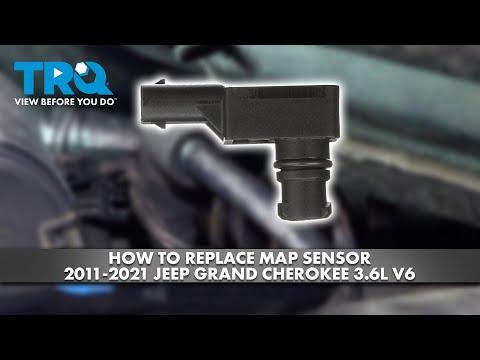





How to Replace the MAP Sensor (No MAF) on a 2011-2022 Jeep Grand Cherokee 3.6L (Engine: V6 3.6L)
Step-by-step instructions with tools, parts, IAT sensor tips, torque specs, and code-clearing guidance
How to Replace the MAP Sensor (No MAF) on a 2011-2022 Jeep Grand Cherokee 3.6L (Engine: V6 3.6L)
Step-by-step instructions with tools, parts, IAT sensor tips, torque specs, and code-clearing guidance for 2011, 2012, 2013, 2014, 2015, 2016, 2017, 2018, 2019, 2020, 2021, 2022


🔧 Grand Cherokee - Air Metering Sensor Replacement (MAF vs MAP/IAT)
Your Grand Cherokee’s 3.6L does not use a traditional Mass Air Flow (MAF) sensor. It uses a MAP sensor (Manifold Absolute Pressure) on the intake manifold (and an IAT sensor—Intake Air Temperature—depending on build), which together do the “air measuring” job.
Difficulty Level: Beginner | Estimated Time: 0.5-1.0 hours
⚠️ Safety & Precautions
- 🛑 Work on a cool engine; the intake area can be hot.
- 🧯 Keep the key off and away from the vehicle so nothing powers up.
- 🔌 It’s safest to disconnect the negative battery cable to avoid accidental shorts and to reduce the chance of setting new fault codes.
- 🧼 If you clean sensors, use only sensor-safe cleaner; do not touch the sensing element.
🔧 Required Tools
You'll need the following tools for this repair:
- 10mm socket
- 1/4" drive ratchet
- 1/4" drive extension (3"-6")
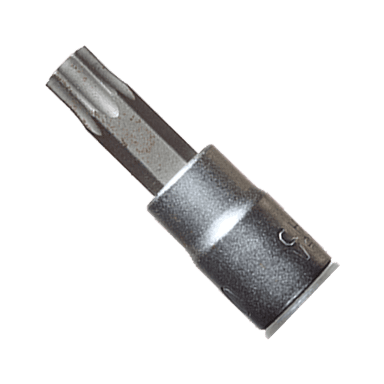
- Torx T20 bit socket
- Torx T25 bit socket
- Small flathead screwdriver
- Pick tool (small hook pick)
- Torque wrench (inch-pound)
- OBD2 scan tool
- Nitrile gloves
- Safety glasses
- Shop light
🔩 Required Parts
HowToo sells all the parts you need for this repair:
- MAP sensor - Qty: 1
- MAP sensor O-ring (seal) - Qty: 1
- IAT sensor - Qty: 1
- IAT sensor O-ring (seal) - Qty: 1
- Sensor-safe electronics cleaner - Qty: 1
📋 Before You Begin
- Park on level ground, shift to Park, and set the parking brake.
- Open the hood and let the engine cool for 20-30 minutes.
- Disconnect the negative battery terminal: use a 10mm socket, loosen the clamp, and move the cable aside so it can’t spring back.
- If you have a check-engine light, plug in an OBD2 scan tool and write down the codes before you start.
🔨 Step-by-Step Instructions
Follow these steps in order:
Step 1: Identify the correct “MAF-related” sensor
- Use a shop light and look for the MAP sensor on the top/rear area of the intake manifold (it plugs in with a small electrical connector and usually has one mounting screw).
- Also check the air intake/airbox area for an IAT sensor (a small probe-style sensor in the intake tube or airbox lid, depending on configuration).
- If unsure, replace MAP first.
Step 2: Remove the engine cover (if equipped)
- Use your hands (and a shop light) to locate the corners of the cover.
- Pull straight up firmly to release the rubber grommets, then set the cover aside.
Step 3: Unplug the MAP sensor connector
- Locate the MAP sensor connector.
- Use a small flathead screwdriver to gently help lift the lock tab if it’s stubborn (don’t break it).
- Pull the connector straight off the sensor.
Step 4: Remove the MAP sensor
- Use a Torx T20 bit socket or Torx T25 bit socket (whichever fits) with a 1/4" drive ratchet and extension to remove the MAP mounting screw.
- Twist the sensor gently and pull it straight out.
- If the O-ring sticks, use a pick tool (small hook pick) carefully to remove the old O-ring.
Step 5: Install the new MAP sensor and seal
- Lightly wipe the mounting hole with a clean rag (no dirt should fall into the intake).
- Install the new MAP sensor O-ring (seal) onto the new sensor.
- Push the sensor straight in until it seats fully.
- Install the mounting screw by hand first, then tighten with a Torx T20/T25 bit socket and 1/4" drive ratchet.
- Torque to 35 in-lbs (4 N·m) using a torque wrench (inch-pound).
Step 6: Reconnect the MAP sensor connector
- Push the connector on until it clicks/locks.
- Gently tug to confirm it’s fully seated.
Step 7 (If replacing IAT): Remove and replace the IAT sensor
- Locate the IAT sensor in the intake tube/airbox area using a shop light.
- Unplug the connector (use a small flathead screwdriver only if needed to release the lock).
- If it’s held by a screw, remove it using a Torx T20 bit socket and 1/4" drive ratchet, then pull the sensor out.
- If it’s a twist-lock style, rotate it gently by hand and pull it out.
- Install the new IAT sensor O-ring (seal) and push the sensor in until seated, then reinstall the screw if equipped.
- Torque to 35 in-lbs (4 N·m) (only if it uses a screw) using a torque wrench (inch-pound).
- Reconnect the electrical connector until it clicks.
Step 8: Reinstall the engine cover
- Align the cover over the mounting points.
- Press straight down at the corners until it snaps into the grommets.
Step 9: Reconnect the battery
- Reinstall the negative battery cable and tighten with a 10mm socket.
- Make sure the terminal is snug and doesn’t rotate by hand.
✅ After Repair
- Use an OBD2 scan tool to clear any stored codes.
- Start the engine and let it idle for 2-3 minutes; confirm the idle is steady.
- Test drive 10-15 minutes with mixed city speeds; recheck for a check-engine light.
- If codes return (like P0106/P0107/P0108), inspect the wiring connector pins and look for intake vacuum leaks.
💰 DIY vs Shop Cost
Shop Cost: $180-$400 (parts + labor)
DIY Cost: $40-$180 (parts only)
You Save: $140-$220 by doing it yourself!
Shop labor rates vary but typically run $100-$150/hour. This repair takes a shop approximately 0.5-1.0 hours.
🎯 Ready to get started?
HowToo makes it easy: same-day/2-day shipping on every part, plus all the tools and specialty tools you need! Check out the parts and tools sections below to add everything to your cart.
Guide for Manifold Absolute Pressure Sensor replace for these Jeep vehicles
| Year Make Model | Sub Model | Engine | Body Style |
|---|---|---|---|
| 2022 Jeep Grand Cherokee | - | V6 3.6L | - |
| 2021 Jeep Grand Cherokee | - | V6 3.6L | - |
| 2020 Jeep Grand Cherokee | - | V6 3.6L | - |
| 2019 Jeep Grand Cherokee | - | V6 3.6L | - |
| 2018 Jeep Grand Cherokee | - | V6 3.6L | - |
| 2017 Jeep Grand Cherokee | - | V6 3.6L | - |
| 2016 Jeep Grand Cherokee | - | V6 3.6L | - |
| 2015 Jeep Grand Cherokee | - | V6 3.6L | - |
| 2014 Jeep Grand Cherokee | - | V6 3.6L | - |
| 2013 Jeep Grand Cherokee | - | V6 3.6L | - |
| 2012 Jeep Grand Cherokee | - | V6 3.6L | - |
| 2011 Jeep Grand Cherokee | - | V6 3.6L | - |