














How to Replace the MAF Sensor on a 2005-2023 Ford Escape – Step-by-Step (Trim: SE | Engine: Inline 3 1.5L)
Detailed DIY instructions with tools, parts list, safety tips, and install steps to change the mass air flow sensor on your 2020 Ford Escape
How to Replace the MAF Sensor on a 2005-2023 Ford Escape – Step-by-Step (Trim: SE | Engine: Inline 3 1.5L)
Detailed DIY instructions with tools, parts list, safety tips, and install steps to change the mass air flow sensor on your 2020 Ford Escape for 2005, 2006, 2007, 2008


🔧 Escape - Mass Air Flow (MAF) Sensor Replacement
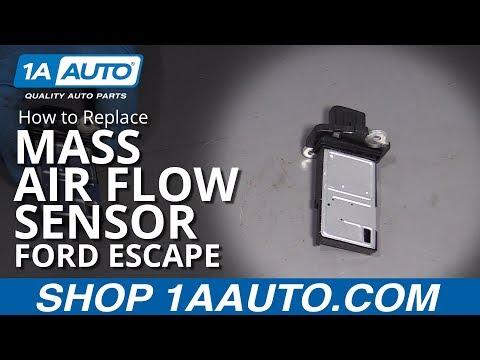
You’ll be removing the old mass air flow (MAF) sensor from the intake duct and installing a new one on your Escape. The MAF sensor measures how much air the engine is breathing so the computer can control fuel correctly.
Difficulty Level: Beginner | Estimated Time: 0.5–1 hour
⚠️ Safety & Precautions
- 🛑 Work with the engine off and completely cool to avoid burns.
- 🛑 Keep fingers, tools, and loose clothing away from the radiator fan; it can start automatically.
- 🛑 Disconnect the negative battery terminal to avoid accidental shorts and to help reset fuel trims.
- 🛑 Do not touch the sensing element on the MAF sensor; oil or dirt will ruin it.
- 🛑 Only use proper electrical connectors; do not probe the connector with sharp objects.
🔧 Required Tools
You'll need the following tools for this repair:
- 🧰 8mm socket
- 🧰 10mm socket
- 🧰 1/4" drive ratchet
- 🧰 1/4" drive 3" extension
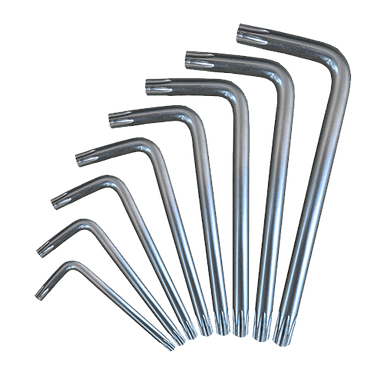
- 🧰 T20 Torx screwdriver
- 🧰 Flathead screwdriver (medium)
- 🧰 Needle-nose pliers
- 🧰 Shop towels
- 🧰 Mechanic gloves
- 🧰 Safety glasses
🔩 Required Parts
HowToo sells all the parts you need for this repair:
- 🔩 Mass air flow (MAF) sensor - Qty: 1
- 🔩 MAF sensor O-ring or seal - Qty: 1 (if not included with sensor)
- 🔩 MAF sensor mounting screws - Qty: 2 (optional, replace if rusty or damaged)
- 🔩 Dielectric grease (for electrical connectors) - Qty: small tube
📋 Before You Begin
- 🧭 Park the Escape on level ground, shift to Park, and set the parking brake.
- 🔌 Turn off the engine and remove the key or turn off the start button; wait at least 2–3 minutes for modules to go to sleep.
- 🔋 Disconnect the negative battery terminal using a 10mm socket and move the cable end so it cannot spring back to the battery post.
- 🧼 Clean the area around the air intake duct and MAF sensor with a dry cloth so dirt doesn’t fall into the intake when you remove the sensor.
🔨 Step-by-Step Instructions
Follow these steps in order:
Step 1: Locate the MAF sensor
- Open the hood using the interior hood release, then the hood latch under the hood front edge.
- The MAF sensor on your Escape is mounted in the air intake tube between the air filter box and the engine.
- Look for a small plastic sensor housing sticking into the intake tube with a 4–5 wire electrical connector plugged into it.
Step 2: Disconnect the MAF electrical connector
- Put on your mechanic gloves and safety glasses.
- Press down the locking tab on the MAF connector with your thumb or a flathead screwdriver.
- While holding the tab down, gently pull the connector straight back to unplug it.
- If it’s stuck, use needle-nose pliers carefully on the connector body, not on the wires. Never pull on wires.
Step 3: Remove the MAF sensor mounting screws
- Use a T20 Torx screwdriver to loosen and remove the two screws that hold the MAF sensor to the intake tube.
- Keep the screws in a safe place so they don’t fall into the engine bay.
- Ford does not publish a specific torque spec for these screws; remember they are small and should only be snug on reinstallation.
Step 4: Remove the old MAF sensor
- Gently twist the MAF sensor body back and forth while pulling it straight out of the intake tube by hand.
- If it feels stuck, carefully wiggle it more; do not pry with a screwdriver on the sensor body to avoid cracking the plastic.
- Look at the opening in the intake tube and make sure the old O-ring or seal comes out with the sensor.
Step 5: Inspect and clean the mounting area
- Use a shop towel to gently wipe the sealing surface of the intake tube where the MAF sensor seats.
- Do not let dirt or pieces of towel fall into the tube; block the opening loosely with a clean towel if needed while cleaning around it.
- Make sure there are no cracks or damage on the intake tube that would let in unmetered air.
Step 6: Prepare the new MAF sensor
- Compare the new MAF sensor to the old one; the connector position, mounting tab shape, and O-ring location should match.
- If the new sensor came with an O-ring, make sure it is seated evenly in its groove.
- If the new sensor did not include an O-ring, transfer the old O-ring if it is in good condition (no cracks, flat spots, or tears). Replace if in doubt. Good seal prevents false air readings.
- Apply a very thin film of dielectric grease to the O-ring if desired; this helps sealing and makes future removal easier, but do not get grease on the sensing element.
Step 7: Install the new MAF sensor
- Align the new MAF sensor so its mounting holes line up with the holes in the intake tube and the sensing element points into the airflow path (same orientation as the old one).
- Gently push the sensor into the tube until the O-ring seats fully; you should feel it “bottom out” evenly.
- Install the two mounting screws by hand to avoid cross-threading, then snug them using the T20 Torx screwdriver.
- Because Ford does not specify a torque here, tighten each screw until it stops, then add just a small additional turn. Do not overtighten; plastic can crack.
Step 8: Reconnect the electrical connector
- If you are using dielectric grease, put a tiny dab at the edge of the connector seal (not on the terminals) with your finger.
- Push the connector straight onto the MAF sensor until you hear or feel a click.
- Gently tug the connector to confirm it is locked in place.
Step 9: Reconnect the battery
- At the battery, place the negative cable back on the negative post.
- Use a 10mm socket and ratchet to tighten the clamp until it is snug and does not move if you twist it by hand.
- Do not overtighten; just firm enough to prevent movement.
Step 10: First start and basic relearn
- Turn the ignition to ON (engine off) for about 10–15 seconds to allow modules to wake up and read the new sensor.
- Start the engine and let it idle in Park for about 5–10 minutes with all accessories off (no A/C, lights, or rear defogger). This helps the engine computer adapt to the new sensor readings.
- After a few minutes, gently blip the throttle once or twice to check that the engine responds smoothly.
✅ After Repair
- 🧪 With the engine idling, listen for smooth idle; there should be no stalling, surging, or hunting.
- 🚗 Take a short test drive with light to moderate acceleration; watch for smooth power and no hesitation.
- 💡 If the check engine light was on before, you can clear it with a scan tool, or it may go out on its own after several drive cycles if the problem is fixed.
- 🔍 After the test drive, open the hood and visually inspect the MAF mounting area and intake tube to ensure everything is still secure and there are no loose hoses or connectors.
💰 DIY vs Shop Cost
Shop Cost: $220–$380 (parts + labor)
DIY Cost: $80–$160 (parts only)
You Save: $140–$220 by doing it yourself!
Shop labor rates vary but typically run $100–$150/hour. This repair takes a shop approximately 0.5–1.0 hours.
🎯 Ready to get started?
HowToo makes it easy: same-day/2-day shipping on every part, plus all the tools and specialty tools you need! Check out the parts and tools sections above to add everything to your cart.
Guide for Mass Air Flow Sensor replace for these Ford vehicles
| Year Make Model | Sub Model | Engine | Body Style |
|---|---|---|---|
| 2023 Ford Escape | Platinum | Inline 4 2.0L | - |
| 2023 Ford Escape | ST-Line Elite | Inline 4 2.0L | - |
| 2023 Ford Escape | ST-Line Select | Inline 4 2.0L | - |
| 2022 Ford Escape | S | Inline 3 1.5L | - |
| 2022 Ford Escape | SE | Inline 3 1.5L | - |
| 2022 Ford Escape | SEL | Inline 3 1.5L | - |
| 2022 Ford Escape | SEL | Inline 4 2.0L | - |
| 2022 Ford Escape | Titanium | Inline 4 2.0L | - |
| 2021 Ford Escape | S | Inline 3 1.5L | - |
| 2021 Ford Escape | SE | Inline 3 1.5L | - |
| 2021 Ford Escape | SEL | Inline 3 1.5L | - |
| 2021 Ford Escape | SEL | Inline 4 2.0L | - |
| 2021 Ford Escape | Titanium | Inline 4 2.0L | - |
| 2020 Ford Escape | S | Inline 3 1.5L | - |
| 2020 Ford Escape | SE | Inline 3 1.5L | - |
| 2020 Ford Escape | SEL | Inline 3 1.5L | - |
| 2020 Ford Escape | SEL | Inline 4 2.0L | - |
| 2020 Ford Escape | Titanium | Inline 4 2.0L | - |
| 2012 Ford Escape | Limited | V6 3.0L | - |
| 2012 Ford Escape | XLT | V6 3.0L | - |
| 2012 Ford Escape | Hybrid | Inline 4 2.5L | - |
| 2012 Ford Escape | Limited | Inline 4 2.5L | - |
| 2012 Ford Escape | Limited Hybrid | Inline 4 2.5L | - |
| 2012 Ford Escape | XLS | Inline 4 2.5L | - |
| 2012 Ford Escape | XLT | Inline 4 2.5L | - |
| 2011 Ford Escape | Limited | V6 3.0L | - |
| 2011 Ford Escape | XLT | V6 3.0L | - |
| 2011 Ford Escape | Hybrid | Inline 4 2.5L | - |
| 2011 Ford Escape | Limited | Inline 4 2.5L | - |
| 2011 Ford Escape | Limited Hybrid | Inline 4 2.5L | - |
| 2011 Ford Escape | XLS | Inline 4 2.5L | - |
| 2011 Ford Escape | XLT | Inline 4 2.5L | - |
| 2010 Ford Escape | Limited | V6 3.0L | - |
| 2010 Ford Escape | XLT | V6 3.0L | - |
| 2010 Ford Escape | Hybrid | Inline 4 2.5L | - |
| 2010 Ford Escape | Limited | Inline 4 2.5L | - |
| 2010 Ford Escape | Limited Hybrid | Inline 4 2.5L | - |
| 2010 Ford Escape | XLS | Inline 4 2.5L | - |
| 2010 Ford Escape | XLT | Inline 4 2.5L | - |
| 2009 Ford Escape | Limited | V6 3.0L | - |
| 2009 Ford Escape | XLT | V6 3.0L | - |
| 2009 Ford Escape | Hybrid | Inline 4 2.5L | - |
| 2009 Ford Escape | Limited | Inline 4 2.5L | - |
| 2009 Ford Escape | Limited Hybrid | Inline 4 2.5L | - |
| 2009 Ford Escape | XLS | Inline 4 2.5L | - |
| 2009 Ford Escape | XLT | Inline 4 2.5L | - |
| 2008 Ford Escape | Hybrid | Inline 4 2.3L | - |
| 2008 Ford Escape | Limited | V6 3.0L | - |
| 2008 Ford Escape | XLS | Inline 4 2.3L | - |
| 2008 Ford Escape | XLT | Inline 4 2.3L | - |
| 2008 Ford Escape | XLT | V6 3.0L | - |
| 2007 Ford Escape | Hybrid | Inline 4 2.3L | - |
| 2007 Ford Escape | Limited | V6 3.0L | - |
| 2007 Ford Escape | XLS | Inline 4 2.3L | - |
| 2007 Ford Escape | XLT | Inline 4 2.3L | - |
| 2007 Ford Escape | XLT | V6 3.0L | - |
| 2006 Ford Escape | Hybrid | Inline 4 2.3L | - |
| 2006 Ford Escape | Limited | V6 3.0L | - |
| 2006 Ford Escape | XLS | Inline 4 2.3L | - |
| 2006 Ford Escape | XLT | Inline 4 2.3L | - |
| 2006 Ford Escape | XLT | V6 3.0L | - |
| 2005 Ford Escape | Hybrid | Inline 4 2.3L | - |
| 2005 Ford Escape | Limited | V6 3.0L | - |
| 2005 Ford Escape | XLS | Inline 4 2.3L | - |
| 2005 Ford Escape | XLS | V6 3.0L | - |
| 2005 Ford Escape | XLT | Inline 4 2.3L | - |
| 2005 Ford Escape | XLT | V6 3.0L | - |
| 2005 Ford Escape | XLT No Boundaries | Inline 4 2.3L | - |
| 2005 Ford Escape | XLT No Boundaries | V6 3.0L | - |