









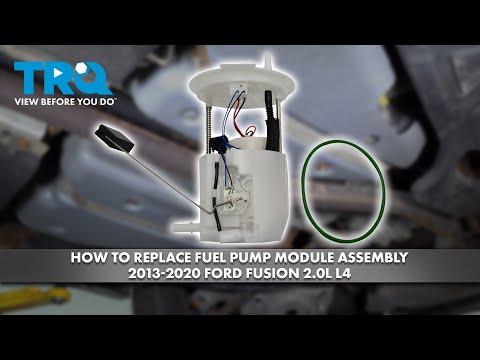






How to Replace the In-Tank Fuel Pump on a 2014 Ford Fusion (Rear Seat Access)
Step-by-step DIY instructions with tools, parts list, safety tips, fuel pressure relief, and priming steps
How to Replace the In-Tank Fuel Pump on a 2014 Ford Fusion (Rear Seat Access)
Step-by-step DIY instructions with tools, parts list, safety tips, fuel pressure relief, and priming steps


🔧 Fusion Energi - Fuel Pump Replacement
The fuel pump on your Fusion Energi is an electric pump inside the fuel tank. Replacing it usually means accessing the pump module from inside the cabin (under the rear seat), swapping the module and seal, then re-priming the fuel system so it starts normally.
Difficulty Level: Intermediate | Estimated Time: 2-4 hours
Assumption: Your Fusion Energi has an under-seat fuel pump access cover (common on this platform).
⚠️ Safety & Precautions
- 🔥 Work outside or in a very well-ventilated area; gasoline vapors ignite easily.
- 🧯 Keep a Class B fire extinguisher nearby.
- 🚫 No smoking, no heat guns, no trouble lights with hot bulbs.
- 🔋 Disconnect the 12V battery negative cable; this prevents accidental pump activation and sparks.
- ⚡ Avoid orange high-voltage cables/components; do not unplug any HV connectors for this job.
- 🧤 Wear fuel-resistant gloves and safety glasses; fuel can spray when lines are opened.
🔧 Required Tools
You'll need the following tools for this repair:
- Safety glasses
- Fuel-resistant nitrile gloves
- Class B fire extinguisher
- 10mm socket
- 8mm socket
- Ratchet (3/8")
- Torque wrench (10–80 Nm range)
- Trim removal tool set
- Flat-blade screwdriver
- Fuel line disconnect tool set (spring-lock) (specialty)
- Brass punch (specialty)
- Dead-blow hammer
- Shop towels
- Fuel-safe drain pan
- Vacuum cleaner
- Paint marker
🔩 Required Parts
HowToo sells all the parts you need for this repair:
- In-tank fuel pump module assembly - Qty: 1
- Fuel pump module seal O-ring - Qty: 1
- Fuel pump lock ring - Qty: 1
- Fuel line retaining clips - Qty: 1 set
📋 Before You Begin
- Park on level ground, shift to Park, and set the parking brake.
- Open the windows or doors for ventilation.
- Relieve fuel pressure before disconnecting any fuel line.
- Disconnect the 12V battery negative cable using a 10mm socket.
🔨 Step-by-Step Instructions
Follow these steps in order:
Step 1: Relieve fuel system pressure
- Open the hood and remove the engine appearance cover (pull upward if equipped).
- If your fuel rail has a Schrader valve (looks like a tire valve), remove the cap and place shop towels around it.
- Carefully press the valve core using a flat-blade screwdriver to release pressure into the towels.
- Tip: Do this with a cool engine.
Step 2: Disconnect the 12V battery
- In the trunk area (12V battery location on Energi), loosen the negative terminal using a 10mm socket.
- Move the cable aside so it cannot spring back onto the post.
Step 3: Remove the rear seat bottom cushion
- Use a trim removal tool set to release the front edge clips (push tool in, then lift).
- Lift the seat bottom up and out of the car.
Step 4: Remove the fuel pump access cover
- Find the round/oval service cover on the floor under the rear seat area.
- Remove any fasteners using an 8mm socket (or carefully pry up butyl seal areas with a flat-blade screwdriver if sealed).
- Vacuum dirt around the cover using a vacuum cleaner so debris can’t fall into the tank.
Step 5: Clean and mark the pump module orientation
- Wipe the top of the pump area with shop towels.
- Use a paint marker to mark the module position relative to the tank (helps reinstall correctly).
Step 6: Disconnect the electrical connector
- Press the lock tab and unplug the pump connector by hand.
- If it’s stubborn, use a trim removal tool set gently—don’t break the tab.
Step 7: Disconnect the fuel line(s)
- Place a fuel-safe drain pan and shop towels under the connection.
- Use the fuel line disconnect tool set (spring-lock) (specialty) to release the line, then pull it straight off.
- Tip: Expect a small fuel spill.
Step 8: Remove the fuel pump lock ring
- Use a brass punch (specialty) and dead-blow hammer to tap the lock ring counterclockwise until it releases.
- Lift off the lock ring and set it aside (replace it if your new parts include one).
Step 9: Remove the pump module
- Carefully lift the module straight up, tilting slightly as needed to clear the float arm.
- Let fuel drain into the tank for a few seconds, then move the module to the fuel-safe drain pan.
- Remove the old seal O-ring from the tank opening using a flat-blade screwdriver carefully.
Step 10: Install the new seal and pump module
- Install the new fuel pump module seal O-ring into the tank groove by hand.
- Lower the new module into the tank, keeping the float arm from snagging.
- Align the module to your paint marks.
Step 11: Install and tighten the lock ring
- Install the lock ring and tap it clockwise using the brass punch (specialty) and dead-blow hammer until fully seated.
- If you have a lock-ring tightening tool, use it with a torque wrench (10–80 Nm range).
- Torque to 55 Nm (41 ft-lbs) if using a torque-capable lock-ring tool.
Step 12: Reconnect the fuel line and electrical connector
- Push the fuel line on until it clicks; verify it is fully locked by gently tugging by hand.
- Reconnect the electrical connector until it clicks.
Step 13: Reinstall the access cover and rear seat
- Reinstall the access cover and tighten fasteners with an 8mm socket.
- Reinstall the rear seat bottom and press down firmly to engage the clips.
Step 14: Reconnect the 12V battery and prime the fuel system
- Reconnect the 12V battery negative cable using a 10mm socket.
- Cycle ignition ON (not start) for 5 seconds, then OFF for 5 seconds; repeat 3–4 times to prime the system.
- Start the vehicle and let it idle while you check for leaks.
✅ After Repair
- Inspect the pump top and fuel line connection for any seepage with a flashlight (no open flame).
- Drive a short loop, then recheck for fuel smell or dampness under the rear seat area.
- If a check engine light appears, scan the system; loose connectors and incomplete priming are common causes.
💰 DIY vs Shop Cost
Shop Cost: $650-$1,200 (parts + labor)
DIY Cost: $200-$600 (parts only)
You Save: $450-$600 by doing it yourself!
Shop labor rates vary but typically run $100-$150/hour. This repair takes a shop approximately 2-4 hours.
🎯 Ready to get started?
HowToo makes it easy: same-day/2-day shipping on every part, plus all the tools and specialty tools you need! Check out the parts and tools sections below to add everything to your cart.