









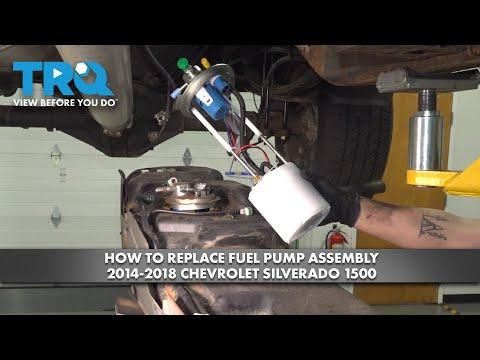







How to Replace the In-Tank Fuel Pump Module on a 2014 Chevrolet Silverado 1500
Step-by-step bed-lift or tank-drop methods with required tools, parts list, safety tips, and priming checks
How to Replace the In-Tank Fuel Pump Module on a 2014 Chevrolet Silverado 1500
Step-by-step bed-lift or tank-drop methods with required tools, parts list, safety tips, and priming checks


🔧 Fuel Pump Module - Replacement
Your Silverado’s fuel pump is part of an in-tank fuel pump module. Replacing it means safely relieving fuel pressure, gaining access to the top of the fuel tank (either by lifting the bed or lowering the tank), swapping the module, then checking carefully for leaks.
Difficulty Level: Advanced | Estimated Time: 3-6 hours
⚠️ Safety & Precautions
- ⛽ Work outside or in a very well-ventilated area; fuel vapors are extremely flammable.
- 🔥 No smoking, no hot lights, no grinders, no sparks; keep a fire extinguisher rated for fuel fires nearby.
- 🧤 Wear safety glasses and fuel-resistant gloves; gasoline will irritate skin/eyes.
- 🛑 Relieve fuel pressure before disconnecting any fuel lines to prevent a high-pressure spray.
- 🔋 Disconnect the negative battery cable before opening the fuel system.
- 🧱 Never rely on a jack alone; support with jack stands on solid ground.
🔧 Required Tools
You'll need the following tools for this repair:
- Safety glasses
- Fuel-resistant nitrile gloves
- Fire extinguisher (Class B)
- Floor jack (rated 3-ton minimum)
- Jack stands (rated 3-ton minimum)
- Wheel chocks
- Socket set (8mm, 10mm, 13mm, 15mm, 18mm)
- Ratchet
- Breaker bar (1/2-inch drive)
- Torque wrench (10–200 ft-lbs range)
- Flat-blade screwdriver
- Pliers
- Fuel line quick-disconnect tool set (specialty)
- Brass punch set (specialty)
- Small hammer
- Shop rags
- Drain pan (at least 3-gallon)
- Hand siphon pump (fuel-safe)
- Work light (LED, non-incandescent)
- Scan tool (OBD-II) with fuel pressure data (recommended)
🔩 Required Parts
HowToo sells all the parts you need for this repair:
- Fuel pump module assembly - Qty: 1
- Fuel pump module tank seal O-ring - Qty: 1
- Fuel line retaining clips (assorted) - Qty: 1
📋 Before You Begin
- Park on level ground, set the parking brake, and place wheel chocks at the front wheels.
- If the tank is more than 1/4 full, use a fuel-safe hand siphon pump to remove fuel into approved containers. Lighter tank = much easier job.
- Plan your access method:
- Method A (recommended): Lift the bed (less wrestling with the tank).
- Method B: Lower the fuel tank (common DIY method if bed bolts are rusted).
- Quick term: a quick-disconnect fuel fitting is a snap-on connector that releases using a small disconnect tool.
🔨 Step-by-Step Instructions
Follow these steps in order:
Step 1: Relieve fuel pressure
- Open the hood and remove the engine cover if equipped (pull up by hand).
- Remove the fuel pump fuse/relay from the under-hood fuse block (use the diagram on the fuse box cover; use pliers if needed).
- Start the engine and let it run until it stalls.
- Crank the engine for 5 seconds (use the key) to bleed off remaining pressure, then turn key off.
Step 2: Disconnect the battery
- Use a 10mm socket to disconnect the negative battery cable and secure it so it can’t spring back.
Step 3: Choose your access method (A or B)
- If you have 1–2 helpers available, Method A is usually faster.
- If you’re working alone, Method B can be safer to control with a jack.
Step 4A (Method A): Remove/raise the bed for access
- Lower the tailgate and unplug the rear harness connectors as needed (use a flat-blade screwdriver to release locks gently).
- Remove the fuel filler neck screws at the bed side (use an 8mm socket or flat-blade screwdriver, depending on fasteners).
- Remove the bed mounting bolts (use an 18mm socket and breaker bar).
- With helpers, lift the bed straight up and slide it rearward a few feet to expose the top of the fuel tank.
- During reassembly, bed bolts: Torque to 100 Nm (74 ft-lbs).
Step 4B (Method B): Lower the fuel tank
- Raise the rear of the truck using a floor jack (rated 3-ton minimum) and support the frame with jack stands (rated 3-ton minimum).
- Support the fuel tank with the floor jack (use a wide wood block on the jack pad if available).
- Loosen the fuel filler hose and vent hose clamps (use a flat-blade screwdriver) and work the hoses off the tank neck.
- Disconnect electrical connectors at the tank (use a flat-blade screwdriver to release the lock tab if needed).
- Disconnect the fuel lines using a fuel line quick-disconnect tool set (specialty); catch drips with shop rags and a drain pan.
- Remove the tank strap bolts (use a 15mm socket or 13mm socket, depending on strap hardware), then slowly lower the tank a few inches to access the top connections.
- Note: Strap bolt torque varies by hardware; torque to factory specification with a torque wrench during reassembly.
Step 5: Clean the area around the fuel pump module
- Use a work light (LED, non-incandescent) to see clearly.
- Wipe/dust the top of the tank clean with shop rags so dirt can’t fall into the tank.
Step 6: Remove the fuel pump lock ring
- Unplug the module electrical connector (by hand; use a flat-blade screwdriver only if needed).
- Disconnect any remaining lines at the module using the fuel line quick-disconnect tool set (specialty).
- Use a brass punch set (specialty) and small hammer to tap the lock ring counterclockwise until it releases.
- Quick term: a brass punch is a non-sparking drift used to avoid ignition risk.
Step 7: Remove the module and replace the seal
- Lift the module straight up carefully; tilt as needed to clear the float arm (fuel level sender).
- Remove the old tank seal O-ring (use a flat-blade screwdriver gently if it’s stuck).
- Install the new O-ring seal (lightly wet it with clean fuel for easier seating).
Step 8: Install the new fuel pump module
- Lower the new module into the tank, keeping the float arm from bending.
- Align the module tabs to the tank marks.
- Install the lock ring and tap it clockwise using the brass punch set (specialty) and small hammer until it is fully seated/locked.
Step 9: Reconnect lines and wiring
- Reconnect fuel lines until you feel/hear a click; gently tug to confirm they’re locked.
- Reconnect the electrical connector firmly by hand.
- Replace any broken/loose retaining clips (use pliers as needed).
Step 10: Reinstall the tank or bed
- If Method B, raise the tank with the floor jack, reinstall straps, and tighten strap bolts with a ratchet, then torque to factory specification using a torque wrench.
- Reconnect filler/vent hoses and tighten clamps with a flat-blade screwdriver.
- If Method A, slide the bed back into position, install bolts with an 18mm socket, and Torque to 100 Nm (74 ft-lbs).
- Reconnect rear harness plugs and secure the filler neck screws (use an 8mm socket or flat-blade screwdriver).
Step 11: Restore power and prime the fuel system
- Reinstall the fuel pump fuse/relay by hand.
- Reconnect the battery negative cable (use a 10mm socket).
- Turn the key to ON (engine off) for 5 seconds, then OFF for 10 seconds; repeat 3 times to prime the system.
✅ After Repair
- Start the engine and let it idle while you inspect for leaks at the pump module and fuel line connections.
- If you have a scan tool (OBD-II), check fuel pressure data and scan for codes; clear any stored fuel system codes if present.
- Test drive for 10–15 minutes, then re-check for leaks once parked.
💰 DIY vs Shop Cost
Shop Cost: $900-$1,600 (parts + labor)
DIY Cost: $250-$700 (parts only)
You Save: $650-$900 by doing it yourself!
Shop labor rates vary but typically run $100-$150/hour. This repair takes a shop approximately 3-6 hours.
🎯 Ready to get started?
HowToo makes it easy: same-day/2-day shipping on every part, plus all the tools and specialty tools you need! Check out the parts and tools sections below to add everything to your cart.