









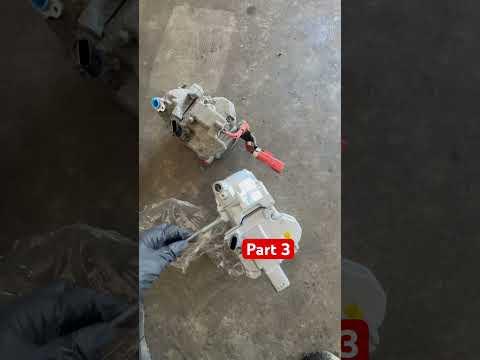







How to Replace the High-Voltage Electric A/C Compressor on a 2018 Toyota Prius
Step-by-step hybrid safety shutdown, required tools/parts, torque specs, and evacuate & recharge procedure for 2016, 2017, 2018, 2019, 2020, 2021, 2022
How to Replace the High-Voltage Electric A/C Compressor on a 2018 Toyota Prius
Step-by-step hybrid safety shutdown, required tools/parts, torque specs, and evacuate & recharge procedure for 2016, 2017, 2018, 2019, 2020, 2021, 2022


🔧 Prius - A/C Compressor Replacement
On your Prius, the A/C compressor is an electric, high-voltage unit. Replacing it involves safely disabling the hybrid high-voltage system, removing the compressor and lines, and then properly evacuating and recharging the refrigerant system.
Difficulty Level: Advanced | Estimated Time: 3-6 hours
⚠️ Safety & Precautions
- ⚠️ High voltage hybrid system: the A/C compressor uses high-voltage. Use Class 0 insulated gloves (1000V) and follow the HV shutdown steps below.
- ⚠️ Refrigerant is hazardous and illegal to vent. You need proper recovery equipment to remove refrigerant safely.
- ⚠️ Use only the correct compressor oil type shown on the under-hood A/C label. The wrong oil can damage the hybrid A/C compressor.
- Disconnecting the 12V battery is required, and the HV service plug must be removed before unplugging the compressor.
- Allow the system to sit after HV shutdown before touching orange cables/connectors.
🔧 Required Tools
You'll need the following tools for this repair:
- Class 0 insulated gloves (1000V)
- Safety glasses
- Nitrile gloves
- Floor jack (rated 3-ton minimum)
- Jack stands (rated 3-ton minimum)
- Wheel chocks
- 10mm socket
- 12mm socket
- 14mm socket
- 3/8" drive ratchet
- 6" extension
- Torque wrench (10–80 Nm range)
- Trim clip removal tool
- Flathead screwdriver
- Line/flare-nut wrench set (10mm–17mm)
- A/C manifold gauge set (specialty)
- Refrigerant recovery machine (specialty)
- Vacuum pump (specialty)
- Refrigerant scale (specialty)
- Scan tool capable of HVAC codes/data (specialty)
🔩 Required Parts
HowToo sells all the parts you need for this repair:
- A/C compressor (hybrid electric type) - Qty: 1
- A/C compressor O-ring set (suction & discharge) - Qty: 1
- Correct A/C compressor oil (per under-hood A/C label) - Qty: 1
- Refrigerant (type per under-hood A/C label) - Qty: 1
- Receiver/drier or desiccant bag (if applicable) - Qty: 1
📋 Before You Begin
- Park on level ground, set the parking brake, and chock the rear wheels.
- Confirm refrigerant type and charge amount from the under-hood A/C label (it will list R-134a or R-1234yf and the exact grams/oz).
- Make sure the A/C refrigerant is professionally recovered using a recovery machine before opening any A/C line.
- Hybrid shutdown: power OFF, keep the key away from the car, disconnect 12V negative cable, remove the HV service plug, then wait before touching any orange connectors.
🔨 Step-by-Step Instructions
Follow these steps in order:
Step 1: Recover the refrigerant
- Connect the A/C manifold gauge set (specialty) to the high/low service ports.
- Use the refrigerant recovery machine (specialty) to recover all refrigerant from the system. Do not vent refrigerant.
Step 2: Disable the hybrid high-voltage system
- Turn the car OFF and keep the smart key at least 15 feet away.
- Open the hatch and access the 12V battery area.
- Use a 10mm socket to disconnect the 12V negative terminal. Wrap the cable so it can’t spring back.
- Remove the hybrid battery service plug grip (HV service plug) per the rear access panel procedure; use the trim clip removal tool and 10mm socket as needed.
- Wait at least 10 minutes before unplugging any orange high-voltage connector.
Step 3: Raise the front and remove the lower covers
- Lift the front using a floor jack (rated 3-ton minimum) and support with jack stands (rated 3-ton minimum).
- Remove the engine under cover/splash shield using a 10mm socket, trim clip removal tool, and flathead screwdriver.
- Reinstall under-cover fasteners later to Torque to 5 Nm (44 in-lb) for small bolts (typical under-cover bolts).
Step 4: Locate the electric A/C compressor
- The compressor is mounted low on the engine, driven electrically (no belt), and has an orange high-voltage connector.
- Put on Class 0 insulated gloves (1000V) before touching any orange connector.
Step 5: Disconnect the high-voltage connector at the compressor
- Release the connector lock and unplug the orange high-voltage connector by hand (do not pry on the wires).
- If a bracket blocks access, remove it using a 10mm socket, then reinstall later to Torque to 9 Nm (80 in-lb).
Step 6: Disconnect the A/C refrigerant lines from the compressor
- Place rags under the fittings to catch residual oil.
- Use a 10mm socket or 12mm socket (varies by flange bolt) to remove the suction/discharge line retaining bolt(s).
- Gently wiggle the lines free; do not bend them.
- Remove and discard old O-rings. Install new O-rings from the A/C compressor O-ring set with a light coat of the correct compressor oil.
- Reinstall the line retaining bolt(s) and Torque to 9.8 Nm (87 in-lb).
Step 7: Remove the compressor mounting bolts and compressor
- Support the compressor with one hand.
- Use a 14mm socket with a 3/8" drive ratchet and 6" extension to remove the compressor mounting bolts.
- Remove the compressor from the vehicle.
- Install the new compressor and hand-start all mounting bolts.
- Tighten evenly and Torque to 25 Nm (18 ft-lb) for compressor mounting bolts.
Step 8: Reconnect lines and high-voltage connector
- Reconnect the A/C lines (with new O-rings installed) and verify the lines sit flat and square.
- Reconnect the orange high-voltage connector until the lock clicks.
- Double-check that no tools or rags are left near the compressor.
Step 9: Reinstall under covers and lower the car
- Reinstall the splash shield using a 10mm socket and trim clip removal tool.
- Lower the car safely using the floor jack (rated 3-ton minimum).
Step 10: Restore HV service plug and 12V power
- Reinstall the HV service plug grip fully and lock it into place.
- Reconnect the 12V negative terminal using a 10mm socket. Torque to 5.4 Nm (48 in-lb).
Step 11: Evacuate and recharge the A/C system
- Connect the A/C manifold gauge set (specialty).
- Use the vacuum pump (specialty) to pull vacuum and hold to confirm no leaks.
- Recharge using a refrigerant scale (specialty) to the exact amount on the under-hood A/C label.
- If the compressor was shipped with oil or requires oil adjustment, follow the compressor supplier instructions and the under-hood label oil specification.
✅ After Repair
- Start the car (READY mode) and set A/C to LO, blower medium, recirculation ON.
- Confirm cold vent temps and that the compressor runs smoothly (no grinding noises).
- Check for leaks at the compressor line fittings using the A/C manifold gauge set (specialty) readings and an electronic leak check if available.
- Use a scan tool capable of HVAC codes/data (specialty) to check and clear any stored A/C or hybrid-related DTCs.
💰 DIY vs Shop Cost
Shop Cost: ₹35,000-₹90,000 (parts + labor + refrigerant service)
DIY Cost: ₹18,000-₹65,000 (parts only, assuming you already have specialty A/C equipment)
You Save: ₹10,000-₹35,000 by doing it yourself!
Shop labor rates vary but typically run ₹1,000-₹2,500/hour. This repair takes a shop approximately 3-5 hours.
🎯 Ready to get started?
HowToo makes it easy: same-day/2-day shipping on every part, plus all the tools and specialty tools you need! Check out the parts and tools sections below to add everything to your cart.
🔧 Prius - A/C Compressor Replacement
On your Prius, the A/C compressor is an electric, high-voltage compressor. Replacing it means safely shutting down the hybrid high-voltage system, removing the compressor and A/C lines, then evacuating and recharging the system to the exact spec.
Difficulty Level: Advanced | Estimated Time: 3-6 hours
⚠️ Safety & Precautions
- ⚠️ High voltage hazard: the A/C compressor is powered by the hybrid system. Wear Class 0 insulated gloves (1000V) before touching orange connectors and follow the HV shutdown steps.
- ⚠️ Refrigerant must be recovered with proper equipment. Do not vent refrigerant to the air.
- ⚠️ Use only the exact compressor oil type specified on the under-hood A/C label; wrong oil can damage the electric compressor.
- Battery disconnect is required: disconnect 12V first, then remove the HV service plug and wait before working.
- Work on a cool car; hot components and pressurized lines can cause burns.
🔧 Required Tools
You'll need the following tools for this repair:
- Class 0 insulated gloves (1000V)
- Safety glasses
- Nitrile gloves
- Floor jack (rated 3-ton minimum)
- Jack stands (rated 3-ton minimum)
- Wheel chocks
- 10mm socket
- 12mm socket
- 14mm socket
- 3/8" drive ratchet
- 6" extension
- Torque wrench (10–80 Nm range)
- Trim clip removal tool
- Flathead screwdriver
- Line/flare-nut wrench set (10mm–17mm)
- A/C manifold gauge set (specialty)
- Refrigerant recovery machine (specialty)
- Vacuum pump (specialty)
- Refrigerant scale (specialty)
- Scan tool capable of HVAC codes/data (specialty)
🔩 Required Parts
HowToo sells all the parts you need for this repair:
- A/C compressor (hybrid electric type) - Qty: 1
- A/C compressor O-ring set (suction & discharge) - Qty: 1
- Correct A/C compressor oil (per under-hood A/C label) - Qty: 1
- Refrigerant (type and weight per under-hood A/C label) - Qty: 1
- Receiver/drier or desiccant bag (if applicable) - Qty: 1
📋 Before You Begin
- Park on level ground, set the parking brake, and place wheel chocks behind the rear wheels.
- Verify refrigerant type and charge amount on the under-hood A/C label (this tells you the exact refrigerant weight to refill).
- Have the system recovered before starting (using a refrigerant recovery machine, which removes refrigerant into a tank).
- Plan access: the compressor is low in the engine bay, so you’ll usually work from underneath after removing the under cover.
🔨 Step-by-Step Instructions
Follow these steps in order:
Step 1: Recover the refrigerant
- Connect the A/C manifold gauge set (specialty) to the high and low service ports.
- Use the refrigerant recovery machine (specialty) to recover all refrigerant from the system.
Step 2: Power down the Prius and disconnect the 12V battery
- Make sure the car is OFF (not in READY) and keep the key fob away from the car.
- Open the hatch and access the 12V battery area.
- Use a 10mm socket to remove the negative battery cable from the 12V battery and secure it so it can’t touch the terminal.
Step 3: Remove the HV service plug grip and wait
- Remove the hybrid battery service plug grip (this is the HV disconnect) using the trim clip removal tool and 10mm socket as needed to access the cover.
- Wait at least 10 minutes before touching any orange high-voltage connector. This lets capacitors discharge.
Step 4: Raise the front and remove the engine under cover
- Lift the front using a floor jack (rated 3-ton minimum) and support it with jack stands (rated 3-ton minimum).
- Remove the under cover fasteners using a 10mm socket, trim clip removal tool, and flathead screwdriver.
Step 5: Unplug the compressor high-voltage connector
- Put on Class 0 insulated gloves (1000V).
- Release the lock and unplug the orange connector at the compressor by hand (no prying).
- If a bracket is in the way, remove it using a 10mm socket, then reinstall later to Torque to 9 Nm (80 in-lb).
Step 6: Disconnect the A/C lines at the compressor
- Place rags under the compressor line connection to catch any oil drips.
- Use a 10mm socket or 12mm socket to remove the line retaining bolt(s) (hardware varies).
- Carefully pull the lines straight out; do not bend them.
- Remove the old O-rings and install new ones from the A/C compressor O-ring set, lightly coated with the correct compressor oil.
- Reinstall the line bolt(s) and Torque to 9.8 Nm (87 in-lb).
Step 7: Remove the compressor mounting bolts
- Support the compressor with one hand so it doesn’t drop.
- Use a 14mm socket, 3/8" drive ratchet, and 6" extension to remove the compressor mounting bolts.
- Remove the compressor from below.
Step 8: Install the new compressor
- Position the new compressor and hand-start all mounting bolts.
- Tighten the bolts evenly using the 14mm socket.
- Final tighten with a torque wrench (10–80 Nm range) to Torque to 25 Nm (18 ft-lb).
Step 9: Reconnect lines and high-voltage connector
- Reconnect the A/C lines (confirm the flange sits flat, and the new O-rings did not pinch).
- Reconnect the orange high-voltage connector until the lock clicks.
Step 10: Reinstall under cover and lower the Prius
- Reinstall the under cover using the 10mm socket and trim clip removal tool.
- Lower the car carefully using the floor jack (rated 3-ton minimum).
Step 11: Restore HV and 12V power
- Reinstall the HV service plug grip fully and lock it in place.
- Reconnect the 12V negative cable using a 10mm socket and Torque to 5.4 Nm (48 in-lb).
Step 12: Evacuate and recharge the A/C system
- Connect the A/C manifold gauge set (specialty) and pull a vacuum using the vacuum pump (specialty).
- Confirm it holds vacuum (basic leak check).
- Recharge using a refrigerant scale (specialty) to the exact amount listed on the under-hood A/C label.
- If oil balancing is required, follow the compressor supplier instructions and the under-hood oil specification exactly.
✅ After Repair
- Start the car and confirm it goes to READY.
- Turn A/C ON and verify cold air and stable pressures on the gauges.
- Inspect the compressor line connections for any oily residue that could indicate a leak.
- Use a scan tool capable of HVAC codes/data (specialty) to check for and clear any A/C or hybrid-related codes.
💰 DIY vs Shop Cost
Shop Cost: ₹35,000-₹90,000 (parts + labor + refrigerant service)
DIY Cost: ₹18,000-₹65,000 (parts only, assuming you already have specialty A/C equipment)
You Save: ₹10,000-₹35,000 by doing it yourself!
Shop labor rates vary but typically run ₹1,000-₹2,500/hour. This repair takes a shop approximately 3-5 hours.
🎯 Ready to get started?
HowToo makes it easy: same-day/2-day shipping on every part, plus all the tools and specialty tools you need! Check out the parts and tools sections below to add everything to your cart.