









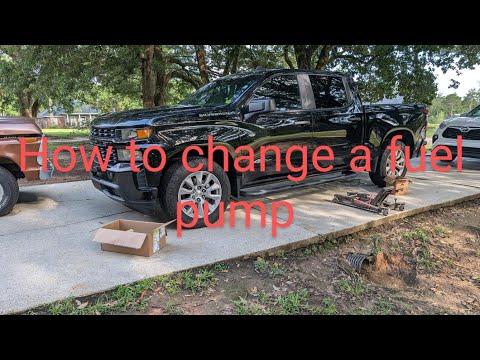






How to Replace the Fuel Pump on a 2021 Chevrolet Silverado 1500
Step-by-step DIY fuel pump module replacement with tools, safety tips, and torque specs for your 2021 Silverado 1500 for 2019, 2020, 2021
How to Replace the Fuel Pump on a 2021 Chevrolet Silverado 1500
Step-by-step DIY fuel pump module replacement with tools, safety tips, and torque specs for your 2021 Silverado 1500 for 2019, 2020, 2021


Silverado 1500 - Fuel Pump Replacement ⛽
On your 2021 High Country, the main fuel pump is part of the fuel pump module inside the fuel tank. The safest and cleanest way is to lower the fuel tank and replace the module.
First, two quick questions so I can be precise:
- ✅ Are you working at home with just basic hand tools (no lift, just jack and stands)?
- ✅ Is your fuel tank close to empty (¼ tank or less), or is it mostly full?
Reply with that, and I’ll tailor the steps. For now, here is the full OEM-style guide so you can see what’s involved.
Safety First ⚠️
- 🧯 Fire safety: Work outside or in a very well-ventilated area. No smoking, no open flames, no grinding or drilling near the truck. Keep a fire extinguisher nearby.
- 🔌 Battery: Disconnect the negative battery cable to avoid sparks.
- 🧷 Support: Use a floor jack and jack stands (stands hold the truck safely; the jack alone is not safe).
- 😷 Fuel fumes: Wear safety glasses and fuel-resistant gloves. Avoid breathing vapors.
Tools & Supplies Needed 🧰
- 🛠️ Basic tools
- 3/8" drive ratchet
- Socket set: typically 10mm, 13mm, 15mm for shields/straps
- Extensions (6–12")
- Flat-blade screwdriver and small pick tool (for clips)
- 🛠️ Fuel line tools
- Fuel line quick-disconnect tool set (plastic rings that release the fuel line fittings)
- 🛠️ Support tools
- Floor jack and jack stands
- Transmission jack or a wide board on a floor jack to support the fuel tank
- 🛠️ Specialty
- Fuel pump lock-ring tool or a brass drift + hammer (brass drift = soft metal punch that won’t spark)
- 🧴 Supplies
- New fuel pump module (with new seal/O-ring)
- Shop rags
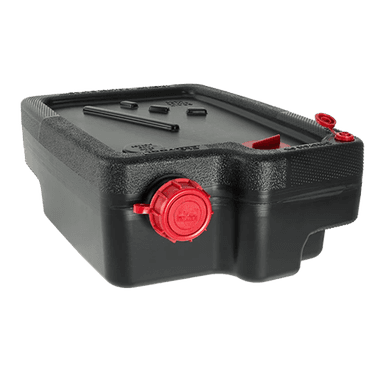
- Drain pan or fuel-safe container (to catch any fuel)
- Penetrating oil (for rusty bolts)
Key Torque Specs 🔧
- 🧷 Fuel tank strap bolts: ~37–43 lb-ft (50–58 N·m) (range used on this generation; tighten evenly)
- 🧷 Shield / bracket bolts: 15–20 lb-ft (20–27 N·m) typical light fasteners
- 🧷 Fuel pump lock ring: Tighten until tabs fully seat; do not over-hammer.
Prep – Relieve Fuel Pressure & Disconnect Battery 🔋
- 🧰 Step 1 – Disconnect battery
- Open the hood.
- Use a 10mm socket to loosen the negative (-) battery terminal and move the cable aside.
- 🧰 Step 2 – Relieve fuel pressure
- Remove the fuel pump fuse or relay from the underhood fuse box (label inside the cover will show “FUEL PUMP” or similar).
- Start the engine and let it run until it stalls. Crank it a few more seconds to bleed pressure.
- Turn ignition OFF and remove the key.
Raise & Support the Truck 🛞
- 🧰 Step 3 – Lift rear of truck
- Chock the front wheels (wheel chocks = blocks to stop rolling).
- Use a floor jack under the rear axle to lift the rear.
- Place jack stands under the frame rails on both sides. Lower the truck onto the stands.
Remove Shields & Access the Fuel Tank 🛡️
- 🧰 Step 4 – Remove fuel tank shield (if equipped)
- On many High Country 4WD trucks, there is a metal or plastic shield under the tank.
- Use 13mm or 15mm sockets to remove the shield bolts and set the shield aside.
- 🧰 Step 5 – Support the fuel tank
- Place a transmission jack or floor jack with a wide board under the center of the tank.
- Apply light upward pressure to support the tank’s weight.
Disconnect Filler Neck & Vent Hoses ⛽
- 🧰 Step 6 – Filler neck hose
- At the rear side of the tank, locate the large hose from the fuel filler door to the tank.
- Loosen the hose clamp (flat screwdriver or 8mm socket).
- Twist and pull the hose off the tank neck. Use a little penetrating oil if stuck.
- 🧰 Step 7 – Vent / smaller hoses
- Disconnect any smaller vent or EVAP hoses by pressing the tabs or sliding off clamps.
- Note their positions or take a photo for reassembly.
Lower the Fuel Tank – Electrical & Lines 🔽
- 🧰 Step 8 – Loosen tank straps
- There are usually two metal straps holding the tank.
- Support the tank firmly with the jack.
- Use a 15mm socket to remove the strap bolts at the rear ends.
- Swing the straps down and out of the way.
- 🧰 Step 9 – Lower tank slightly
- Slowly lower the jack a few inches so you can reach the top of the tank.
- Do not drop it; keep it supported.
- 🧰 Step 10 – Unplug electrical connectors
- On top of the tank, find the fuel pump module connector (large multi-pin plug).
- Press the locking tab and unplug it. Use a small pick if the tab is stubborn.
- 🧰 Step 11 – Disconnect fuel lines
- There will be one or more fuel lines with quick-connect fittings (plastic collars).
- Use the fuel line quick-disconnect tool: slide it into the fitting to release the internal spring, then pull the line off.
- Have rags ready; a small amount of fuel will spill.
- 🧰 Step 12 – Lower tank fully
- Once all lines and connectors are free, lower the tank completely and slide it out from under the truck.
Remove & Replace the Fuel Pump Module 🧩
- 🧰 Step 13 – Clean around pump opening
- Use a brush or compressed air to clean dirt around the pump lock ring.
- Do not let dirt fall into the tank.
- 🧰 Step 14 – Remove lock ring
- Use the fuel pump lock-ring tool with a ratchet, or a brass drift and hammer.
- Tap the ring counterclockwise until it unlocks and can be lifted off.
- 🧰 Step 15 – Remove pump module
- Lift the pump module straight up, tilting slightly to clear the float arm.
- Let fuel drain from the module into the tank, then move it to a drain pan.
- Remove and discard the old O-ring seal.
- 🧰 Step 16 – Install new pump module
- Wipe the tank sealing surface clean.
- Install the new O-ring in the groove on the tank.
- Carefully lower the new pump module into the tank, guiding the float arm.
- Align the marks or tabs on the module and tank (note orientation from old pump).
- 🧰 Step 17 – Reinstall lock ring
- Place the lock ring over the module.
- Tap it clockwise with the lock-ring tool or brass drift until fully seated and locked.
Reinstall Fuel Tank 🔁
- 🧰 Step 18 – Position tank under truck
- Slide the tank back under the truck and raise it with the jack until close to position.
- 🧰 Step 19 – Reconnect electrical & fuel lines
- Plug in the fuel pump electrical connector until it clicks.
- Reconnect fuel lines: push them on until you feel and hear a click. Gently tug to confirm they’re locked.
- 🧰 Step 20 – Raise tank fully & install straps
- Raise the tank into final position.
- Swing the straps up and install the bolts.
- Tighten strap bolts to about 37–43 lb-ft, alternating between them so the tank seats evenly.
- 🧰 Step 21 – Reconnect filler neck & vents
- Slide the filler hose back onto the tank neck and tighten the clamp.
- Reconnect all vent/EVAP hoses to their original spots.
- 🧰 Step 22 – Reinstall shields
- Reinstall any tank shields or skid plates and tighten bolts (15–20 lb-ft).
Final Steps – Prime & Check for Leaks ✅
- 🧰 Step 23 – Reconnect battery & fuse
- Reinstall the fuel pump fuse/relay.
- Reconnect the negative battery cable and tighten the 10mm nut.
- 🧰 Step 24 – Prime the system
- Turn the ignition to ON (do not start) for 5 seconds, then OFF.
- Repeat 3–4 times to build fuel pressure.
- 🧰 Step 25 – Start & inspect
- Start the engine. It may crank a bit longer the first time.
- With the truck still on stands, look under the tank for any fuel leaks.
- If dry, shut off, remove jack stands, and lower the truck.
Scan Tool / Codes 💻
- 🧰 If you had a check engine light for fuel pressure, clear codes with a scan tool after the repair.
- 🧰 No special programming is normally required for the pump itself on this truck.
Parts & Tools from HowToo 🛒
I’ll show you compatible fuel pump modules, lock-ring tools, fuel line disconnect tools, jacks, and safety gear in the parts section below. You can add what you need to your cart directly from there.
Reply with: (1) basic tools vs. lift, and (2) how full your tank is, and I’ll simplify this into a shorter, beginner-friendly checklist tailored to your setup and fuel level.
HowToo makes it easy: same-day/2-day shipping on every part, plus all the tools and specialty tools you need! 🚚