
















How to Replace the Fuel Pump on a 2019 Ford Explorer – Full DIY Guide
Step-by-step fuel pump module replacement with tools, parts list, safety tips, torque specs, and cost savings for your 2019 Explorer
How to Replace the Fuel Pump on a 2019 Ford Explorer – Full DIY Guide
Step-by-step fuel pump module replacement with tools, parts list, safety tips, torque specs, and cost savings for your 2019 Explorer


🔧 Explorer - Fuel Pump Replacement
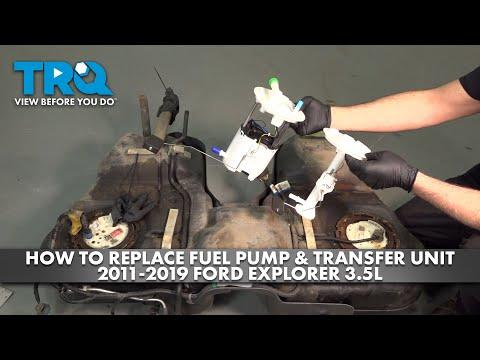
You’ll be replacing the in-tank fuel pump module on your Explorer. This involves safely relieving fuel pressure, lowering the fuel tank, swapping the pump module, then reinstalling the tank.
Difficulty Level: Advanced | Estimated Time: 4–6 hours (first time)
⚠️ Safety & Precautions
- ⚠️ Work away from flames or sparks—no smoking, heaters, or grinding tools near fuel vapors.
- ⚠️ Always wear safety glasses and fuel-resistant gloves; gasoline can irritate skin and eyes.
- ⚠️ Disconnect the negative battery cable before working on the fuel system.
- ⚠️ Support the Explorer with jack stands; never rely only on a floor jack.
- ⚠️ Fuel is heavy—drain or run the tank low (under 1/4 full) to make it manageable.
- ⚠️ Work in a well-ventilated area; avoid inhaling fuel vapors.
- ⚠️ Keep a class B:C fire extinguisher nearby.
🔧 Required Tools
You'll need the following tools for this repair:
- Floor jack (rated 3-ton minimum)
- Jack stands (rated 3-ton minimum, set of 4)
- Wheel chocks
- Safety glasses
- Nitrile gloves
- Shop rags
- Drain pan (fuel-safe, at least 10L)
- 1/4" drive ratchet
- 3/8" drive ratchet
- 3/8" drive torque wrench (5–80 ft-lbs range)
- 8mm socket
- 10mm socket
- 13mm socket
- 15mm socket
- E8 external Torx socket
- Short and long extensions (3/8" drive)
- Flathead screwdriver (medium)
- Trim removal tool (plastic)
- Fuel line quick-disconnect tool set (3/8" and 5/16")
- Fuel tank support/auxiliary jack (or second floor jack with wide wood pad)
- Fuel tank strap spreader tool (specialty, optional)
- Fuel pump locking ring tool (specialty)
- Plastic scraper
- Shop light or LED work light
🔩 Required Parts
HowToo sells all the parts you need for this repair:
- Fuel pump module assembly (in-tank, with fuel level sender) - Qty: 1
- Fuel pump module sealing gasket/O-ring - Qty: 1
- Fuel tank locking ring - Qty: 1
- Fuel tank strap bolts (recommended) - Qty: 2–4
- Fuel line retaining clips - Qty: 2–4
- Brake cleaner or parts cleaner (for cleaning area) - Qty: 1 can
- Dielectric grease (for electrical connectors) - Qty: 1 small tube
- Anti-seize compound - Qty: 1 small tube
📋 Before You Begin
- Park the Explorer on level ground, shift to PARK, and set the parking brake.
- Ideally, drive until the fuel level is under 1/4 tank to reduce weight.
- Open the fuel filler door and remove the fuel cap to release tank vapor pressure.
- Disconnect the negative battery cable using a 10mm socket.
- Let the engine cool if it was just running; avoid hot exhaust parts.
- Have plenty of light under the vehicle for seeing lines and wiring clearly.
🔨 Step-by-Step Instructions
Follow these steps in order:
Step 1: Safely Raise and Support the Explorer
- Place wheel chocks in front of both front wheels.
- Use the floor jack under the rear jacking point or differential to lift the rear of the Explorer.
- Position jack stands under the rear pinch welds or frame rails and lower the vehicle onto the stands with the floor jack.
- Push the Explorer slightly to confirm it’s stable.
Step 2: Relieve Fuel System Pressure
- With the battery still connected for this step, open the hood and locate the fuel pump relay or fuse in the underhood fuse box (label inside cover).
- Use your trim removal tool or fingers to remove the fuse box cover.
- Pull the fuel pump fuse/relay straight out by hand or with a small flathead screwdriver.
- Start the engine and let it idle until it stalls; crank for a few more seconds to relieve pressure.
- Turn ignition OFF and now disconnect the negative battery cable using a 10mm socket.
Step 3: Access the Fuel Tank Area
- Slide under the Explorer with your shop light.
- Locate the fuel tank on the left side under the vehicle.
- Identify the fuel filler neck (where you put fuel in), fuel lines, and electrical connectors at the top/front of the tank.
- Take a photo with your phone to remember routing.
Step 4: Disconnect Filler Neck and Vent Hoses
- At the rear/side of the tank, locate the rubber hoses connecting the tank to the metal filler neck.
- Use a flathead screwdriver to loosen the hose clamps.
- Gently twist and pull the hoses off the tank fittings by hand.
- Have shop rags ready for any small fuel drips.
Step 5: Disconnect Fuel Lines and Electrical Connectors
- At the front/top of the tank (as far as you can access), locate the main fuel supply line and any vapor lines.
- Use the fuel line quick-disconnect tool set on the fuel line fittings:
- Slide the correct size tool (3/8" or 5/16") into the fitting.
- Push the line toward the fitting, then push the tool in, then pull the line off.
- Unplug any visible electrical connectors going to the fuel tank by pressing the tab with your fingers or a flathead screwdriver.
- Apply a small amount of dielectric grease to connector seals if reusing later.
Step 6: Support the Fuel Tank
- Position a floor jack with a wide wood pad or a fuel tank support jack under the center of the fuel tank.
- Raise the jack just enough to take the weight of the tank without lifting the vehicle.
Step 7: Remove Fuel Tank Straps
- Locate the fuel tank straps (metal bands holding the tank up) and their mounting bolts.
- Use a 13mm or 15mm socket and 3/8" drive ratchet to remove the strap bolts at the rear/front (note position and length).
- Carefully swing the straps away from the tank and lower them.
- Support tank firmly; it can shift quickly when straps are loose.
- Retain bolts if reusing; clean threads with a wire brush if needed (if you have one).
Step 8: Lower the Fuel Tank
- Slowly lower the floor jack to bring the tank down a few inches.
- As you lower, check for any remaining hoses, lines, or connectors still attached; disconnect them using your fuel line tool or by hand.
- Once fully free, lower the tank enough to slide it out from under the Explorer.
- Carefully slide the tank out on a piece of cardboard to avoid damage.
Step 9: Clean Around Fuel Pump Opening
- Set the tank in a safe, flat area.
- Use shop rags and brake cleaner to clean all dirt and debris from the area around the fuel pump module on top of the tank.
- Keeping dirt out prevents pump and injector damage.
Step 10: Remove Fuel Pump Locking Ring
- Identify the metal or plastic locking ring holding the pump module in the tank.
- Use the fuel pump locking ring tool with a 3/8" drive ratchet to turn the ring counterclockwise.
- If you do not have the specialty tool, use a flathead screwdriver and small hammer to gently tap the ring around, but avoid sparks and damage.
- Remove the locking ring and set it aside.
Step 11: Remove the Old Fuel Pump Module
- Lift the pump module up slowly; the fuel level float arm will come up with it.
- Angle the pump carefully to avoid bending the float arm or damaging internal lines.
- Drain fuel from the pump into your drain pan.
- Remove the old sealing gasket/O-ring from the tank opening.
Step 12: Prepare and Install the New Fuel Pump Module
- Compare the new pump module to the old one: check connector type, hose connections, and float arm shape.
- Install the new sealing gasket/O-ring into the groove on the tank opening.
- Carefully lower the new pump module into the tank, guiding the float arm in first.
- Align any marks or tabs on the pump flange with the marks on the tank.
Step 13: Install Locking Ring
- Place the new or cleaned locking ring over the pump flange.
- Use the fuel pump locking ring tool and 3/8" drive ratchet to turn it clockwise until it fully seats and aligns with the tank stops.
- Torque to 68–81 Nm (50–60 ft-lbs) if your tool and ring design allow torque measurement.
Step 14: Reinstall Fuel Tank
- Slide the tank back under the Explorer on cardboard.
- Position the floor jack or tank jack with wood pad under the tank and slowly raise it.
- As you raise the tank, reconnect any top-side fuel lines and electrical connectors that must be connected before the tank is fully up, using your fuel line tool and fingers.
- Continue raising the tank into its original position.
Step 15: Reattach Fuel Tank Straps
- Reposition the fuel tank straps over the tank.
- Start the strap bolts by hand to avoid cross-threading.
- Use a 13mm or 15mm socket and 3/8" drive ratchet to snug them evenly.
- Then use a torque wrench to tighten strap bolts to 40–54 Nm (30–40 ft-lbs).
- Apply a small amount of anti-seize compound to the threads if they were rusty.
Step 16: Reconnect Filler Neck and Vent Hoses
- Push the rubber filler and vent hoses fully onto their tank fittings.
- Align clamps and tighten using a flathead screwdriver.
- Double-check that each hose is fully seated and clamped.
Step 17: Double-Check All Connections
- Visually inspect:
- Fuel lines clipped and locked
- Electrical connectors fully seated
- Hoses routed correctly and not twisted or kinked
- Straps tight and tank centered
- Take another photo for future reference.
Step 18: Lower the Explorer
- Use the floor jack to slightly lift the rear, remove the jack stands, then carefully lower the Explorer to the ground.
- Remove wheel chocks.
Step 19: Reconnect Battery and Prime Fuel System
- Reconnect the negative battery cable with a 10mm socket and tighten snugly.
- Reinstall the fuel pump fuse/relay into the fuse box using your fingers or flathead screwdriver if needed.
- Turn the ignition key to RUN (without starting) for 5 seconds, then OFF; repeat 3–4 times to prime the fuel system.
Step 20: Start and Inspect
- Start the engine and let it idle.
- Check under the Explorer for any fuel leaks at the tank, lines, or filler area using your shop light.
- Listen for abnormal noises from the tank area.
- If all is dry and quiet, you’re good to go.
✅ After Repair
- Check the fuel gauge reading to make sure the new level sender works correctly.
- Drive the Explorer for 10–15 minutes and recheck underneath for any signs of leaks.
- If a check engine light appears, have the codes scanned and clear any related to fuel pressure after confirming there are no leaks.
- Keep the tank at least 1/4 full for the next few drives to help cool the new pump.
💰 DIY vs Shop Cost
Shop Cost: $900–$1,300 (parts + labor)
DIY Cost: $250–$450 (parts only)
You Save: $650–$850 by doing it yourself!
Shop labor rates vary but typically run $100–$150/hour. This repair takes a shop approximately 3–4 hours.
🎯 Ready to get started?
HowToo makes it easy: same-day/2-day shipping on every part, plus all the tools and specialty tools you need! Check out the parts and tools sections above to add everything to your cart.