









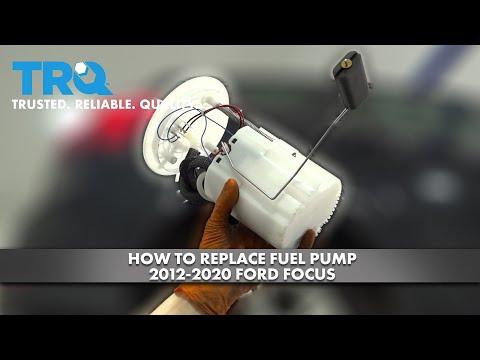






How to Replace the Fuel Pump on a 2018 Ford Focus (In-Tank Module DIY Guide)
Step-by-step instructions for access cover vs tank drop, tools/parts list, safety tips, and leak checks
How to Replace the Fuel Pump on a 2018 Ford Focus (In-Tank Module DIY Guide)
Step-by-step instructions for access cover vs tank drop, tools/parts list, safety tips, and leak checks


🔧 Focus - Fuel Pump Replacement
On your Focus, the fuel pump is part of an in-tank fuel pump module. Replacement typically involves relieving fuel pressure, accessing the pump from inside the car (if there’s an access cover) or lowering the fuel tank (if there isn’t), then swapping the module and sealing it correctly to prevent leaks and evap/fuel smell.
Difficulty Level: Advanced | Estimated Time: 2.5-5.5 hours
⚠️ Safety & Precautions
- ⚠️ Work outside or in a very well-ventilated area—fuel vapors ignite easily.
- ⚠️ No smoking, no heaters, no trouble lights with hot bulbs; use an LED work light.
- ⚠️ Relieve fuel pressure before disconnecting any fuel line to avoid fuel spray.
- ⚠️ Keep a Class B fire extinguisher nearby and wipe spills immediately.
- ⚠️ Disconnect the negative battery cable before unplugging the pump module.
- ⚠️ Support the vehicle on jack stands; never rely on a jack alone.
🔧 Required Tools
You'll need the following tools for this repair:
- Safety glasses
- Nitrile gloves
- Class B fire extinguisher
- LED work light
- Wheel chocks
- Floor jack (rated 3-ton minimum)
- Jack stands (rated 3-ton minimum)
- 10mm socket
- 8mm socket
- 13mm socket
- Ratchet
- 3-inch extension
- Torque wrench (10–150 ft-lbs range)
- Trim removal tool
- Flat-blade screwdriver
- Fuel line disconnect tool set 5/16" and 3/8"
- Fuel pump lock ring tool (specialty)
- Non-sparking brass punch (specialty)
- Small hammer
- Drain pan
- Shop towels
- Plastic cap/plug kit for fuel lines
🔩 Required Parts
HowToo sells all the parts you need for this repair:
- Fuel pump module assembly - Qty: 1
- Fuel pump module seal O-ring - Qty: 1
- Fuel tank strap bolts - Qty: 2
📋 Before You Begin
- Park on level ground, set the parking brake, and place wheel chocks at the rear wheels.
- Run the fuel level as low as possible (under 1/4 tank). A lighter tank is much safer to handle.
- Plan for two possible access methods: an interior service cover (easier) or lowering the tank (harder).
- Have a place ready to set the fuel pump module down without dirt—any dirt can damage the new pump.
🔨 Step-by-Step Instructions
Follow these steps in order:
Step 1: Relieve fuel pressure
- Open the hood.
- Use a 10mm socket to disconnect the negative battery cable and move it aside so it can’t spring back.
- Locate the under-hood fuse box and remove the fuel pump fuse/relay (cover diagram will show location). Use a flat-blade screwdriver carefully if needed.
- Start the engine and let it run until it stalls. Crank it for 3–5 seconds one more time to clear remaining pressure.
- Tip: This reduces fuel spray at connectors.
Step 2: Determine which access method your Focus has
- Fold the rear seat backs down, then lift the rear seat bottom cushion (use a trim removal tool if clips are tight).
- Look for a round/oval metal access cover with wiring/fuel lines nearby.
- If you see an access cover, follow Steps 3–7 (interior access).
- If there is no access cover, follow Steps 8–14 (fuel tank lowering).
Step 3: Remove the interior access cover (if equipped)
- Use a trim removal tool and flat-blade screwdriver to lift any butyl sealer edges and remove the cover fasteners (commonly 8mm socket).
- Set the cover aside and keep dirt away from the opening.
Step 4: Clean the area around the pump module
- Use shop towels to wipe dirt away from the top of the module and the tank opening area.
- Tip: Dirt in the tank can ruin the new pump.
Step 5: Disconnect electrical connector and fuel lines
- Unplug the pump electrical connector by releasing the lock tab using a trim removal tool or your fingers.
- Place a drain pan under the area and wrap connections with shop towels.
- Use the fuel line disconnect tool set 5/16" and 3/8" to release the quick-connect fittings, then cap the lines using the plastic cap/plug kit.
- Tip: Expect a small amount of fuel.
Step 6: Remove the fuel pump lock ring
- Use the fuel pump lock ring tool (specialty) to rotate the lock ring counterclockwise and remove it.
- If it’s stubborn, use a non-sparking brass punch (specialty) and small hammer gently on the ring tabs (avoid steel punch/sparks).
Step 7: Replace the pump module and seal
- Lift the module straight up. Tilt it as needed to clear the float arm without bending it.
- Remove the old seal and install the new fuel pump module seal O-ring (make sure it sits flat and not twisted).
- Install the new fuel pump module assembly in the same orientation as the old one.
- Reinstall the lock ring using the fuel pump lock ring tool (specialty) until it fully seats at its stops.
- Torque to factory specification (lock ring seating is critical; the exact spec depends on tank/module version).
Step 8: Raise and safely support the car (if no access cover)
- Chock the front wheels with wheel chocks.
- Lift the rear using a floor jack (rated 3-ton minimum) and support with jack stands (rated 3-ton minimum) on solid points.
Step 9: Support the fuel tank
- Position the floor jack (rated 3-ton minimum) under the tank with a stable pad.
- Keep the drain pan and shop towels ready for any fuel drips.
Step 10: Disconnect connectors/lines at the tank
- Disconnect the pump electrical connector using a trim removal tool as needed.
- Disconnect fuel/EVAP lines using the fuel line disconnect tool set 5/16" and 3/8", then cap them with the plastic cap/plug kit.
Step 11: Remove the tank straps and lower the tank
- Use a 13mm socket and ratchet to remove the fuel tank strap bolts while the tank is supported by the jack.
- Slowly lower the tank with the floor jack, watching for any hoses/wiring still attached.
- Torque to factory specification when reinstalling strap bolts (exact spec varies by strap/tank configuration).
Step 12: Remove the lock ring and pump module (tank lowered)
- Clean the module area with shop towels.
- Remove the lock ring using the fuel pump lock ring tool (specialty), then lift out the module.
Step 13: Install new seal and new pump module
- Install the new fuel pump module seal O-ring flat in its groove.
- Install the new fuel pump module assembly in the same orientation.
- Reinstall and fully seat the lock ring using the fuel pump lock ring tool (specialty).
- Torque to factory specification (exact spec depends on module style).
Step 14: Reinstall the fuel tank
- Raise the tank with the floor jack.
- Reconnect all fuel/EVAP lines using the fuel line disconnect tool set as needed until each fitting clicks.
- Reconnect the electrical connector.
- Install new fuel tank strap bolts using a 13mm socket, then tighten with a torque wrench to factory specification.
✅ After Repair
- Reinstall the fuel pump fuse/relay.
- Reconnect the negative battery cable using a 10mm socket.
- Prime the system: key ON for 5 seconds, OFF for 5 seconds; repeat 3–4 times before starting.
- Start the engine and let it idle 2–3 minutes.
- Inspect for leaks at all quick-connect fittings and at the pump seal area.
- If you smell fuel inside the cabin, recheck lock ring seating and access cover sealing.
💰 DIY vs Shop Cost
Shop Cost: $900-$1,600 (parts + labor)
DIY Cost: $250-$650 (parts only)
You Save: $650-$950 by doing it yourself!
Shop labor rates vary but typically run $100-$150/hour. This repair takes a shop approximately 2.5-5.5 hours.
🎯 Ready to get started?
HowToo makes it easy: same-day/2-day shipping on every part, plus all the tools and specialty tools you need! Check out the parts and tools sections below to add everything to your cart.
Quick check so I can make this 100% exact for your Focus:
- Do you see a round access cover under the rear seat bottom cushion?
- Is your Focus push-button start or a keyed ignition?