









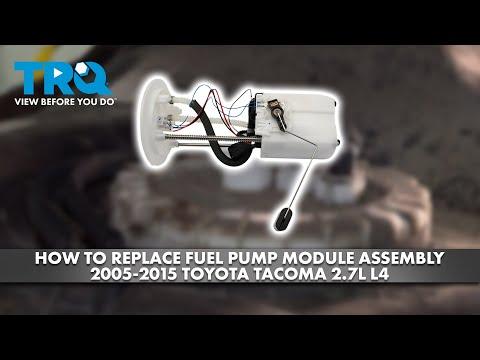





How to Replace the Fuel Pump on a 2017 Toyota Tacoma
Step-by-step fuel tank removal guide with tools, parts, torque specs, and safety tips for 2016, 2017, 2018
How to Replace the Fuel Pump on a 2017 Toyota Tacoma
Step-by-step fuel tank removal guide with tools, parts, torque specs, and safety tips for 2016, 2017, 2018


🔧 Fuel Pump - Replacement
The fuel pump on your Tacoma is inside the fuel tank. Replacing it means safely relieving fuel pressure, lowering the tank, and swapping the pump module or pump assembly. This is a fuel system repair, so clean work and fire safety matter a lot.
Difficulty Level: Advanced | Estimated Time: 4-6 hours
⚠️ Safety & Precautions
- Work outside or in a very well-ventilated area. Fuel vapors are flammable.
- No smoking, sparks, heaters, or open flames anywhere nearby.
- Disconnect the negative battery terminal before starting.
- Relieve fuel pressure before disconnecting any fuel line.
- Keep a fire extinguisher rated for fuel fires within reach.
- Use jack stands if you raise the truck. Never work under a vehicle supported only by a jack.
🔧 Required Tools
You'll need the following tools for this repair:
- 10mm socket
- 12mm socket
- 14mm socket
- Ratchet
- Short extension
- Torque wrench
- Fuel line disconnect tool
- Floor jack rated 3-ton minimum
- Jack stands
- Drain pan
- Shop towels
- Safety glasses
- Nitrile gloves
- Trim tool
- Plastic scraper
- Torque screwdriver
🔩 Required Parts
HowToo sells all the parts you need for this repair:
- Fuel pump assembly - Qty: 1
- Fuel pump tank seal - Qty: 1
- Fuel filter strainer - Qty: 1
- Fuel tank retaining seal or lock ring - Qty: 1
- Fuel line seals or O-rings - Qty: 1 set
📋 Before You Begin
- Park on level ground and set the parking brake.
- Run the fuel level as low as safely possible before starting.
- Disconnect the negative battery cable.
- Relieve fuel pressure from the system before opening any line.
- Raise the rear only if needed for tank access, then support with jack stands.
🔨 Step-by-Step Instructions
Follow these steps in order:
Step 1: Relieve fuel pressure
- Use the fuel system relay or fuse method, then crank the engine briefly until it stalls if needed.
- Disconnect the negative battery terminal with a 10mm socket.
- Remove the fuel cap carefully to release any tank pressure.
Step 2: Raise and support the truck
- Use a floor jack rated 3-ton minimum to raise the rear if needed.
- Place the truck securely on jack stands.
- Make sure the truck is stable before crawling underneath.
Step 3: Remove tank shielding and access hardware
- Use a 10mm socket, 12mm socket, or 14mm socket to remove any skid plate or shields covering the fuel tank.
- Keep track of bolt locations. Some fasteners may differ in length.
Step 4: Disconnect the fuel tank connections
- Use a fuel line disconnect tool to separate the fuel feed line.
- Disconnect the electrical connector going to the fuel pump module.
- Disconnect any vapor lines or vent hoses attached to the tank.
- Label every hose before removal.
Step 5: Support and lower the fuel tank
- Place the floor jack rated 3-ton minimum under the tank with a wood block if needed.
- Use a 12mm socket or 14mm socket to remove the tank strap bolts.
- Lower the tank slowly and check for any line or connector still attached.
- Remove the tank from under the truck once it is free.
Step 6: Remove the fuel pump module
- Clean the top of the tank with shop towels before opening it.
- Use a trim tool or plastic scraper to remove dirt around the pump cover area.
- Remove the lock ring or retainer carefully.
- Lift the fuel pump module straight up and out of the tank.
- Remove the old seal and strainer.
Step 7: Install the new fuel pump module
- Install the new fuel pump tank seal in the correct groove.
- Lower the new fuel pump assembly into the tank without damaging the float arm.
- Install the lock ring or retainer.
- Torque to 50 Nm (37 ft-lbs) if a serviceable retainer torque specification applies to your lock ring style.
- Make sure the seal stays seated.
Step 8: Reinstall the tank
- Raise the tank with the floor jack until the connections can be reattached.
- Reconnect the vapor lines, electrical connector, and fuel line.
- Use the 12mm socket or 14mm socket to reinstall the tank straps.
- Torque to 37 Nm (27 ft-lbs) for the strap bolts unless your service data for your trim specifies otherwise.
Step 9: Reinstall shields and lower the vehicle
- Reinstall any skid plate or shield using the 10mm socket, 12mm socket, or 14mm socket.
- Lower the truck off the jack stands.
- Reconnect the negative battery terminal with the 10mm socket.
Step 10: Prime and test the system
- Cycle the ignition key ON for a few seconds, then OFF, several times to prime the system.
- Start the engine and check for fuel leaks at the tank, line, and fittings.
- Verify normal idle and fuel pump operation.
- Stop immediately if you smell raw fuel.
✅ After Repair
- Recheck all fuel connections after the first drive.
- Inspect the tank area again for seepage or odor.
- If the engine cranks longer than normal, repeat the prime cycle.
- Clear any fuel system codes if they were set during the repair.
💰 DIY vs Shop Cost
Shop Cost: $900-$1,700 (parts + labor)
DIY Cost: $250-$650 (parts only)
You Save: $650-$1,050 by doing it yourself!
Shop labor rates vary but typically run $100-$150/hour. This repair takes a shop approximately 4-6 hours.
🎯 Ready to get started?
HowToo makes it easy: same-day/2-day shipping on every part, plus all the tools and specialty tools you need! Check out the parts and tools sections below to add everything to your cart.