









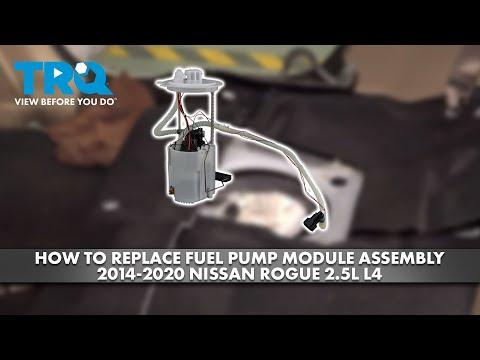





How to Replace the Fuel Pump on a 2014 Nissan Rogue (Step-by-Step DIY)
Complete 2014 Nissan Rogue fuel pump module replacement guide with tools, parts list, safety tips, torque specs, and detailed instructions.
How to Replace the Fuel Pump on a 2014 Nissan Rogue (Step-by-Step DIY)
Complete 2014 Nissan Rogue fuel pump module replacement guide with tools, parts list, safety tips, torque specs, and detailed instructions.


🔧 Rogue - Fuel Pump Module Replacement
You’ll be replacing the in-tank fuel pump module, which sits inside the fuel tank under the rear seat. This restores proper fuel pressure if your pump has failed or is getting weak.
Difficulty Level: Intermediate | Estimated Time: 2–3 hours
⚠️ Safety & Precautions
- 🔥 Work away from open flames, cigarettes, or anything that can spark.
- 🧯 Keep a Class B/C fire extinguisher nearby when working with fuel.
- 🔌 Disconnect the negative battery terminal before opening the fuel system.
- 🌬️ Work in a well-ventilated area; fuel vapors are toxic and flammable.
- 💧 Avoid getting fuel on skin and eyes; wash immediately if it happens.
- 📏 Use only non-sparking tools (plastic or brass) if you have to tap the lock ring.
- 🧵 Do not use power tools that can spark directly over the fuel tank opening.
- 🧽 Keep dirt away from the pump opening to prevent contaminating the tank.
🔧 Required Tools
You'll need the following tools for this repair:
- 🔧 10mm socket
- 🔧 12mm socket
- 🔧 1/4" drive ratchet
- 🔧 3/8" drive ratchet
- 🔧 3/8" drive torque wrench (5–80 ft-lbs range)
- 🔧 Extension bar 3"
- 🔧 Phillips #2 screwdriver
- 🔧 Flathead screwdriver (small)
- 🔧 Fuel pump lock-ring removal tool (specialty)
- 🔧 Plastic trim tool set
- 🔧 Needle-nose pliers
- 🔧 Clean shop rags
- 🔧 Plastic drain pan or fuel-safe container (at least 1 gallon)
- 🔧 Hand siphon pump (fuel-rated)
- 🔧 Mechanic’s gloves
- 🔧 Nitrile disposable gloves
- 🔧 Safety glasses
- 🔧 Flashlight or work light (explosion-proof if possible)
🔩 Required Parts
HowToo sells all the parts you need for this repair:
- 🔩 Fuel pump module assembly (with fuel level sensor) - Qty: 1
- 🔩 Fuel pump module O-ring seal - Qty: 1
- 🔩 Fuel pump lock ring - Qty: 1 (recommended)
- 🔩 Fuel-resistant cleaner or brake cleaner - Qty: 1 can
- 🔩 Shop towels - Qty: as needed
- 🔩 Dielectric grease (for electrical connectors) - Qty: small tube
📋 Before You Begin
- Park your Rogue on level ground, shift to Park, and set the parking brake.
- Ideally, run the fuel level down to ¼ tank or less to reduce spillage.
- Open all doors or windows for ventilation while working.
- Turn ignition OFF and remove the key.
- Disconnect the negative battery cable using a 10mm socket and move it aside so it cannot spring back.
- Have a small container ready to catch any fuel that may drip when lines are disconnected.
🔨 Step-by-Step Instructions
Follow these steps in order:
Step 1: Relieve residual fuel pressure
- Reconnect the negative battery cable briefly using the 10mm socket.
- Turn ignition to ON (do not start), then pull the fuel pump fuse from the fuse box using needle-nose pliers (consult your owner’s manual for exact fuse location).
- Start the engine and let it run until it stalls; this relieves pressure in the fuel line.
- Crank for 2–3 more seconds to remove any remaining pressure, then turn ignition OFF.
- Disconnect the negative battery cable again using the 10mm socket.
Step 2: Remove the rear seat bottom cushion
- Slide the front seats forward to give yourself room in the back.
- From the rear footwell, grab the front edge of the rear seat bottom and pull straight up sharply to release the clips.
- Lift the seat bottom and pull it out of the vehicle; set it somewhere clean.
- Check for any wiring under the seat before fully removing.
Step 3: Access the fuel pump service cover
- Under the rear seat area, locate the round metal access cover on the floor (usually slightly right of center).
- Use the Phillips #2 screwdriver to remove the screws holding the access cover.
- Lift the access cover off and set aside.
- Use a clean shop rag to wipe away dirt around the pump top and lines so nothing falls inside the tank.
Step 4: Disconnect electrical and fuel lines
- Use your flathead screwdriver (small) to gently lift any locking tabs on the electrical connectors.
- Unplug the electrical connectors by hand; do not pull on the wires. You can add a tiny bit of dielectric grease later when reassembling.
- For the fuel lines: press the plastic release tabs on the quick-connect fittings while pulling the line straight off. Use needle-nose pliers carefully if your fingers can’t reach the tabs.
- Place a shop rag under each connection to catch any fuel drips and direct remaining fuel into your plastic drain pan.
- Work slowly; forcing the fittings can break them.
Step 5: Remove the fuel pump lock ring
- The large round plastic/metal ring around the pump is the lock ring that holds the pump to the tank.
- Use the fuel pump lock-ring removal tool (specialty) with your 3/8" drive ratchet to turn the ring counterclockwise to loosen it.
- If you do not have the special tool, you can very carefully use a flathead screwdriver and a plastic or rubber mallet to tap the ring loose, but avoid creating sparks.
- Once loose, spin the lock ring off by hand and set it aside.
Step 6: Remove the old fuel pump module
- Gently lift the pump assembly straight up by its top flange.
- As you lift, tilt it slightly to clear the float arm for the fuel level sensor; be patient and do not bend the arm.
- Let excess fuel drain from the pump into your plastic drain pan.
- Remove and discard the old O-ring seal from the tank opening.
Step 7: Prepare the new pump and seal
- Compare the new pump module to the old one to ensure connectors, ports, and float arm match.
- Lightly coat the new O-ring seal with clean fuel from the tank; this helps it seat properly.
- Place the new O-ring in the groove around the tank opening, making sure it sits flat all the way around.
- Do not twist the O-ring; it must lie flat.
Step 8: Install the new fuel pump module
- Carefully lower the new pump module into the tank, guiding the float arm through the opening without bending it.
- Make sure the pump sits flat on the O-ring and aligns with any marks or tabs on the tank.
- Install the new or cleaned lock ring by hand, turning it clockwise until it contacts the pump flange.
Step 9: Tighten the lock ring
- Use the fuel pump lock-ring removal tool (specialty) with your 3/8" drive torque wrench to tighten the lock ring.
- Tighten to 230 Nm (170 ft-lbs) if your torque wrench and tool allow. If you cannot measure this exactly, ensure it is very snug and seated fully, without stripping the ring.
- The ring must be fully seated to prevent leaks.
Step 10: Reconnect fuel lines and electrical connectors
- Reconnect the fuel lines by pushing them straight onto their fittings until you hear or feel a “click.” Gently tug to confirm they are locked.
- Wipe any spilled fuel from the area with shop rags and fuel-resistant cleaner.
- Apply a very small amount of dielectric grease to the electrical connector seals if you have it.
- Reconnect the electrical connectors until they click into place.
Step 11: Reinstall the access cover and rear seat
- Place the metal access cover back over the pump opening.
- Use the Phillips #2 screwdriver to reinstall and snug the screws (hand-tight; do not overtighten).
- Position the rear seat bottom cushion back in place, align the rear tabs, then push down firmly on the front to lock the clips.
Step 12: Reconnect battery and prime the fuel system
- Reconnect the negative battery cable using the 10mm socket and tighten to 6–8 Nm (4–6 ft-lbs) (snug but not overtightened).
- Turn ignition to ON (do not start) for 5 seconds, then turn OFF. Repeat 3–4 times. This “primes” the fuel system and builds pressure.
- During priming, check under the rear seat access area (you may need to lift the seat bottom front edge) for fuel smells or visible leaks.
Step 13: Start the engine and final check
- Start the engine and let it idle for a few minutes.
- Listen for smooth running and watch the instrument cluster; the fuel gauge should show a reasonable level.
- Check again for any fuel smell or signs of leakage around the pump area.
✅ After Repair
- Take your Rogue for a short test drive (5–10 minutes) and confirm it accelerates smoothly with no stalling or hesitation.
- After the drive, recheck the rear seat area for any fuel odor; if you smell raw fuel, re-inspect the pump seal and line connections.
- Monitor the fuel gauge over the next few trips to ensure it reads consistently and does not jump around.
- If a check engine light appears, have the codes scanned; sometimes old fuel pressure codes need clearing.
💰 DIY vs Shop Cost
Shop Cost: $650–$900 (parts + labor)
DIY Cost: $250–$450 (parts only)
You Save: $400–$500 by doing it yourself!
Shop labor rates vary but typically run $100–$150/hour. This repair takes a shop approximately 2–3 hours.
🎯 Ready to get started?
HowToo makes it easy: same-day/2-day shipping on every part, plus all the tools and specialty tools you need! Check out the parts and tools sections above to add everything to your cart.