













How to Replace the Fuel Pump on a 2014-2019 Toyota Corolla (Step-by-Step) (Engine: Inline 4 1.8L)
Complete DIY fuel pump module replacement with tools, parts list, torque specs, safety tips, and detailed instructions
How to Replace the Fuel Pump on a 2014-2019 Toyota Corolla (Step-by-Step) (Engine: Inline 4 1.8L)
Complete DIY fuel pump module replacement with tools, parts list, torque specs, safety tips, and detailed instructions for 2014, 2015, 2016, 2017, 2018, 2019


🔧 Corolla - Fuel Pump Replacement
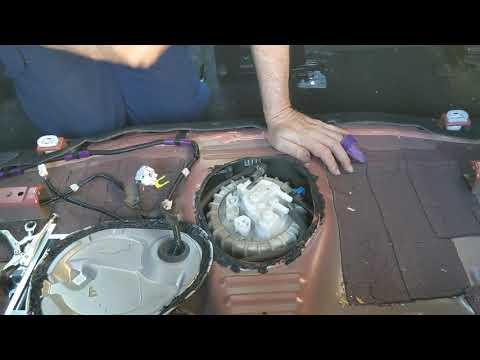
You’ll be replacing the in-tank fuel pump module, which sits inside the fuel tank under the rear seat. This restores proper fuel pressure if your Corolla has a failing pump (hard starting, stalling, no-start).
Difficulty Level: Intermediate | Estimated Time: 2-3 hours
⚠️ Safety & Precautions
- ⚠️ Work in a well-ventilated area; gasoline fumes are flammable and harmful to breathe.
- ⚠️ Keep all flames, cigarettes, and sparks far away from the car.
- ⚠️ Do not use power tools that can spark near open fuel.
- ⚠️ Disconnect the battery negative terminal before opening the fuel system to avoid sparks.
- ⚠️ Relieve fuel pressure before disconnecting fuel lines to avoid fuel spray.
- ⚠️ Wear safety glasses and fuel-resistant gloves to protect eyes and skin.
- ⚠️ Clean the area around the pump cover before opening to keep dirt out of the tank.
🔧 Required Tools
You'll need the following tools for this repair:
- 🛠️ 10mm socket
- 🛠️ 12mm socket
- 🛠️ 1/4" drive ratchet
- 🛠️ 3/8" drive ratchet
- 🛠️ 3/8" drive torque wrench (5-80 ft-lbs range)
- 🛠️ Short extension 3/8" drive
- 🛠️ Phillips #2 screwdriver
- 🛠️ Flathead screwdriver small
- 🛠️ Plastic trim removal tool
- 🛠️ Fuel line quick-disconnect tool (Toyota size) (specialty)
- 🛠️ Fuel pump lock ring tool (Toyota style) (specialty)
- 🛠️ Clean shop rags
- 🛠️ Small parts tray
- 🛠️ Flashlight or work light LED
- 🛠️ Safety glasses
- 🛠️ Nitrile gloves
- 🛠️ Hand siphon pump (for fuel) (specialty)
🔩 Required Parts
HowToo sells all the parts you need for this repair:
- 🔩 Fuel pump module assembly (in-tank) - Qty: 1
- 🔩 Fuel pump module seal/gasket - Qty: 1
- 🔩 Fuel pump lock ring - Qty: 1 (recommended)
- 🔩 Fuel line O-rings for quick-connect fittings - Qty: 2-4 (as equipped)
- 🔩 Electrical connector dielectric grease - Qty: 1 tube
- 🔩 Shop towels or absorbent pads - Qty: 1 pack
📋 Before You Begin
- Park the Corolla on level ground, shift to Park, and set the parking brake.
- Ideally run the fuel level down to about 1/4 tank or less. This makes the job easier and safer.
- Turn ignition OFF and remove the key from the car.
- Open all doors and windows to improve ventilation.
- Disconnect the negative battery terminal using a 10mm socket and move the cable aside so it cannot spring back.
- Have a metal-safe fuel container and hand siphon pump ready if you need to remove some fuel.
🔨 Step-by-Step Instructions
Follow these steps in order:
Step 1: Relieve Fuel Pressure
- Open the driver door but do not turn the key on.
- Remove the fuel pump fuse or fuel pump relay from the under-hood fuse box using your flathead screwdriver small to gently lift it if needed. The fuse box lid diagram will show the pump fuse/relay location.
- Reconnect the battery negative cable with a 10mm socket just for this step.
- Start the engine and let it idle until it stalls. This uses up the remaining pressure in the fuel line.
- Crank the engine for another 3–5 seconds after it stalls, then stop.
- Disconnect the battery negative cable again with the 10mm socket.
- Fuel pressure relief reduces messy spray
Step 2: Access the Fuel Pump Under Rear Seat
- Slide both front seats fully forward for more room in the rear.
- From the rear doors, locate the lower front edge of the rear seat cushion.
- Use your plastic trim removal tool to push in and release the seat cushion clips at the front edge (one on each side). Pull the cushion upward as you release each clip.
- Lift the front of the rear seat cushion and slide it forward, then remove it from the car.
- You will see a metal access cover with wiring on the right side (passenger side) under the seat.
Step 3: Remove the Fuel Pump Access Cover
- Use a Phillips #2 screwdriver to remove the screws holding the metal cover plate.
- Lift off the cover and set it aside in your parts tray.
- Clean the top of the pump area thoroughly using clean shop rags. Remove dust and debris so nothing falls into the tank.
- Clean now to avoid future fuel contamination
Step 4: Disconnect Electrical Connectors
- Use your flathead screwdriver small to gently lift the locking tabs on the electrical connectors to the pump module.
- Unplug all connectors and inspect them for corrosion or damage.
- Apply a tiny amount of dielectric grease to the connector seals if desired, but do not fill the terminals.
Step 5: Disconnect Fuel Lines
- Place shop towels around the fuel line fittings to catch any drips.
- Use the fuel line quick-disconnect tool (Toyota size) (specialty) to release the quick-connect fittings. Slide the tool into the fitting, push the line toward the pump, then pull the line off.
- Work slowly and keep the fittings straight to avoid breaking the plastic ends.
- Cap or wrap the open lines with clean rags to keep dirt out.
Step 6: Remove the Fuel Pump Lock Ring
- Check that the area is still clean and free of loose dirt.
- Use the fuel pump lock ring tool (Toyota style) (specialty) with your 3/8" drive ratchet to turn the lock ring counterclockwise.
- If you do not have the special tool, you can very carefully use a dull punch and hammer, but the proper tool is strongly recommended to avoid sparks or damage.
- Remove the lock ring and set it aside. If replacing, keep the new one ready.
Step 7: Remove the Old Fuel Pump Module
- Lift the pump module slowly straight up. Use both hands.
- As you raise it, tilt it slightly to keep the fuel inside the cup and avoid spilling back into the car.
- Note the orientation of the pump module (hose and connector positions). Take a picture if needed.
- Remove the old pump module seal/gasket from the tank opening and discard it.
- Set the old pump module in a drain pan or fuel-safe container.
Step 8: Prepare the New Fuel Pump Module
- Compare the new pump module to the old one. Check that the electrical connectors, outlet positions, and overall height match.
- Install any included new filter sock or strainer onto the new module according to its instructions, using your Phillips #2 screwdriver if required for screws.
- Install new fuel line O-rings on the pump outlets if provided. Lightly coat them with fresh, clean gasoline for lubrication.
- Place the new pump module seal/gasket around the opening on the tank, seated flat.
- Always use a new gasket to prevent leaks
Step 9: Install the New Fuel Pump Module
- Carefully lower the new pump module into the tank, matching the same orientation as the original (align tabs/marks on the tank and pump). Many Toyota tanks have alignment marks; line them up.
- Make sure the bottom of the pump seats fully and the gasket stays in place, not pinched.
- Install the new fuel pump lock ring by hand first, ensuring the threads or tabs engage correctly.
- Use the fuel pump lock ring tool (Toyota style) (specialty) and 3/8" drive ratchet to tighten the ring clockwise.
- Torque the lock ring to 68 Nm (50 ft-lbs) if your tool and ring design allow for torque measurement. Otherwise, tighten firmly until the alignment marks match the original locked position.
Step 10: Reconnect Fuel Lines and Electrical Connectors
- Reconnect the fuel lines to the pump module. Push them straight on until you hear or feel a click.
- Gently tug on each line to confirm it is fully locked.
- Reconnect the electrical connectors by hand until they click into place.
- Double-check that no wires are pinched and lines are routed cleanly.
Step 11: Reinstall Access Cover and Rear Seat
- Place the metal access cover back over the pump opening.
- Install the screws using the Phillips #2 screwdriver and snug them down. No specific torque is required; just snug, not stripped.
- Position the rear seat cushion back in the car. Engage the rear hooks first by sliding the seat rearward.
- Push down firmly on the front of the cushion over each clip location until you hear them snap in.
Step 12: Prime the Fuel System and Check for Leaks
- Reinstall the fuel pump fuse or relay in the under-hood fuse box using your flathead screwdriver small if needed.
- Reconnect the negative battery cable with the 10mm socket and tighten to 5 Nm (44 in-lbs) (snug, not over-tight).
- Turn the ignition to ON (engine not started) for 5 seconds, then OFF. Repeat 3–4 times. This primes the new pump and builds pressure.
- Check under the rear seat area (you can leave the cushion off briefly) for any fuel smell or visible leaks at the access cover edges.
- If dry, reinstall the rear seat cushion if you previously left it off.
Step 13: Start the Engine and Final Checks
- Start the engine and let it idle for several minutes.
- Listen for smooth running and normal pump sound (a soft humming from the rear is normal).
- Walk around the car and check underneath for any drips or fuel smell.
- If everything looks and smells normal, shut the engine off and you’re done.
✅ After Repair
- 🧪 Start the engine several times after it has cooled to confirm reliable starts.
- 🧪 Take a short test drive around your area, paying attention to acceleration and any hesitation.
- 🧪 If a check engine light appears, have the code read with an OBD-II scanner to confirm it is not fuel-related.
- 🧪 Keep the fuel tank above 1/4 full for the next few days; the pump uses fuel for cooling.
💰 DIY vs Shop Cost
Shop Cost: $550-$850 (parts + labor)
DIY Cost: $180-$320 (parts only)
You Save: $370-$530 by doing it yourself!
Shop labor rates vary but typically run $100-$150/hour. This repair takes a shop approximately 1.5-2.0 hours.
🎯 Ready to get started?
HowToo makes it easy: same-day/2-day shipping on every part, plus all the tools and specialty tools you need! Check out the parts and tools sections above to add everything to your cart.
Guide for Fuel Pump Module Assembly replace for these Toyota vehicles
| Year Make Model | Sub Model | Engine | Body Style |
|---|---|---|---|
| 2019 Toyota Corolla | - | Inline 4 1.8L | - |
| 2018 Toyota Corolla | - | Inline 4 1.8L | - |
| 2017 Toyota Corolla | - | Inline 4 1.8L | - |
| 2016 Toyota Corolla | - | Inline 4 1.8L | - |
| 2015 Toyota Corolla | - | Inline 4 1.8L | - |
| 2014 Toyota Corolla | - | Inline 4 1.8L | - |