









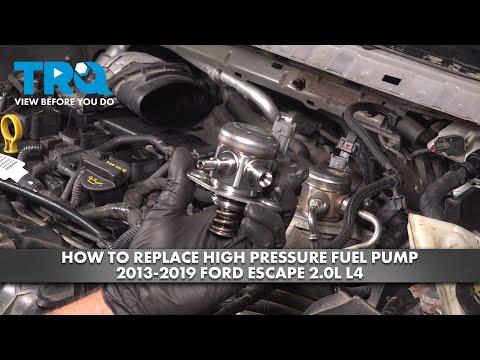






How to Replace the Fuel Pump on a 2013-2019 Ford Escape 2.0L EcoBoost (Engine: Inline 4 2.0L)
Step-by-step DIY fuel pump module replacement with tools, parts list, safety tips, and cost savings compared to shop repair
How to Replace the Fuel Pump on a 2013-2019 Ford Escape 2.0L EcoBoost (Engine: Inline 4 2.0L)
Step-by-step DIY fuel pump module replacement with tools, parts list, safety tips, and cost savings compared to shop repair for 2013, 2014, 2015, 2016


🔧 Escape - Fuel Pump Replacement
Your Escape actually has two fuel pumps: a low-pressure pump in the fuel tank and a high-pressure pump on the engine. The usual DIY replacement is the in-tank fuel pump module when there are fuel delivery issues or a failed pump.
Difficulty Level: Intermediate | Estimated Time: 3-4 hours
⚠️ Safety & Precautions
- ⚠️ Gasoline is highly flammable; work in a well-ventilated area away from flames, heaters, or smoking.
- ⚠️ Always disconnect the negative battery cable before touching the fuel system to avoid sparks.
- ⚠️ Relieve fuel pressure before disconnecting any fuel lines to prevent spray.
- ⚠️ Support the vehicle securely with jack stands; never rely only on a jack.
- ⚠️ Wear safety glasses and fuel-resistant gloves; fuel can damage eyes and skin.
- ⚠️ Keep a class B/C fire extinguisher nearby when working with fuel.
🔧 Required Tools
You'll need the following tools for this repair:
- 🛠️ Floor jack (rated 3-ton minimum)
- 🛠️ Jack stands (rated 3-ton minimum, Qty: 2-4)
- 🛠️ Wheel chocks
- 🛠️ Ratchet handle 3/8"
- 🛠️ Ratchet handle 1/4"
- 🛠️ 8mm socket
- 🛠️ 10mm socket
- 🛠️ 13mm socket
- 🛠️ E8 external Torx socket
- 🛠️ T25 Torx bit
- 🛠️ Fuel line quick disconnect tool set (Ford compatible) (specialty)
- 🛠️ Fuel pump locking ring tool (Ford plastic ring type) (specialty)
- 🛠️ Flat blade screwdriver (small)
- 🛠️ Plastic trim removal tool set
- 🛠️ Pry bar (small)
- 🛠️ Torque wrench 3/8" drive
- 🛠️ Torque wrench 1/2" drive
- 🛠️ Drain pan (fuel-safe)
- 🛠️ Siphon pump for fuel (manual)
- 🛠️ Shop rags (lint-free)
- 🛠️ Plastic scraper
- 🛠️ Flashlight or work light (LED)
- 🛠️ Safety glasses
- 🛠️ Nitrile gloves (fuel-resistant)
🔩 Required Parts
HowToo sells all the parts you need for this repair:
- 🔩 Fuel pump module assembly (in-tank, AWD, 2.0L EcoBoost) - Qty: 1
- 🔩 Fuel pump module locking ring - Qty: 1
- 🔩 Fuel pump module tank seal/O-ring - Qty: 1
- 🔩 Fuel line retaining clips (Ford style) - Qty: 2-4
- 🔩 Electrical connector locks/clips (if damaged) - Qty: as needed
- 🔩 Brake cleaner or dedicated fuel system cleaner spray - Qty: 1
- 🔩 Fuel-safe absorbent pads - Qty: 1 pack
📋 Before You Begin
- Park your Escape on a flat, level surface with plenty of ventilation.
- Engage the parking brake and place wheel chocks behind the rear wheels.
- Ideally have the fuel level below 1/4 tank; less fuel makes the tank lighter and safer.
- Open the fuel filler door to help release any pressure in the tank.
- Disconnect the negative battery terminal using a 10mm socket.
- Plan where to safely store any drained fuel in approved containers.
🔨 Step-by-Step Instructions
Follow these steps in order:
Step 1: Relieve fuel system pressure
- Locate the under-hood fuse/relay box and remove the fuel pump fuse or fuel pump relay using your plastic trim tool to lift the cover. The exact cavity is labeled on the fuse box lid.
- Reconnect the negative battery cable temporarily with a 10mm socket.
- Start the engine and let it run until it stalls; this uses up fuel in the line.
- Crank the engine for 3–4 seconds once more to release remaining pressure, then turn the key off.
- Disconnect the negative battery cable again with the 10mm socket.
- Fuel pressure relief reduces dangerous spray
Step 2: Raise and support the vehicle
- Loosen, but do not remove, the rear wheel lug nuts slightly using the appropriate lug wrench or socket while the Escape is on the ground.
- Position the floor jack under the approved rear jacking point (center of rear subframe crossmember).
- Lift the rear of the Escape high enough to work under the fuel tank.
- Place jack stands securely under the rear pinch welds or frame points and slowly lower the vehicle onto them.
- Ensure the Escape is stable before going underneath. Shake it slightly to confirm it’s solid.
Step 3: Reduce fuel level if needed
- If the tank has more than about 1/4 fuel, use a siphon pump through the fuel filler neck to remove fuel into approved containers.
- Do not suck on any hose; always use the manual pump feature.
- Less fuel means safer, easier tank handling
Step 4: Remove shields and access components near the tank
- Use a T25 Torx bit and ratchet to remove any plastic shields or covers under the rear of the Escape that block the fuel tank or fuel lines.
- Keep all screws and clips in a small tray so you don’t lose them.
Step 5: Disconnect EVAP and fuel lines at the tank
- Locate the fuel pump module on the top of the fuel tank (toward the right side, above the rear axle area).
- Unplug the electrical connector from the fuel pump module by lifting the locking tab with a small flat blade screwdriver and pulling straight off.
- Place shop rags under the fuel line connection to catch any drips.
- Use the fuel line quick disconnect tool set to release the fuel line from the module. Slide the tool into the fitting, push in, then pull the line off.
- Disconnect any EVAP (vapor) hoses by pressing the side tabs and gently twisting off with your hands or a plastic trim tool.
- Do not force plastic fuel fittings; they break easily
Step 6: Support the fuel tank
- Place a wide piece of wood (to spread weight) on your floor jack and position it under the center of the fuel tank.
- Gently raise the jack just enough to support the tank, not to lift the vehicle.
Step 7: Remove fuel tank straps
- Locate the metal straps holding the tank to the body; there will be bolts or nuts at the ends.
- Use a 13mm socket and ratchet to remove the strap bolts/nuts while the tank is supported.
- Carefully swing the straps down and out of the way.
- Keep one hand on the tank as you lower it
Step 8: Lower the tank slightly and disconnect remaining lines
- Slowly lower the floor jack a few inches to bring the tank down but keep it supported.
- Check for any additional electrical connectors, vent lines, or clips on top or sides of the tank.
- Disconnect them by hand or with the plastic trim tool, noting where each goes for reassembly.
Step 9: Remove the fuel tank from the vehicle
- With all lines and connectors removed, continue lowering the floor jack until the tank is free from the body.
- Carefully slide the tank out from under the Escape; you may need to gently tilt it.
- Place the tank on a clean, flat surface away from ignition sources.
Step 10: Clean area around fuel pump module
- Use brake cleaner and shop rags to thoroughly clean dirt from the top of the pump module area.
- This prevents debris from falling into the tank when you open it.
Step 11: Remove fuel pump locking ring
- Install the fuel pump locking ring tool onto the plastic ring that holds the pump module.
- Using a ratchet or breaker bar, turn the ring counterclockwise to unlock it.
- If you do not have the tool, you can very carefully use a plastic scraper or wood block and tap around the ring with a light hammer, but the proper tool is much safer.
- Lift the locking ring off and set it aside; replace it if worn or cracked.
Step 12: Remove the old fuel pump module
- Carefully lift the pump module straight up, tilting as needed to clear the float arm (the piece that measures fuel level).
- Allow fuel to drain from the module into a drain pan as you remove it.
- Remove the old tank seal/O-ring from the tank opening with a plastic scraper or your fingers.
- Do not drop dirt or pieces into the tank
Step 13: Inspect and clean tank opening
- Inspect the tank interior with a flashlight for any large debris or water; do not use electric shop vacs with fuel.
- Wipe the sealing surface of the tank opening with a clean shop rag.
Step 14: Install new tank seal and fuel pump module
- Lightly coat the new tank seal/O-ring with clean fuel to help it seat.
- Place the new seal evenly into the groove around the tank opening.
- Lower the new fuel pump module into the tank, carefully guiding the float arm and aligning the locating tabs on the module flange with the marks on the tank.
- Make sure the seal stays flat and not twisted
Step 15: Install locking ring
- Place the new or cleaned locking ring over the pump module flange.
- Use the fuel pump locking ring tool and ratchet to tighten the ring clockwise until it fully locks into its stops.
- Follow the manufacturer’s torque specification in a service manual or data source; do not over-tighten, as this can crack the ring or tank.
Step 16: Reinstall fuel tank
- Place the fuel tank back onto the floor jack with the wood block support.
- Raise the tank slowly toward the vehicle, making sure it clears suspension and exhaust parts.
- Reconnect any lines and electrical connectors on top of the tank as it nears its final position, using your hands or a plastic trim tool for clips.
- Make sure each connector clicks and each hose is fully seated.
Step 17: Reinstall tank straps
- Once the tank is in place, swing the straps back up.
- Install the strap bolts/nuts with a 13mm socket and ratchet.
- Tighten to the manufacturer’s specified torque from a service manual; ensure the tank is snug and does not move.
Step 18: Reconnect fuel and EVAP lines at pump module
- Reconnect the fuel supply line by pushing it straight onto the pump module fitting until you feel and hear a click.
- Use new fuel line retaining clips if the old ones are loose or damaged.
- Reconnect EVAP hoses by pressing them on until secure.
- Plug the electrical connector into the fuel pump module until it locks.
Step 19: Reinstall shields and lower the vehicle
- Reinstall any underbody shields or covers you removed using the T25 Torx bit and ratchet.
- Raise the Escape slightly with the floor jack, remove the jack stands, and lower the vehicle to the ground.
Step 20: Restore power and prime the fuel system
- Reinstall the fuel pump fuse or relay into the fuse box using your fingers or plastic trim tool.
- Reconnect the negative battery cable using the 10mm socket.
- Turn the ignition key to ON (engine off) for 5–10 seconds, then back to OFF. Repeat this 2–3 times to let the new pump fill the lines and build pressure.
- Listen for pump humming during key-on
Step 21: Start engine and check for leaks
- Start the engine and let it idle.
- With the Escape safely parked, inspect under the rear area for any fuel drips or strong fuel smell.
- If you see leaks, shut off immediately and re-check fittings and seal.
✅ After Repair
- Check for any warning lights on the dash; if the Check Engine light stays on, a scan tool can read and clear any stored fuel system codes.
- Take a short test drive, monitoring for hesitation, stalling, or fuel odor.
- After your first drive, re-check underneath for any signs of fuel leakage.
- Dispose of old fuel and fuel-soaked rags at a proper hazardous waste facility.
💰 DIY vs Shop Cost
Shop Cost: $800-$1,100 (parts + labor)
DIY Cost: $250-$450 (parts only)
You Save: $350-$850 by doing it yourself!
Shop labor rates vary but typically run $100-$150/hour. This repair takes a shop approximately 2-3 hours.
🎯 Ready to get started?
HowToo makes it easy: same-day/2-day shipping on every part, plus all the tools and specialty tools you need! Check out the parts and tools sections below to add everything to your cart.
Guide for Fuel Pump Module Assembly replace for these Ford vehicles
| Year Make Model | Sub Model | Engine | Body Style |
|---|---|---|---|
| 2019 Ford Escape | - | Inline 4 2.0L | - |
| 2019 Ford Escape | - | Inline 4 1.5L | - |
| 2018 Ford Escape | - | Inline 4 2.0L | - |
| 2018 Ford Escape | - | Inline 4 1.5L | - |
| 2017 Ford Escape | - | Inline 4 2.0L | - |
| 2017 Ford Escape | - | Inline 4 1.5L | - |
| 2016 Ford Escape | - | Inline 4 1.6L | - |
| 2016 Ford Escape | - | Inline 4 2.0L | - |
| 2015 Ford Escape | - | Inline 4 1.6L | - |
| 2015 Ford Escape | - | Inline 4 2.0L | - |
| 2014 Ford Escape | - | Inline 4 1.6L | - |
| 2014 Ford Escape | - | Inline 4 2.0L | - |
| 2013 Ford Escape | - | Inline 4 1.6L | - |
| 2013 Ford Escape | - | Inline 4 2.0L | - |