













How to Replace the Fuel Pump on a 2013-2017 Ram 1500 Pickup Truck (Engine: V6 3.6L)
Step-by-step fuel pump module replacement with tools, parts list, torque specs, and safety tips for your 2015 Ram 1500
How to Replace the Fuel Pump on a 2013-2017 Ram 1500 Pickup Truck (Engine: V6 3.6L)
Step-by-step fuel pump module replacement with tools, parts list, torque specs, and safety tips for your 2015 Ram 1500 for 2013, 2015, 2016, 2017


1500 - Fuel Pump Replacement ⛽
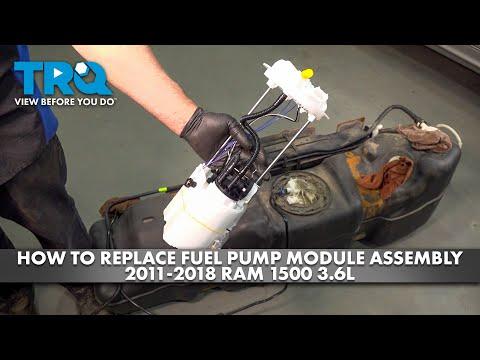
On your 2015 1500, the main fuel pump is inside the fuel tank as part of the fuel pump module (pump + level sensor + filter). The tank must be lowered to replace it.
Quick questions before we start:
- ✅ Do you have a safe way to lift and support the truck (good jack + jack stands or a lift)?
- ✅ Is your fuel tank close to empty (¼ tank or less)? A full tank is very heavy and unsafe to drop.
If the answer to either is “no”, I strongly recommend having a shop do this job. If you’re set, follow the guide below.
1500 - Parts & Specs 📦
- 🧰 Main parts
- Fuel pump module assembly (for 3.6L, 4WD, flex fuel)
- Fuel pump module seal/O-ring (always replace)
- Fuel tank strap bolts (replace if badly rusted)
- 🧰 Key torque specs (Ram OEM)
- Fuel tank strap bolts: 40 N·m (30 ft‑lb)
- Fuel filler neck clamp: 3–5 N·m (27–44 in‑lb)
- Fuel pump lock ring: tighten until tabs fully seated; no specific torque, use lock-ring tool and align marks.
1500 - Tools Needed 🔧
- 🧰 Basic tools
- Floor jack and jack stands (stands hold the truck safely after lifting)
- Transmission jack or a wide wood-topped floor jack to support the tank
- Socket set: 8mm, 10mm, 13mm, 15mm, 18mm sockets (metric) + ratchet
- Extensions and a universal joint (for hard-to-reach bolts)
- Flat screwdriver and trim tool (for clips)
- Pliers (regular and needle-nose)
- 🧰 Specialty / very helpful tools
- Fuel line quick-disconnect tool (small plastic tool that releases the fuel line clips)
- Fuel pump lock-ring tool or brass punch + hammer (never use steel punch near fuel fumes)
- Safety glasses and fuel-resistant gloves
- Drain pan and rags (for spilled fuel)
1500 - Safety First ⚠️
- ⚠️ Work outside or in a very well-ventilated area. No smoking, no open flames, no grinding/welding nearby.
- ⚠️ Disconnect the negative battery cable before touching fuel lines.
- ⚠️ Support the truck with jack stands, never only a jack.
- ⚠️ Fuel is toxic and flammable. Keep a fire extinguisher rated for fuel nearby.
1500 - Prep: Relieve Fuel Pressure & Access 🔍
- 🧰 1. Relieve fuel pressure
- Remove the fuel pump relay from the under-hood fuse/relay box (check lid diagram for “FUEL PUMP” or “F70/F73” depending on label).
- Start the engine and let it run until it stalls. Crank for a few more seconds to bleed pressure.
- Turn key OFF and reconnect nothing yet.
- 🧰 2. Disconnect battery
- Use 10mm wrench to remove the negative (black) battery cable and secure it away from the terminal.
- 🧰 3. Raise and support the rear
- Chock the front wheels.
- Lift the rear of the truck by the frame and place jack stands under the frame rails.
- Lower the truck gently onto the stands and leave the jack under the rear axle as a backup (not as main support).
1500 - Remove Fuel Tank 🛠️
- 🧰 4. Support the fuel tank
- Place a transmission jack or floor jack with a wide wood block under the center of the tank.
- Apply light upward pressure to hold the tank.
- 🧰 5. Disconnect filler neck and vent hoses
- At the rear/side of the tank, loosen the hose clamps on the large filler hose and smaller vent hose using a flat screwdriver or 8mm socket.
- Twist and pull the hoses off the tank fittings. Twisting first helps break them loose.
- 🧰 6. Unplug electrical connectors
- Locate the fuel pump electrical connector on top/front of the tank (you may need to lower the tank slightly to see it).
- Press the tab and unplug the connector.
- Disconnect any additional small connectors (EVAP/vent) attached to the tank.
- 🧰 7. Disconnect EVAP lines
- Find the small plastic lines going to the tank (EVAP/vent lines).
- Use your fingers or a small pick to release the quick-connect tabs and pull the lines off gently.
- Do not force them; they can crack if pried too hard.
- 🧰 8. Remove tank straps
- Support the tank firmly with the jack.
- Remove the fuel tank strap bolts (usually 15mm or 18mm) at the rear of each strap.
- Rotate the straps down and away from the tank.
- 🧰 9. Lower the tank
- Slowly lower the jack and tank a few inches.
- Check for any remaining hoses or connectors; disconnect them as needed.
- Lower the tank fully and slide it out from under the truck.
1500 - Replace Fuel Pump Module 🔄
- 🧰 10. Clean around pump opening
- Use compressed air or a brush to clean dirt around the pump lock ring on top of the tank.
- Keeping dirt out prevents damage to the new pump.
- 🧰 11. Remove lock ring
- Use a fuel pump lock-ring tool with a hammer, or a brass punch and hammer.
- Tap the ring counterclockwise until it unlocks and can be lifted off.
- 🧰 12. Remove old pump module
- Lift the pump module straight up, tilting slightly to clear the float arm.
- Remove and discard the old O-ring seal.
- 🧰 13. Install new pump module
- Lightly coat the new O-ring with clean engine oil or fuel.
- Place the new O-ring in the groove on the tank.
- Carefully lower the new pump module into the tank, guiding the float arm in without bending it.
- Align the marks on the pump flange and tank (note orientation of connectors/lines).
- 🧰 14. Install lock ring
- Install the lock ring and tap it clockwise with the lock-ring tool or brass punch until fully seated and aligned with the stops.
1500 - Reinstall Fuel Tank 🔁
- 🧰 15. Position tank under truck
- Slide the tank back under the truck and onto the jack.
- Raise it slowly into position, watching hoses and wiring.
- 🧰 16. Reinstall tank straps
- Rotate the straps into place over the tank.
- Install strap bolts and tighten to 30 ft‑lb (40 N·m).
- 🧰 17. Reconnect electrical and lines
- Plug in the fuel pump electrical connector until it clicks.
- Reconnect EVAP/vent lines to their fittings (listen/feel for a click).
- Reconnect the filler hose and vent hose; tighten clamps to 27–44 in‑lb (snug, not crushed).
- 🧰 18. Lower the truck
- Remove the jack from under the tank.
- Raise the rear slightly, remove jack stands, and lower the truck to the ground.
1500 - Prime System & First Start 🚚
- 🧰 19. Reconnect battery and relay
- Reconnect the negative battery cable and tighten the 10mm nut.
- Reinstall the fuel pump relay in the fuse box.
- 🧰 20. Prime the fuel system
- Turn the key to RUN (not start) for 5 seconds, then OFF.
- Repeat 3–4 times. This builds fuel pressure.
- 🧰 21. Start and check for leaks
- Start the engine. It may crank a bit longer the first time.
- With the truck safely supported if needed, look under the truck and around the tank for any fuel leaks or drips.
- If you see or smell fuel, shut off immediately and recheck connections.
1500 - Tips & Next Steps 💡
- 🧰 Good time to replace the fuel filter/strainer if not included with the module (most modules have it built in).
- 🧰 Keep the tank above ¼ full in daily use to help cool the pump and extend its life.
If you tell me roughly how full your tank is and what tools you have, I can tailor this to your exact situation and suggest any shortcuts or extra safety steps.
HowToo makes it easy: below this answer you’ll see the correct fuel pump module, new seal, and any specialty tools (lock-ring tool, fuel line disconnect set) you may need. You can add them to your cart right from the parts section, with fast shipping.
Guide for Fuel Pump Module Assembly replace for these Ram vehicles
| Year Make Model | Sub Model | Engine | Body Style |
|---|---|---|---|
| 2017 Ram 1500 | - | V8 5.7L | - |
| 2017 Ram 1500 | - | V6 3.6L | - |
| 2016 Ram 1500 | - | V8 5.7L | - |
| 2016 Ram 1500 | - | V6 3.6L | - |
| 2015 Ram 1500 | - | V8 5.7L | - |
| 2015 Ram 1500 | - | V6 3.6L | - |
| 2013 Ram 1500 | - | V8 5.7L | - |
| 2013 Ram 1500 | - | V6 3.6L | - |
| 2013 Ram 1500 | - | V8 4.7L | - |