









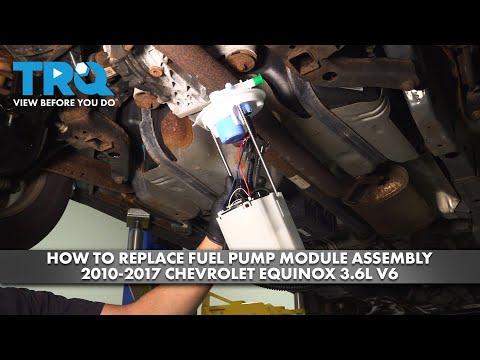







How to Replace the Fuel Pump on a 2012-2017 Chevrolet Equinox (Trim: LT | Engine: V6 3.6L)
Step-by-step DIY fuel pump module replacement with required tools, parts list, torque specs, safety tips, and cost savings
How to Replace the Fuel Pump on a 2012-2017 Chevrolet Equinox (Trim: LT | Engine: V6 3.6L)
Step-by-step DIY fuel pump module replacement with required tools, parts list, torque specs, safety tips, and cost savings for 2012, 2013, 2014, 2015, 2016, 2017


🔧 Equinox - Fuel Pump Replacement
Your Equinox actually has two fuel pumps: a fuel pump module in the tank and a high-pressure pump on the engine. The steps, tools, and difficulty are very different.
Difficulty Level: Advanced | Estimated Time: 3-5 hours
⚠️ Safety & Precautions
- ⛽ Fuel is highly flammable – keep all sparks, cigarettes, and open flames far away.
- 🧯 Work in a well-ventilated area to avoid breathing fuel vapors; have a fire extinguisher nearby.
- 🔌 Disconnect the negative battery cable before working on the fuel system.
- 🧤 Fuel will irritate skin and eyes – wear safety glasses and fuel-resistant gloves.
- 🛠 Your Equinox’s tank is under the rear floor – the vehicle must be safely raised and supported.
🔧 Required Tools
You'll need the following tools for this repair:
- 🧰 Floor jack (rated 3-ton minimum)
- 🧰 Jack stands (rated 3-ton minimum, Qty 4)
- 🧰 Wheel chocks
- 🧰 Safety glasses
- 🧰 Nitrile gloves
- 🧰 Drain pan (fuel safe)
- 🧰 Shop rags
- 🧰 3/8" drive ratchet
- 🧰 1/2" drive ratchet
- 🧰 10mm socket
- 🧰 13mm socket
- 🧰 15mm socket
- 🧰 6" socket extension
- 🧰 Torx T15 screwdriver
- 🧰 Flathead screwdriver (medium)
- 🧰 Fuel line quick-disconnect tool set (GM size) (specialty)
- 🧰 Fuel pump lock ring tool (GM plastic ring type) (specialty)
- 🧰 Pry bar (small)
- 🧰 Transmission/floor jack with wide saddle (for fuel tank support)
- 🧰 Torque wrench 3/8" drive (5–60 Nm range)
- 🧰 Torque wrench 1/2" drive (20–150 Nm range)
- 🧰 Plastic trim tool set
- 🧰 Multimeter
🔩 Required Parts
HowToo sells all the parts you need for this repair:
- 🔩 Fuel pump module (in-tank, with fuel level sender) - Qty: 1
- 🔩 Fuel pump module seal/O-ring - Qty: 1
- 🔩 Fuel pump lock ring (tank retaining ring) - Qty: 1
- 🔩 Fuel tank strap bolts (replacement hardware) - Qty: 4
- 🔩 Fuel line retaining clips - Qty: 2–4
- 🔩 Electrical contact cleaner - Qty: 1
- 🔩 Anti-seize compound - Qty: 1
- 🔩 Penetrating oil spray - Qty: 1
📋 Before You Begin
- 🅿️ Park the Equinox on a flat, solid surface; set the parking brake; place wheel chocks at the front wheels.
- ⛽ Try to have the fuel tank nearly empty; a full tank is very heavy.
- 🔌 Disconnect the negative battery terminal using a 10mm socket.
- ⛽ Relieve fuel pressure:
- Pull the fuel pump fuse or relay in the underhood fuse box (check the fuse box lid diagram).
- Start the engine and let it run until it stalls, then crank for 3–5 seconds more.
- Turn ignition OFF and reinstall the fuse/relay after repair is complete.
- 🧯 Keep a class B/C fire extinguisher within reach.
🔨 Step-by-Step Instructions
Follow these steps in order:
Step 1: Safely raise and support the rear of the Equinox
- Use the floor jack to lift the rear of the vehicle at the rear center jacking point (under the rear subframe crossmember).
- Place jack stands under the rear pinch welds on both sides; lower the vehicle onto the stands.
- Leave the floor jack lightly touching the center area under the rear subframe for backup support.
- Never work under a car supported only by a jack.
Step 2: Support the fuel tank
- Position the transmission/floor jack with a wide saddle or a wooden board under the center of the fuel tank.
- Raise the jack just enough to firmly support the tank without lifting the vehicle.
Step 3: Remove the fuel tank shield (if equipped)
- Use a 13mm socket and ratchet to remove any bolts securing the plastic or metal tank shield.
- Lower the shield and set it aside.
- Spray rusty bolts with penetrating oil first.
Step 4: Disconnect fuel filler neck and vent hoses
- At the left rear of the tank, locate the large filler hose and smaller vent hose going to the tank.
- Use a flathead screwdriver to loosen the hose clamps.
- Twist the hoses gently to break them free, then pull them off the tank fittings.
- Use shop rags to catch any small fuel drips.
Step 5: Unplug electrical connectors and fuel lines at the tank
- At the front top area of the tank, locate the main fuel pump electrical connector.
- Use a plastic trim tool to release any clips holding the harness to the tank.
- Press the locking tab and disconnect the electrical connector by hand.
- For fuel lines:
- Use the fuel line quick-disconnect tool to release the fuel supply line from the tank fitting.
- Wrap the connection with shop rags to catch fuel as you separate it.
Step 6: Remove fuel tank straps
- Support the tank firmly with the transmission jack; slightly raise if needed.
- Use a 15mm socket and 1/2" drive ratchet to remove the rear strap bolts (one on each strap).
- Slowly lower the straps away from the tank; note their orientation for reinstallation.
- Torque on reassembly: 40 Nm (30 ft-lbs).
Step 7: Lower the tank and access the pump
- Slowly lower the transmission jack to bring the tank down a few inches.
- Check for any remaining hoses or connectors; disconnect them using flathead screwdriver or hands as needed.
- Lower the tank fully and slide it out from under the vehicle.
- Work slowly; don’t force the tank past obstacles.
Step 8: Clean around the pump opening
- Set the tank on a clean surface.
- Use shop rags to wipe all dirt around the fuel pump lock ring and opening.
- Keeping dirt out prevents fuel system damage.
Step 9: Remove the fuel pump lock ring
- Install the fuel pump lock ring tool over the plastic lock ring tabs.
- Use a 3/8" drive ratchet to turn the tool counterclockwise to unlock the ring.
- If you don’t have the tool, a brass punch and hammer are sometimes used, but the proper tool is safer for plastic rings.
- Lift off the lock ring and remove the old tank seal/O-ring.
Step 10: Remove the old fuel pump module
- Carefully lift the pump module straight up from the tank.
- Angle it slightly to clear the float arm and internal hoses.
- Let excess fuel drain from the module into the tank before moving it to the drain pan.
Step 11: Install the new seal and pump module
- Place the new fuel pump module seal/O-ring into its groove on the tank opening.
- Carefully lower the new pump module into the tank, ensuring the float arm is not bent.
- Align the pump module tabs with the alignment marks on the tank (note the orientation of the electrical connector/fuel line fittings to match the old one).
Step 12: Reinstall the lock ring
- Set the new or cleaned lock ring over the pump module.
- Use the fuel pump lock ring tool and 3/8" ratchet to turn it clockwise until it fully locks into its stops.
- Torque: 100–110 Nm (74–81 ft-lbs) if your tool and ring style allow torque measurement.
Step 13: Reinstall the fuel tank
- Slide the tank back under the vehicle and position it on the transmission jack.
- Raise the tank slowly into position, ensuring it clears exhaust and suspension parts.
- Reconnect any upper hoses or electrical connectors you can reach as the tank comes up.
Step 14: Reinstall tank straps and shield
- Position the fuel tank straps over the tank.
- Install new or cleaned strap bolts using a 15mm socket and 1/2" ratchet.
- Torque strap bolts to 40 Nm (30 ft-lbs) with the torque wrench.
- Reinstall the tank shield using the 13mm socket; snug the bolts to about 15 Nm (11 ft-lbs).
Step 15: Reconnect filler neck, vent hoses, fuel line, and wiring
- Reconnect the large filler hose and smaller vent hose to the tank fittings; tighten clamps using a flathead screwdriver.
- Snap the fuel line back onto the tank outlet using your hands; gently tug to ensure it is locked.
- Reconnect the main fuel pump electrical connector by hand until it clicks; secure the wiring with clips using a plastic trim tool.
Step 16: Lower the vehicle
- Remove the transmission jack from under the tank.
- Use the floor jack to lift the rear slightly, remove jack stands, then lower the Equinox to the ground.
Step 17: Reconnect battery and prime the fuel system
- Reconnect the negative battery cable using a 10mm socket; tighten to about 8 Nm (71 in-lbs).
- Turn the ignition key to ON (engine off) for 5 seconds, then OFF; repeat 3–4 times to let the new pump prime the system.
Step 18: Start the engine and check for leaks
- Start the engine and let it idle.
- Visually check underneath for any fuel leaks near the tank, straps, and fuel line connection.
- Sniff for strong fuel smells; if present, shut the engine off and recheck all connections.
✅ After Repair
- 🚗 Take a short test drive (5–10 minutes) and make sure there is no hesitation, stalling, or loss of power.
- ⛽ Recheck for fuel leaks after the drive, especially under the rear of the vehicle.
- 💡 If the check engine light is on, use a scan tool at a local shop or parts store to clear any old fuel-system codes.
- 📏 Confirm the fuel gauge reads correctly as you refuel; an incorrect reading can indicate an issue with the new module’s level sensor.
💰 DIY vs Shop Cost
Shop Cost: $750–$1,050 (parts + labor)
DIY Cost: $220–$380 (parts only)
You Save: $530–$670 by doing it yourself!
Shop labor rates vary but typically run $100–$150/hour. This repair takes a shop approximately 3–4 hours.
🎯 Ready to get started?
HowToo makes it easy: same-day/2-day shipping on every part, plus all the tools and specialty tools you need! Check out the parts and tools sections above to add everything to your cart.
Guide for Fuel Pump and Sender Assembly replace for these Chevrolet vehicles
| Year Make Model | Sub Model | Engine | Body Style |
|---|---|---|---|
| 2017 Chevrolet Equinox | LS | Inline 4 2.4L | - |
| 2017 Chevrolet Equinox | LT | Inline 4 2.4L | - |
| 2017 Chevrolet Equinox | L | Inline 4 2.4L | - |
| 2017 Chevrolet Equinox | Premier | Inline 4 2.4L | - |
| 2016 Chevrolet Equinox | LS | Inline 4 2.4L | - |
| 2016 Chevrolet Equinox | LT | Inline 4 2.4L | - |
| 2016 Chevrolet Equinox | LTZ | Inline 4 2.4L | - |
| 2016 Chevrolet Equinox | L | Inline 4 2.4L | - |
| 2015 Chevrolet Equinox | LS | Inline 4 2.4L | - |
| 2015 Chevrolet Equinox | LT | Inline 4 2.4L | - |
| 2015 Chevrolet Equinox | LTZ | Inline 4 2.4L | - |
| 2015 Chevrolet Equinox | L | Inline 4 2.4L | - |
| 2014 Chevrolet Equinox | LS | Inline 4 2.4L | - |
| 2014 Chevrolet Equinox | LT | Inline 4 2.4L | - |
| 2014 Chevrolet Equinox | LTZ | Inline 4 2.4L | - |
| 2013 Chevrolet Equinox | LS | Inline 4 2.4L | - |
| 2013 Chevrolet Equinox | LT | Inline 4 2.4L | - |
| 2013 Chevrolet Equinox | LTZ | Inline 4 2.4L | - |
| 2012 Chevrolet Equinox | LS | Inline 4 2.4L | - |
| 2012 Chevrolet Equinox | LT | Inline 4 2.4L | - |
| 2012 Chevrolet Equinox | LTZ | Inline 4 2.4L | - |