









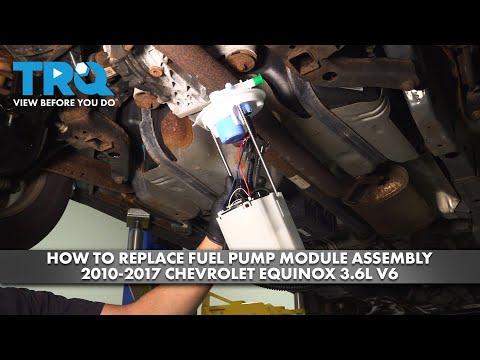







How to Replace the Fuel Pump on a 2010-2017 GMC Terrain (In-Tank Fuel Pump Module) (Engine: Inline 4 2.4L)
Step-by-step DIY guide with required tools/parts, safety tips, and fuel tank drop vs access panel instructions
How to Replace the Fuel Pump on a 2010-2017 GMC Terrain (In-Tank Fuel Pump Module) (Engine: Inline 4 2.4L)
Step-by-step DIY guide with required tools/parts, safety tips, and fuel tank drop vs access panel instructions for 2010, 2011, 2012, 2013, 2014, 2015, 2016, 2017


🔧 Terrain - Fuel Pump Replacement
The fuel pump on your Terrain is part of an in-tank fuel pump module (pump + level sensor). Replacement involves safely depressurizing the fuel system, disconnecting fuel lines and wiring, and removing the module either through an interior access panel (if equipped) or by lowering the fuel tank.
Difficulty Level: Advanced | Estimated Time: 2-5 hours
Assumption: Your Terrain uses an in-tank pump module; access may be under the rear seat or may require lowering the tank.
⚠️ Safety & Precautions
- 🔥 Work outdoors or in a well-ventilated area; fuel vapors ignite easily.
- 🧯 Keep a Class B fire extinguisher nearby; no smoking, flames, or hot work.
- 🔌 Disconnect the negative battery cable to prevent sparks.
- 🧤 Wear fuel-resistant gloves and safety glasses; fuel can irritate skin/eyes.
- 🚗 Support the vehicle with jack stands; never rely on a floor jack alone.
- ⛽ Relieve fuel pressure before opening any fuel line to avoid fuel spray.
🔧 Required Tools
You'll need the following tools for this repair:
- Safety glasses
- Nitrile gloves
- Class B fire extinguisher
- Floor jack (rated 3-ton minimum)
- Jack stands (rated 3-ton minimum)
- Wheel chocks
- Metric socket set (7mm, 10mm, 13mm, 15mm)
- Ratchet
- Socket extensions
- Torque wrench (10–100 ft-lbs range)
- Flat trim tool
- Flathead screwdriver
- Fuel line quick-disconnect tool set (5/16", 3/8") (specialty)
- Fuel pump lock ring tool (specialty)
- Brass punch
- Small hammer
- Shop towels
- Drain pan (fuel-safe)
- Siphon pump (fuel-safe)
- Transmission jack (specialty)
🔩 Required Parts
HowToo sells all the parts you need for this repair:
- Fuel pump module assembly (in-tank) - Qty: 1
- Fuel pump module seal/O-ring - Qty: 1
- Fuel pump lock ring - Qty: 1 (recommended)
📋 Before You Begin
- 🅿️ Park on level ground, set the parking brake, and chock the front wheels.
- ⛽ Run the fuel level as low as possible; a lighter tank is much safer to handle.
- 🔌 Use a 10mm socket to disconnect the negative battery cable and isolate it so it can’t spring back.
- 🧰 Know your specialty tools:
- A fuel line quick-disconnect tool releases the spring-lock inside GM fuel line fittings.
- A fuel pump lock ring tool grips the retaining ring to turn it without sparks.
🔨 Step-by-Step Instructions
Follow these steps in order:
Step 1: Relieve fuel pressure
- Use a flathead screwdriver to open the underhood fuse/relay box cover.
- Remove the fuel pump fuse/relay (diagram is on the fuse box cover) by hand or with a small puller.
- Start the engine and let it run until it stalls.
- Crank again for 3 seconds to remove remaining pressure, then turn the key OFF.
Step 2: Choose the correct access method
- Look under the rear seat cushion/cargo floor area for a metal access cover held by small bolts.
- If you find an access cover, follow Steps 3–7.
- If there is no access cover, you must lower the fuel tank; skip to Steps 8–15.
Step 3: Remove the interior access cover (if equipped)
- Use a trim tool to lift the rear seat cushion edges as needed.
- Use a 7mm socket or 10mm socket (varies by cover fasteners) to remove the access cover screws/bolts.
- Lift the cover and set it aside. Use shop towels to catch any dust and fuel.
Step 4: Clean the area before opening the tank
- Use shop towels to wipe dirt from the top of the pump module.
- Cleanliness prevents tank contamination.
Step 5: Disconnect the wiring connector
- Press the lock tab and unplug the pump module connector by hand.
Step 6: Disconnect the fuel line(s)
- Place a drain pan (fuel-safe) under the connection.
- Use the fuel line quick-disconnect tool (5/16" or 3/8") to release the line, then pull the line straight off.
- Use shop towels to wrap the connection as you separate it to control spray/drips.
Step 7: Remove the lock ring and lift out the fuel pump module
- Use the fuel pump lock ring tool to rotate the ring counterclockwise and remove it.
- If you don’t have the ring tool, use a brass punch and small hammer to tap the ring counterclockwise (brass reduces spark risk).
- Lift the module up slowly. Angle it as needed to clear the float arm without bending it.
- Remove the old seal/O-ring from the tank opening by hand.
Step 8: (No access cover) Raise and support the vehicle
- Use a floor jack to lift the rear of the vehicle at the approved jack point.
- Set it down onto jack stands and confirm stability before going underneath.
Step 9: Support the fuel tank
- Position a transmission jack under the fuel tank.
- Use a block of wood (flat) between the jack and tank if needed to spread the load.
Step 10: Disconnect the filler neck and vent connections
- Use a flathead screwdriver to loosen hose clamps where accessible.
- Carefully twist and pull hoses off the tank fittings by hand.
Step 11: Disconnect fuel lines and electrical connector at the tank
- Use the fuel line quick-disconnect tool set to disconnect the fuel line(s).
- Unplug the tank/pump electrical connector by hand.
- Use shop towels and a drain pan (fuel-safe) to catch any fuel.
Step 12: Lower the tank straps
- Use a 15mm socket and ratchet to remove the fuel tank strap bolts.
- Lower the tank slightly with the transmission jack and double-check that nothing is still connected.
- Once free, lower the tank enough to access the pump module on top.
- Torque to 25 Nm (18 ft-lbs) when reinstalling the strap bolts.
Step 13: Remove the pump module from the tank (tank lowered)
- Use shop towels to clean dirt from the top of the tank around the module.
- Use the fuel pump lock ring tool (or brass punch and small hammer) to remove the lock ring.
- Lift out the module and remove the old seal/O-ring.
Step 14: Install the new seal and new fuel pump module
- Install the new seal/O-ring into the tank groove by hand. Make sure it sits flat.
- Lower the new pump module into the tank, guiding the float arm carefully.
- Install the lock ring and tighten with the fuel pump lock ring tool until fully seated and aligned (ring should be firmly locked with no wobble).
- Don’t pinch the seal.
Step 15: Reconnect everything and reassemble
- Reconnect fuel line(s) by pushing them on until they click; lightly tug by hand to confirm they are locked.
- Reconnect the electrical connector until it clicks.
- If the tank was lowered:
- Raise the tank with the transmission jack.
- Reinstall straps using the 15mm socket and torque wrench.
- Torque to 25 Nm (18 ft-lbs).
- Reconnect filler and vent hoses using the flathead screwdriver to tighten clamps.
- If you used an access cover:
- Reinstall the cover using a 7mm socket or 10mm socket.
- Reposition the rear seat cushion using a trim tool as needed.
✅ After Repair
- 🔌 Reinstall the fuel pump fuse/relay by hand, then reconnect the negative battery cable using a 10mm socket.
- 🔑 Prime the system: turn key to ON for 5 seconds (do not crank), OFF for 5 seconds; repeat 3 times.
- ⛽ Start the engine and let it idle for 2 minutes while you check for leaks at all fuel connections.
- 🧪 If the check engine light is on, scan and clear codes after confirming there are no leaks.
- 🚙 Test drive 5–10 minutes, then re-check for fuel smell or seepage.
💰 DIY vs Shop Cost
Shop Cost: $900-$1,600 (parts + labor)
DIY Cost: $250-$700 (parts only)
You Save: $650-$900 by doing it yourself!
Shop labor rates vary but typically run $100-$150/hour. This repair takes a shop approximately 2-4 hours.
🎯 Ready to get started?
HowToo makes it easy: same-day/2-day shipping on every part, plus all the tools and specialty tools you need! Check out the parts and tools sections below to add everything to your cart.
Guide for Fuel Pump Module Assembly replace for these GMC vehicles
| Year Make Model | Sub Model | Engine | Body Style |
|---|---|---|---|
| 2017 GMC Terrain | - | Inline 4 2.4L | - |
| 2017 GMC Terrain | - | V6 3.6L | - |
| 2016 GMC Terrain | - | Inline 4 2.4L | - |
| 2016 GMC Terrain | - | V6 3.6L | - |
| 2015 GMC Terrain | - | Inline 4 2.4L | - |
| 2015 GMC Terrain | - | V6 3.6L | - |
| 2014 GMC Terrain | - | Inline 4 2.4L | - |
| 2014 GMC Terrain | - | V6 3.6L | - |
| 2013 GMC Terrain | - | Inline 4 2.4L | - |
| 2013 GMC Terrain | - | V6 3.6L | - |
| 2012 GMC Terrain | - | Inline 4 2.4L | - |
| 2011 GMC Terrain | - | Inline 4 2.4L | - |
| 2010 GMC Terrain | - | Inline 4 2.4L | - |