









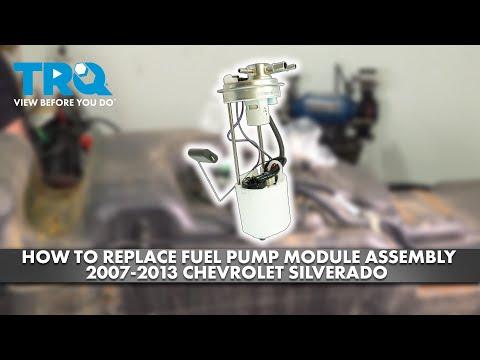







How to Replace the Fuel Pump on a 2010-2013 Chevrolet Silverado 1500 (Engine: V8 5.3L | Body: Standard Cab Pickup)
Step-by-step instructions with tools, parts, safety tips, and torque specs
How to Replace the Fuel Pump on a 2010-2013 Chevrolet Silverado 1500 (Engine: V8 5.3L | Body: Standard Cab Pickup)
Step-by-step instructions with tools, parts, safety tips, and torque specs for 2010, 2011, 2012, 2013


🔧 Fuel Pump - Replacement
The fuel pump on your Silverado is inside the fuel tank as part of the pump module. This job means safely relieving fuel pressure, lowering the tank, and swapping the pump module assembly.
Difficulty Level: Intermediate | Estimated Time: 3-5 hours
⚠️ Safety & Precautions
- Work outside or in a very well-ventilated area. Fuel vapors are flammable.
- Keep sparks, cigarettes, heat guns, and open flames far away.
- Disconnect the negative battery cable before starting.
- Relieve fuel system pressure before opening any fuel lines.
- Use a jack and jack stands on level ground. Never rely on the jack alone.
- If fuel is spilled, clean it up immediately and let the area air out.
🔧 Required Tools
You'll need the following tools for this repair:
- Safety glasses
- Fuel-safe gloves
- Floor jack (rated 3-ton minimum)
- Jack stands (rated for truck weight)
- Wheel chocks
- 8mm socket
- 10mm socket
- 13mm socket
- 15mm socket
- 3/8-inch ratchet
- 3/8-inch extension set
- Fuel line quick-disconnect tool
- Flat-blade screwdriver
- Torque wrench
- Drain pan
- Shop rags
- Funnel
🔩 Required Parts
HowToo sells all the parts you need for this repair:
- Fuel pump module assembly - Qty: 1
- Fuel tank sending unit seal - Qty: 1
- Fuel tank strap bolts - Qty: 2
- Fuel filter - Qty: 1
- Fuel line O-rings / seals - Qty: 1 set
📋 Before You Begin
- Run the tank down to as little fuel as possible. A lighter tank is much easier and safer to remove.
- Park on a level surface and set the parking brake.
- Disconnect the negative battery cable with an 8mm socket.
- Relieve fuel pressure at the fuel rail service point before disconnecting lines.
- Label every hose and connector.
🔨 Step-by-Step Instructions
Follow these steps in order:
Step 1: Relieve fuel pressure
- Use a fuel pressure relief method at the Schrader valve on the fuel rail if equipped, then capture fuel with a rag and drain pan.
- Disconnect the negative battery cable with an 8mm socket.
- Wear eye protection now.
Step 2: Raise and support the truck
- Use a floor jack to lift the rear of the truck.
- Support it securely with jack stands placed under the frame.
- Block the front wheels with wheel chocks.
Step 3: Remove the fuel filler neck shield and disconnect the filler neck
- Use a 10mm socket and flat-blade screwdriver to remove any filler neck shield fasteners and clamps.
- Disconnect the filler hose from the tank neck and move it aside.
- Expect a little fuel odor.
Step 4: Disconnect electrical and fuel lines
- Use a fuel line quick-disconnect tool to separate the fuel supply and vapor lines.
- Disconnect the pump wiring harness connector.
- Cover open lines with clean caps or rags to keep dirt out.
Step 5: Support the tank and remove the straps
- Place the floor jack under the tank with a wood block if needed to spread the load.
- Use a 15mm socket to remove the fuel tank strap bolts.
- Lower the tank slowly and check for any remaining connections.
Step 6: Remove the old fuel pump module
- Clean the top of the tank with a rag before opening it.
- Use a flat-blade screwdriver and care to remove the lock ring if equipped.
- Lift the pump module straight out of the tank.
- Remove the old seal and keep dirt out of the tank opening.
Step 7: Install the new fuel pump module
- Install the new fuel tank sending unit seal in the tank opening.
- Lower the new fuel pump module assembly into the tank carefully.
- Make sure the float arm is not bent and the module is seated fully.
- Install the lock ring and tighten to spec per service manual if your replacement kit provides a different retention style.
Step 8: Raise the tank and reconnect everything
- Use the floor jack to lift the tank back into place.
- Install the straps and tighten the strap bolts with a 15mm socket.
- Torque to 25 Nm (18 ft-lbs) for the tank strap bolts.
- Reconnect the fuel lines and electrical connector.
- Reinstall the filler neck and any shield hardware with a 10mm socket.
Step 9: Reconnect battery and prime the system
- Reconnect the negative battery cable with an 8mm socket.
- Turn the key to ON for 2-3 seconds, then OFF. Repeat 3 times to prime the system.
- Check carefully for fuel leaks at every connection.
✅ After Repair
- Start the engine and let it idle.
- Inspect the tank, lines, and rail area for leaks.
- Road test the truck and confirm normal power and no hesitation.
- If the fuel gauge reads incorrectly, the sender may need recheck at the module connector.
💰 DIY vs Shop Cost
Shop Cost: $850-$1,400 (parts + labor)
DIY Cost: $250-$550 (parts only)
You Save: $600-$850 by doing it yourself!
Shop labor rates vary but typically run $100-$150/hour. This repair takes a shop approximately 3-5 hours.
🎯 Ready to get started?
HowToo makes it easy: same-day/2-day shipping on every part, plus all the tools and specialty tools you need! Check out the parts and tools sections below to add everything to your cart.
Guide for Fuel Pump Module Assembly replace for these Chevrolet vehicles
| Year Make Model | Sub Model | Engine | Body Style |
|---|---|---|---|
| 2013 Chevrolet Silverado 1500 | - | V8 4.8L | Extended Cab Pickup |
| 2013 Chevrolet Silverado 1500 | - | V8 4.8L | Crew Cab Pickup |
| 2013 Chevrolet Silverado 1500 | - | V8 5.3L | Crew Cab Pickup |
| 2013 Chevrolet Silverado 1500 | - | V8 5.3L | Extended Cab Pickup |
| 2013 Chevrolet Silverado 1500 | - | V8 4.8L | Standard Cab Pickup |
| 2013 Chevrolet Silverado 1500 | - | V8 5.3L | Standard Cab Pickup |
| 2012 Chevrolet Silverado 1500 | - | V8 4.8L | Extended Cab Pickup |
| 2012 Chevrolet Silverado 1500 | - | V8 4.8L | Crew Cab Pickup |
| 2012 Chevrolet Silverado 1500 | - | V8 5.3L | Crew Cab Pickup |
| 2012 Chevrolet Silverado 1500 | - | V8 5.3L | Extended Cab Pickup |
| 2012 Chevrolet Silverado 1500 | - | V8 4.8L | Standard Cab Pickup |
| 2012 Chevrolet Silverado 1500 | - | V8 5.3L | Standard Cab Pickup |
| 2011 Chevrolet Silverado 1500 | - | V8 4.8L | Extended Cab Pickup |
| 2011 Chevrolet Silverado 1500 | - | V8 4.8L | Crew Cab Pickup |
| 2011 Chevrolet Silverado 1500 | - | V8 5.3L | Crew Cab Pickup |
| 2011 Chevrolet Silverado 1500 | - | V8 5.3L | Extended Cab Pickup |
| 2011 Chevrolet Silverado 1500 | - | V8 4.8L | Standard Cab Pickup |
| 2011 Chevrolet Silverado 1500 | - | V8 5.3L | Standard Cab Pickup |
| 2010 Chevrolet Silverado 1500 | - | V8 4.8L | Extended Cab Pickup |
| 2010 Chevrolet Silverado 1500 | - | V8 4.8L | Crew Cab Pickup |
| 2010 Chevrolet Silverado 1500 | - | V8 5.3L | Crew Cab Pickup |
| 2010 Chevrolet Silverado 1500 | - | V8 5.3L | Extended Cab Pickup |
| 2010 Chevrolet Silverado 1500 | - | V8 4.8L | Standard Cab Pickup |
| 2010 Chevrolet Silverado 1500 | - | V8 5.3L | Standard Cab Pickup |