









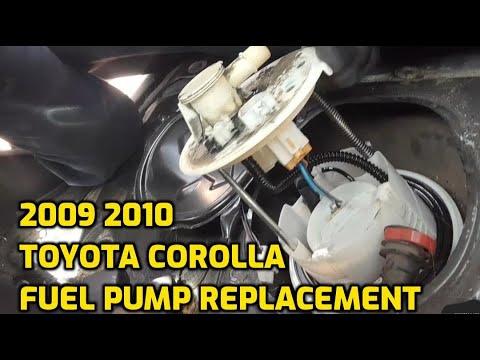





How to Replace the Fuel Pump on a 2009 Toyota Corolla (In-Tank Module Under Rear Seat)
Step-by-step instructions with safety tips, required tools/parts, fuel pressure relief, and leak-check guidance
How to Replace the Fuel Pump on a 2009 Toyota Corolla (In-Tank Module Under Rear Seat)
Step-by-step instructions with safety tips, required tools/parts, fuel pressure relief, and leak-check guidance


🔧 Corolla - Fuel Pump Replacement
Your Corolla’s fuel pump sits inside the fuel tank as part of a module under the rear seat area. The job is mainly about working cleanly and safely (fuel fumes!), relieving fuel pressure, then swapping the pump/module and sealing it back up so it doesn’t leak or set an EVAP/fuel smell issue.
Difficulty Level: Intermediate | Estimated Time: 1.5-3.0 hours
⚠️ Safety & Precautions
- 🧯 Work outdoors or in a very well-ventilated area; no smoking/sparks/open flames.
- 🧤 Fuel is flammable and hard on skin/eyes; wear gloves and safety glasses.
- 🔋 Disconnect the negative battery cable before opening the tank module.
- 🧻 Keep rags handy and immediately wipe spills; dispose of fuel-soaked rags safely.
- ⚠️ Relieve fuel pressure before disconnecting any fuel line to prevent spray.
🔧 Required Tools
You'll need the following tools for this repair:
- 10mm socket
- 12mm socket
- 1/4" drive ratchet
- 3/8" drive ratchet
- 3" extension
- Torque wrench (5-30 Nm range)
- Flat-blade screwdriver
- Phillips screwdriver
- Trim removal tool
- Needle-nose pliers
- Pick tool
- Brass drift punch (specialty)
- Small hammer
- Shop towels
- Small drain pan
- Permanent marker
- Handheld vacuum
- Nitrile gloves
- Safety glasses
- Fire extinguisher (Class B)
🔩 Required Parts
HowToo sells all the parts you need for this repair:
- Fuel pump module assembly - Qty: 1
- Fuel pump tank seal / O-ring (module gasket) - Qty: 1
- Fuel pump strainer (sock filter) - Qty: 1
- Fuel line retainer clips - Qty: 1
📋 Before You Begin
- 🅿️ Park on level ground, set the parking brake, and open the fuel door to reduce tank vapor pressure.
- 🧼 Vacuum around the rear seat and the service cover area so no dirt falls into the tank.
- 🔧 Plan to work with a low fuel level (under 1/4 tank is best) to reduce spillage and weight.
- 🔍 Uncommon term: the module seal/O-ring is the rubber ring that prevents leaks at the tank opening.
🔨 Step-by-Step Instructions
Follow these steps in order:
Step 1: Relieve fuel pressure
- Open the hood and locate the under-hood fuse/relay box.
- Use needle-nose pliers to remove the EFI fuse (or the C/OPN fuel pump relay, if labeled).
- Start the engine and let it run until it stalls.
- Crank for 3-5 seconds one more time to bleed off remaining pressure, then key OFF.
Step 2: Disconnect the battery
- Use a 10mm socket to disconnect the negative battery cable and move it aside.
Step 3: Access the fuel pump service cover
- Fold the rear seat cushion up and remove it (some cushions use two front clips you pull up sharply; others use bolts).
- If bolts are present, remove them with a 12mm socket.
- Locate the round/oval metal service cover and remove it using a Phillips screwdriver or 10mm socket (fastener type varies).
- Use a handheld vacuum and shop towels to clean the entire top of the module area thoroughly.
- Clean first so grit can’t fall in.
Step 4: Unplug wiring and disconnect fuel lines
- Unplug the fuel pump electrical connector by pressing the tab; use a pick tool gently if the tab is stubborn.
- Place shop towels under the fuel line connection and keep a small drain pan nearby.
- Disconnect the fuel line quick-connect by pressing the connector tabs (or clip), then pull straight off; use needle-nose pliers only if needed.
- Cap/cover the open line ends with a clean towel to keep dirt out.
Step 5: Mark the module orientation
- Use a permanent marker to mark a line from the tank to the module so you reinstall it in the same orientation.
Step 6: Remove the module retainer (two possible styles)
- Style A (Lock ring): Use a brass drift punch (specialty) and small hammer to tap the lock ring counterclockwise until it releases.
- Style B (Small nuts/bolts): Use a 10mm socket to remove the fasteners evenly in a crisscross pattern.
- Lift the retainer off and set it aside cleanly.
Step 7: Remove the fuel pump module
- Carefully lift the module straight up; tilt as needed to clear the float arm.
- Let fuel drain into the tank briefly, then move the module into the small drain pan.
- Remove and discard the old module seal / O-ring from the tank opening using a trim removal tool or pick tool.
Step 8: Install the new seal and module
- Install the new module seal / O-ring onto the tank opening (or as directed by the part design), making sure it sits flat and isn’t twisted.
- Lower the new module in carefully, aligning your marker line.
Step 9: Reinstall the retainer and tighten correctly
- Style A (Lock ring): Reinstall the lock ring and tap clockwise with the brass drift punch (specialty) and small hammer until fully seated at its stops.
- Style B (Nuts/bolts): Start all fasteners by hand, then tighten evenly with a 10mm socket in a crisscross pattern.
- Torque: I’ll give the exact spec once I know your retainer style. Reply with a clear photo of the top of the module showing the retainer (lock ring vs. small nuts).
Step 10: Reconnect fuel line, wiring, and close up
- Reconnect the fuel line quick-connect until it clicks; tug lightly to confirm it’s locked.
- Plug in the electrical connector until it clicks.
- Reinstall the service cover using a Phillips screwdriver or 10mm socket.
- Reinstall the rear seat cushion; if bolts were removed, install with a 12mm socket and tighten snugly.
✅ After Repair
- Reconnect the negative battery cable using a 10mm socket.
- Reinstall the EFI fuse (or C/OPN relay) using needle-nose pliers.
- Prime the system: key ON for 3 seconds, key OFF for 3 seconds; repeat 3 times (don’t crank yet).
- Start the engine and check carefully for fuel smell/leaks at the quick-connect and module seal area.
- If the check engine light comes on, you may need a scan tool to read/clear codes after verifying no leaks.
💰 DIY vs Shop Cost
Shop Cost: $650-$1,200 (parts + labor)
DIY Cost: $180-$450 (parts only)
You Save: $470-$750 by doing it yourself!
Shop labor rates vary but typically run $100-$150/hour. This repair takes a shop approximately 1.5-3.0 hours.
🎯 Ready to get started?
HowToo makes it easy: same-day/2-day shipping on every part, plus all the tools and specialty tools you need! Check out the parts and tools sections below to add everything to your cart.
Two quick questions so I can give the exact torque spec and the correct retainer steps:
- Does your fuel pump retainer use a large locking ring or multiple small 10mm nuts/bolts?
- Can you upload a clear photo of the top of the module after the service cover is removed?