









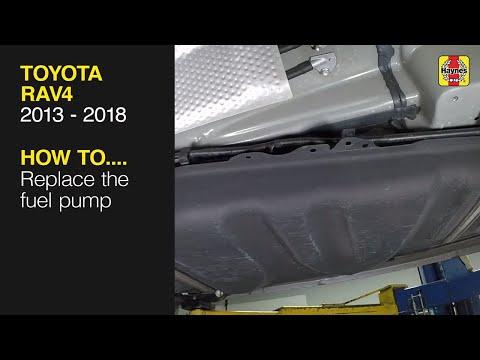





How to Replace the Fuel Pump on a 2009-2018 Toyota RAV4 – Full DIY Guide (Engine: Inline 4 2.5L)
Step-by-step fuel pump replacement with tools, parts list, torque specs, safety tips, and cost-saving advice
How to Replace the Fuel Pump on a 2009-2018 Toyota RAV4 – Full DIY Guide (Engine: Inline 4 2.5L)
Step-by-step fuel pump replacement with tools, parts list, torque specs, safety tips, and cost-saving advice for 2009, 2010, 2011, 2012, 2013, 2014, 2015, 2016, 2017, 2018


🔧 RAV4 - Fuel Pump Replacement
You’ll be replacing the in-tank electric fuel pump assembly under the rear seat. This restores proper fuel pressure if your RAV4 has issues like hard starting, stalling, or no-start.
Difficulty Level: Advanced | Estimated Time: 3-4 hours
⚠️ Safety & Precautions
- ⚠️ Fuel is extremely flammable. Work in a well-ventilated area, away from sparks, open flames, and smoking.
- ⚠️ Disconnect the negative battery cable before opening the fuel system to prevent accidental sparks.
- ⚠️ Relieve fuel system pressure before disconnecting any fuel lines to avoid fuel spray.
- ⚠️ Keep a class B/C fire extinguisher nearby whenever working with fuel.
- ⚠️ Wear safety glasses and fuel-resistant gloves; avoid skin and eye contact with fuel.
- ⚠️ Do not use power tools that can spark near the open fuel tank.
- ⚠️ Work with doors/windows open; avoid breathing fuel vapors for long periods.
🔧 Required Tools
You'll need the following tools for this repair:
- 10mm socket
- 12mm socket
- 1/4" drive ratchet
- 3/8" drive ratchet
- 3" socket extension
- Torque wrench (5-75 ft-lbs range)
- Flathead screwdriver (small)
- Trim removal tool (plastic)
- Fuel line disconnect pliers (for squeeze-type connectors)
- Fuel pump retaining ring tool (specialty)
- Needle-nose pliers
- Shop rags
- Parts cleaning brush (small, soft)
- Hand siphon pump
- Multimeter
- Plastic scraper
- Flashlight or work light (non-sparking)
- Safety glasses
- Nitrile gloves
🔩 Required Parts
HowToo sells all the parts you need for this repair:
- Fuel pump module assembly (fuel suction with pump and sender unit) - Qty: 1
- Fuel pump module gasket/O-ring (tank seal) - Qty: 1
- Fuel pump module retaining ring - Qty: 1 (recommended if original is corroded)
- Fuel line clips - Qty: 2-4 (replace any damaged or loose clips)
- Electrical contact cleaner (aerosol) - Qty: 1
- Shop towels - Qty: 1 pack
- Disposable fuel-safe drain pan - Qty: 1
📋 Before You Begin
- Park your RAV4 on level ground, shift to Park, and set the parking brake.
- Try to have the fuel tank as low as possible (¼ tank or less) to make the pump lighter and reduce spillage.
- Open all doors or windows for ventilation.
- Relieve fuel pressure:
- Remove the EFI or FUEL PUMP fuse from the under-hood fuse box using needle-nose pliers.
- Start the engine and let it run until it stalls, then crank for 3-5 seconds more.
- Turn ignition OFF.
- Disconnect the negative battery terminal using a 10mm socket and move the cable aside.
🔨 Step-by-Step Instructions
Follow these steps in order:
Step 1: Access the fuel pump under the rear seat
- Slide the front seats forward to create space for rear seat work.
- Lift the rear seat bottom cushion:
- Locate the two front seat cushion bolts at the floor using a flashlight.
- Use a 12mm socket and 3/8" ratchet to remove both bolts.
- Lift the front edge of the rear seat cushion and pull it forward and up to remove it from the vehicle.
- Reinstall torque for seat cushion bolts later: 37 Nm (27 ft-lbs).
Step 2: Remove the fuel pump access cover
- Locate the round metal or plastic access cover on the floor under the seat area.
- Use a trim removal tool or flathead screwdriver to gently pry up the cover; work around the edge to avoid bending it.
- Move the cover aside and wipe any loose dirt from around the pump top with shop rags.
- Keep dirt out of the tank opening.
Step 3: Disconnect electrical connector and fuel lines
- Use a flashlight to see the fuel pump connector and lines clearly.
- Unplug the fuel pump electrical connector:
- Press the locking tab with your thumb or a small flathead screwdriver and pull straight off.
- Prepare rags around the fuel line fittings to catch drips.
- Disconnect the fuel supply line:
- Most lines use squeeze or clip connectors. Use fuel line disconnect pliers or your fingers to press the tabs.
- Pull the line straight off the pump fitting while keeping the tabs compressed.
- Catch any fuel in a drain pan or with shop rags.
- If there is a return or vent line, disconnect it the same way and mark each line so they go back to the same place.
Step 4: Clean the pump area
- Use a parts cleaning brush to gently loosen dirt around the retaining ring and gasket.
- Wipe thoroughly with shop rags so no debris can fall into the tank when you open it.
- Take your time; cleanliness matters here.
Step 5: Remove the fuel pump retaining ring
- The large ring holds the pump module to the tank.
- Use a fuel pump retaining ring tool (specialty) attached to a 3/8" ratchet to turn the ring counterclockwise.
- If the ring is stuck, lightly tap the tool with your hand to break it free. Do not use metal hammers that can spark.
- Once loose, unscrew and lift the retaining ring off and set aside.
- Reinstall torque for retaining ring: 68 Nm (50 ft-lbs).
Step 6: Remove the old fuel pump module
- Carefully lift the pump module straight up with both hands.
- As it comes up, tilt slightly to clear the float arm (fuel level sensor) from the tank opening without bending it.
- Let any fuel in the module drain back into the tank for a few seconds.
- Place the old pump module in a drain pan to catch remaining fuel.
- Use a plastic scraper to remove the old gasket/O-ring from the tank lip, if it sticks.
Step 7: Prepare the new fuel pump module
- Compare the new module to the old one to ensure:
- Same electrical connector style.
- Same number and position of fuel line fittings.
- Same float arm orientation.
- Install the new gasket/O-ring into the groove on the tank opening or on the pump module (match how the original was installed).
- If your new pump does not come with a gasket, install a new separate gasket; never reuse a crushed or swollen old gasket.
Step 8: Install the new fuel pump module
- Lower the new pump module into the tank opening, guiding the float arm in first without forcing it.
- Make sure the gasket stays seated and does not pinch or twist.
- Align any index marks:
- There is usually a mark on the pump top that lines up with a mark or notch on the tank to ensure correct orientation.
- Hold the pump down firmly so the gasket is compressed evenly.
Step 9: Reinstall the retaining ring
- Position the retaining ring over the pump flange and start it by hand, turning clockwise.
- Use the fuel pump retaining ring tool and 3/8" ratchet to tighten the ring evenly.
- Torque the retaining ring to 68 Nm (50 ft-lbs) with a torque wrench.
- Even tightening helps prevent fuel leaks.
Step 10: Reconnect fuel lines and electrical connector
- Reconnect the fuel supply line to the correct fitting:
- Push the connector on until you hear or feel a click.
- Gently pull back on the line to confirm it is locked.
- Reconnect any vent or return lines the same way, matching your earlier markings.
- Spray a small amount of electrical contact cleaner on the electrical connector if dirty, then reconnect it until it clicks.
Step 11: Reinstall access cover and rear seat
- Place the access cover back over the pump opening and press it down evenly until fully seated.
- Reinstall the rear seat cushion:
- Hook the rear of the cushion into its mounts first.
- Lower the front and line up the bolt holes.
- Install the two front seat cushion bolts with a 12mm socket and 3/8" ratchet.
- Torque the seat cushion bolts to 37 Nm (27 ft-lbs) using a torque wrench.
Step 12: Restore power and prime the fuel system
- Reinstall the EFI/FUEL PUMP fuse in the under-hood fuse box using needle-nose pliers.
- Reconnect the negative battery terminal with a 10mm socket and torque to about 5 Nm (44 in-lbs) (snug, not overly tight).
- Turn the ignition key to ON (do not start) for 5 seconds, then OFF. Repeat this 3-4 times to prime the system and build pressure.
Step 13: Start the engine and check for leaks
- Start the engine and let it idle.
- Check around the access cover area:
- Look and smell for any signs of fuel leaks.
- If you notice wetness or strong fuel smell, shut off the engine immediately and recheck line connections and gasket seating.
- Once confirmed dry, reinstall any floor mats or trim you moved.
✅ After Repair
- Let the engine idle for 5-10 minutes and confirm smooth running and no stalling.
- Take a short test drive, paying attention to acceleration and any hesitation.
- After the drive, recheck the rear seat area for any fuel smell; if present, stop and re-inspect connections.
- If the Check Engine Light comes on, you may need a scan tool to read and clear any stored fuel system codes.
💰 DIY vs Shop Cost
Shop Cost: $900-$1,300 (parts + labor)
DIY Cost: $250-$450 (parts only)
You Save: $450-$1,050 by doing it yourself!
Shop labor rates vary but typically run $100-$150/hour. This repair takes a shop approximately 3-4 hours.
🎯 Ready to get started?
HowToo makes it easy: same-day/2-day shipping on every part, plus all the tools and specialty tools you need! Check out the parts and tools sections above to add everything to your cart.
Guide for Fuel Pump Module Assembly replace for these Toyota vehicles
| Year Make Model | Sub Model | Engine | Body Style |
|---|---|---|---|
| 2018 Toyota RAV4 | - | Inline 4 2.5L | - |
| 2017 Toyota RAV4 | - | Inline 4 2.5L | - |
| 2016 Toyota RAV4 | - | Inline 4 2.5L | - |
| 2015 Toyota RAV4 | - | Inline 4 2.5L | - |
| 2014 Toyota RAV4 | - | Inline 4 2.5L | - |
| 2013 Toyota RAV4 | - | Inline 4 2.5L | - |
| 2012 Toyota RAV4 | - | Inline 4 2.5L | - |
| 2011 Toyota RAV4 | - | Inline 4 2.5L | - |
| 2010 Toyota RAV4 | - | Inline 4 2.5L | - |
| 2009 Toyota RAV4 | - | Inline 4 2.5L | - |