









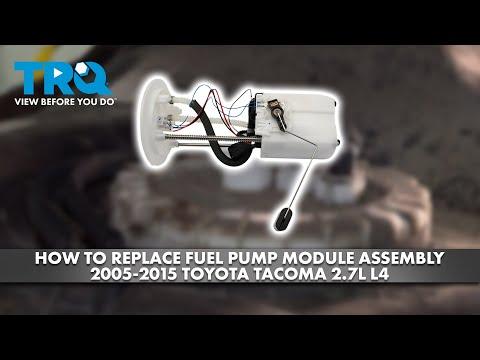







How to Replace the Fuel Pump on a 2005-2014 Toyota Tacoma (In-Tank Module Guide) (Engine: V6 4.0L)
Step-by-step bed-lift vs tank-drop instructions, required tools/parts, safety tips, and torque specs
How to Replace the Fuel Pump on a 2005-2014 Toyota Tacoma (In-Tank Module Guide) (Engine: V6 4.0L)
Step-by-step bed-lift vs tank-drop instructions, required tools/parts, safety tips, and torque specs for 2005, 2006, 2007, 2008, 2009, 2010, 2011, 2012, 2013, 2014


🔧 Tacoma - Fuel Pump Replacement
Your Tacoma’s fuel pump sits inside the fuel tank as part of the in-tank pump/module. Replacement involves safely relieving fuel pressure, accessing the top of the tank, swapping the pump/module and seal, then checking carefully for leaks.
Difficulty Level: Advanced | Estimated Time: 3-6 hours
⚠️ Safety & Precautions
- ⚠️ Work outside or in a very well-ventilated area; fuel vapors ignite easily.
- ⚠️ No smoking, no heaters, no drop lights with hot bulbs; use an LED work light.
- ⚠️ Disconnect the battery negative cable before opening any fuel lines.
- ⚠️ Keep a class B fire extinguisher nearby.
- ⚠️ Support the truck with jack stands; never rely on a jack alone.
- ⚠️ Gasoline will spill; wear safety glasses and fuel-resistant gloves.
🔧 Required Tools
You'll need the following tools for this repair:
- Safety glasses
- Fuel-resistant nitrile gloves
- Class B fire extinguisher
- Wheel chocks
- Floor jack (rated 3-ton minimum)
- Jack stands (rated 3-ton minimum)
- Transmission jack (specialty)
- Socket set 8mm-19mm
- Wrench set 10mm-19mm
- Torque wrench 10-150 ft-lbs
- Torque wrench 30-250 in-lbs
- Phillips screwdriver
- Flat trim tool
- Pliers
- Fuel line quick-disconnect tool set (specialty)
- Brass drift punch (specialty)
- Small hammer
- Shop towels
- Drain pan
- LED work light
- Paint marker
🔩 Required Parts
HowToo sells all the parts you need for this repair:
- In-tank fuel pump module assembly - Qty: 1
- Fuel pump module tank seal O-ring - Qty: 1
- Fuel pump strainer - Qty: 1
- Fuel line O-rings - Qty: 1 kit
📋 Before You Begin
- 🧯 Try to work with the tank at 1/4 fuel or less; it’s much lighter.
- 🛑 Park on level ground, set the parking brake, and chock the front wheels.
- 🔌 Relieve fuel pressure before disconnecting lines (steps below).
- 🔋 Disconnect the negative battery cable using a 10mm socket.
- 🧼 Clean dirt off the tank top area before opening it; dirt in the tank causes pump failure.
🔨 Step-by-Step Instructions
Follow these steps in order:
Step 1: Relieve fuel pressure
- Remove the fuel pump/EFI fuse or relay from the under-hood fuse box using pliers.
- Start the engine and let it run until it stalls.
- Crank for 3 seconds to bleed off remaining pressure, then turn key OFF.
Step 2: Disconnect the battery
- Use a 10mm socket to remove the negative battery terminal and isolate it so it can’t spring back.
Step 3: Choose your access method
- Most DIYers choose Method A (raise/remove the bed) for easier access to the pump/module.
- Method B (drop the fuel tank) works too, but is heavier and tighter for space.
Step 4 (Method A): Raise/remove the bed for access
- Unplug the rear lighting harness at the rear/left frame area using a flat trim tool as needed.
- Remove the fuel filler neck screws at the bed opening using a Phillips screwdriver.
- Remove the bed-to-frame bolts using a socket set (commonly 14mm).
- With 2-3 helpers, lift the bed straight up and slide it rearward a few inches, or fully remove it.
- When reinstalling bed bolts: Torque to 80 Nm (59 ft-lbs).
Step 5 (Method B): Drop the fuel tank
- Raise the truck and support the frame with jack stands (rated 3-ton minimum) using a floor jack (rated 3-ton minimum).
- Support the fuel tank with a transmission jack (specialty) (a jack designed to safely cradle and lift heavy items).
- Disconnect the filler hose and vent hose clamps using a flat screwdriver.
- Disconnect electrical connectors on top/front of tank as you lower it slightly.
- Remove tank strap bolts using a socket set, then lower the tank slowly.
- When reinstalling tank strap bolts: Torque to 41 Nm (30 ft-lbs).
Step 6: Clean and mark the fuel pump module orientation
- Use shop towels to wipe dirt away from the module area.
- Use a paint marker to mark the module position relative to the tank.
- Clean first; dirt ruins new pumps.
Step 7: Disconnect fuel lines from the module
- Wrap connections with shop towels to catch fuel.
- Disconnect the quick-connect fuel line using a fuel line quick-disconnect tool set (specialty) (a tool that releases the internal spring lock without damage).
- Disconnect any vapor/vent hoses using pliers for clamps.
Step 8: Remove the lock ring / retaining ring
- Use a brass drift punch (specialty) and small hammer to tap the lock ring counterclockwise until it releases.
- Do not use a steel punch; it can spark.
Step 9: Remove the module and replace the seal
- Carefully lift the module out; angle it to clear the float arm without bending it.
- Remove the old tank seal O-ring and wipe the sealing surface with shop towels.
- Install the new O-ring (lightly moisten with clean fuel using a shop towel).
Step 10: Install the new pump/module
- Set the new module in using your alignment marks.
- Install the lock ring and tap clockwise using the brass drift punch (specialty) and small hammer until fully seated.
- Reconnect fuel line(s) and hoses; tug gently to confirm they are locked.
- Reconnect the electrical connector(s).
Step 11: Reinstall bed or tank
- If you used Method A, reposition the bed and install bolts with a socket set, then Torque to 80 Nm (59 ft-lbs).
- If you used Method B, raise the tank with the transmission jack (specialty), install straps with a socket set, then Torque to 41 Nm (30 ft-lbs).
- Reattach filler neck screws using a Phillips screwdriver.
- Reconnect the rear harness connector (Method A) by hand until fully latched.
Step 12: Restore power and prime the fuel system
- Reconnect the negative battery cable using a 10mm socket.
- Reinstall the fuse/relay by hand.
- Turn key to ON for 5 seconds, then OFF; repeat 3 times to prime.
- Start the engine and let it idle while you check for leaks.
✅ After Repair
- 🕵️ With the engine idling, inspect every connection for seepage; use an LED work light.
- 🧪 If you smell strong fuel odor, shut it off and re-check line locks and the seal.
- 🛣️ Test drive 5-10 minutes, then re-check for leaks once parked.
- 🔎 If the check engine light comes on, scan for codes and address any EVAP/fuel pressure-related codes.
💰 DIY vs Shop Cost
Shop Cost: $900-$1,400 (parts + labor)
DIY Cost: $250-$650 (parts only)
You Save: $650-$750 by doing it yourself!
Shop labor rates vary but typically run $100-$150/hour. This repair takes a shop approximately 3-5 hours.
🎯 Ready to get started?
HowToo makes it easy: same-day/2-day shipping on every part, plus all the tools and specialty tools you need! Check out the parts and tools sections below to add everything to your cart.
Guide for Fuel Pump Module Assembly replace for these Toyota vehicles
| Year Make Model | Sub Model | Engine | Body Style |
|---|---|---|---|
| 2014 Toyota Tacoma | - | Inline 4 2.7L | - |
| 2014 Toyota Tacoma | - | V6 4.0L | - |
| 2013 Toyota Tacoma | - | Inline 4 2.7L | - |
| 2013 Toyota Tacoma | - | V6 4.0L | - |
| 2012 Toyota Tacoma | - | Inline 4 2.7L | - |
| 2012 Toyota Tacoma | - | V6 4.0L | - |
| 2011 Toyota Tacoma | - | Inline 4 2.7L | - |
| 2011 Toyota Tacoma | - | V6 4.0L | - |
| 2010 Toyota Tacoma | - | Inline 4 2.7L | - |
| 2010 Toyota Tacoma | - | V6 4.0L | - |
| 2009 Toyota Tacoma | - | Inline 4 2.7L | - |
| 2009 Toyota Tacoma | - | V6 4.0L | - |
| 2008 Toyota Tacoma | - | Inline 4 2.7L | - |
| 2008 Toyota Tacoma | - | V6 4.0L | - |
| 2007 Toyota Tacoma | - | Inline 4 2.7L | - |
| 2007 Toyota Tacoma | - | V6 4.0L | - |
| 2006 Toyota Tacoma | - | Inline 4 2.7L | - |
| 2006 Toyota Tacoma | - | V6 4.0L | - |
| 2005 Toyota Tacoma | - | Inline 4 2.7L | - |
| 2005 Toyota Tacoma | - | V6 4.0L | - |