









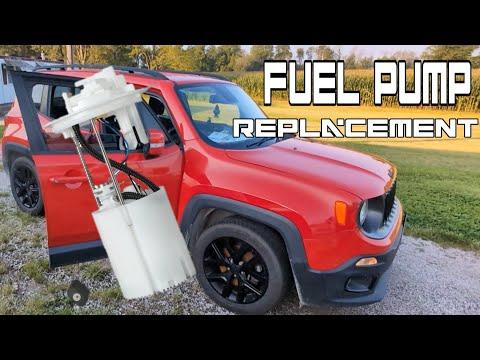






How to Replace the Fuel Pump Module on a 2018 Jeep Renegade (In-Tank Pump)
Step-by-step rear-seat access or fuel-tank drop instructions, tools/parts list, safety tips, and priming/leak-check steps
How to Replace the Fuel Pump Module on a 2018 Jeep Renegade (In-Tank Pump)
Step-by-step rear-seat access or fuel-tank drop instructions, tools/parts list, safety tips, and priming/leak-check steps


🔧 Renegade - Fuel Pump Module Replacement
On your Renegade, the fuel pump is part of an in-tank “fuel pump module” (pump + level sender). Replacement usually happens from an access cover under the rear seat (easier), but some builds require lowering the fuel tank.
Difficulty Level: Intermediate | Estimated Time: 2-5 hours
⚠️ Safety & Precautions
- ⚠️ Work outside or in a very well-ventilated area; fuel vapors ignite easily.
- ⚠️ No smoking, sparks, heat guns, or drop lights with hot bulbs.
- ⚠️ Disconnect the negative battery terminal before opening the fuel system.
- ⚠️ Relieve fuel pressure before disconnecting any fuel line to prevent spray.
- ⚠️ Keep a Class B fire extinguisher nearby and wear eye protection.
- ⚠️ If you must lower the tank: support it securely; do not let it hang by hoses/wiring.
🔧 Required Tools
You'll need the following tools for this repair:
- Safety glasses
- Nitrile gloves
- Class B fire extinguisher
- 10mm socket
- 13mm socket
- Ratchet
- 3/8" torque wrench
- Trim removal tool set
- Flat-blade screwdriver
- Pliers
- Fuel line disconnect tool set (specialty)
- Brass punch (non-sparking)
- Small hammer
- Shop towels
- Drain pan
- Floor jack (rated 3-ton minimum)
- Jack stands (rated 3-ton minimum)
- Wheel chocks
- Transmission jack (specialty)
🔩 Required Parts
HowToo sells all the parts you need for this repair:
- Fuel pump module assembly - Qty: 1
- Fuel pump module tank seal (O-ring/gasket) - Qty: 1
- Fuel pump module lock ring - Qty: 1
- Dielectric grease - Qty: 1
📋 Before You Begin
- Park on level ground and set the parking brake.
- If you’ll lower the tank, drive until the tank is near empty; it’s much lighter and safer.
- Open the fuel door and loosen the gas cap to reduce vapor pressure.
- Plan to keep dirt out: clean around the pump area before opening the tank.
🔨 Step-by-Step Instructions
Follow these steps in order:
Step 1: Relieve fuel pressure
- Open the hood.
- Use a 10mm socket to disconnect the negative battery terminal and set it aside so it can’t spring back.
- Locate the under-hood fuse/relay box (near the battery). Remove the cover.
- Pull the fuel pump fuse/relay (use pliers if needed).
- Reconnect the negative terminal temporarily with the 10mm socket, start the engine, and let it run until it stalls.
- Crank for 3 seconds once more to bleed off leftover pressure.
- Disconnect the negative battery terminal again using the 10mm socket.
- Tip: Put the fuse/relay in a labeled cup.
Step 2: Decide your access method (rear-seat access vs tank removal)
- Fold the rear seat forward and inspect the rear seat bottom area.
- If you see an oval/round metal access cover held by screws or sealant, follow Path A.
- If there is no access cover, follow Path B (fuel tank lowering).
Step 3 (Path A): Remove rear seat bottom and access cover
- Use a trim removal tool set to release the rear seat bottom clips and lift the cushion out.
- Vacuum/wipe dirt away from the access area using shop towels.
- Use a flat-blade screwdriver to remove the access cover fasteners (or gently pry if clipped).
Step 4 (Path A): Disconnect wiring and fuel lines at the module
- Unplug the electrical connector(s) from the module.
- Place shop towels under the line connections.
- Disconnect the quick-connect fuel line(s) using the fuel line disconnect tool set (specialty).
- Tip: Press the line inward before releasing.
Step 5 (Path A): Remove the lock ring and lift out the module
- Mark the module and tank with a reference line using a flat-blade screwdriver (light scratch) so you can install the new one in the same orientation.
- Use a brass punch (non-sparking) and small hammer to tap the lock ring counterclockwise until it unlocks.
- Lift the module out slowly; angle it as needed to clear the float arm without bending it.
- Remove the old tank seal (O-ring/gasket) and wipe the sealing surface with shop towels.
Step 6 (Path A): Install the new seal and fuel pump module
- Install the new tank seal into the tank groove.
- Apply a light film of clean fuel to the seal (use a shop towel), then set the new module in place aligned to your reference mark.
- Install the new lock ring and tap it clockwise with the brass punch (non-sparking) and small hammer until fully seated against its stops.
Step 7 (Path A): Reconnect lines, wiring, and close up
- Reconnect the quick-connect fuel line(s) by pushing on until they click; tug gently to confirm locked.
- Reconnect the electrical connector(s). Apply a small amount of dielectric grease to the connector seal if desired.
- Reinstall the access cover using the flat-blade screwdriver and reinstall the rear seat cushion using the trim removal tool set to align clips.
Step 3 (Path B): Raise and support the Renegade
- Chock the front wheels using wheel chocks.
- Lift the rear with a floor jack (rated 3-ton minimum) and support it on jack stands (rated 3-ton minimum).
Step 4 (Path B): Support the fuel tank
- Position a transmission jack (specialty) under the fuel tank with a block/flat pad so it supports the tank evenly.
- Keep light upward pressure on the tank so straps can be removed safely.
Step 5 (Path B): Disconnect filler neck and lines
- Place a drain pan under the area.
- Use pliers to release hose clamps (if equipped) and carefully disconnect the filler/vent hoses.
- Disconnect electrical connector(s) and fuel line(s) using the fuel line disconnect tool set (specialty).
- Tip: Label hoses with tape before removal.
Step 6 (Path B): Lower the tank and replace the module
- Use a 13mm socket and ratchet to remove the fuel tank strap bolts, then lower straps out of the way.
- Slowly lower the tank with the transmission jack (specialty) enough to access the pump module on top.
- Clean around the module using shop towels.
- Remove the lock ring with the brass punch (non-sparking) and small hammer, replace the seal, install the new module, and seat the new lock ring fully.
Step 7 (Path B): Reinstall the tank
- Raise the tank with the transmission jack (specialty).
- Reinstall straps and strap bolts using the 13mm socket and ratchet; then tighten with a 3/8" torque wrench to the specification for your strap bolts.
- Reconnect filler/vent hoses using pliers for clamps.
- Reconnect fuel line(s) and electrical connector(s). Tug lightly on fuel lines to verify locked.
Step 8: Restore fuse/relay and prime the system
- Reinstall the fuel pump fuse/relay and fuse box cover.
- Reconnect the negative battery terminal using the 10mm socket.
- Turn the key to ON (do not start) for 5 seconds, then OFF for 5 seconds; repeat 3 times to prime the fuel system.
- Start the engine and let it idle for 1-2 minutes.
✅ After Repair
- Inspect for leaks at the module top and at every quick-connect line while it idles.
- If you smell strong fuel or see wetness, shut it off immediately and recheck the seal/lock ring seating and line locks.
- Road test for 10 minutes, then recheck for leaks again.
- If the check engine light comes on, you may need a scan for fuel pressure/EVAP codes caused by a loose connection.
💰 DIY vs Shop Cost
Shop Cost: $800-$1,500 (parts + labor)
DIY Cost: $250-$650 (parts only)
You Save: $550-$850 by doing it yourself!
Shop labor rates vary but typically run $100-$150/hour. This repair takes a shop approximately 2-4 hours.
🎯 Ready to get started?
HowToo makes it easy: same-day/2-day shipping on every part, plus all the tools and specialty tools you need! Check out the parts and tools sections below to add everything to your cart.