









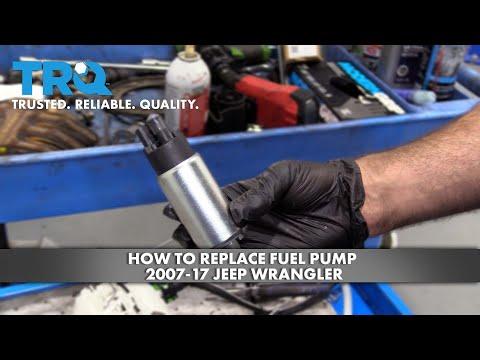







How to Replace the Fuel Pump Module on a 2015 Jeep Wrangler (In-Tank Pump)
Step-by-step fuel tank drop instructions, required tools/parts, safety tips, and leak-check procedure
How to Replace the Fuel Pump Module on a 2015 Jeep Wrangler (In-Tank Pump)
Step-by-step fuel tank drop instructions, required tools/parts, safety tips, and leak-check procedure


🔧 Wrangler - Fuel Pump Module Replacement
On your Wrangler, the fuel pump is part of an in-tank “fuel pump module” that also includes the fuel level sensor. Replacement requires safely lowering the fuel tank, swapping the module and seal, then reinstalling everything without fuel leaks.
Difficulty Level: Advanced | Estimated Time: 3-6 hours
⚠️ Safety & Precautions
- ⚠️ Work outdoors or in a very well-ventilated area; fuel vapors are flammable.
- ⚠️ No smoking, no heaters, no shop lights with hot bulbs near the tank.
- ⚠️ Keep a Class B fire extinguisher nearby.
- ⚠️ Disconnect the negative battery cable before opening the fuel system.
- ⚠️ Support the fuel tank with a jack before removing straps/skid plate.
- ⚠️ Relieve fuel pressure before disconnecting fuel lines to avoid spray.
🔧 Required Tools
You'll need the following tools for this repair:
- Safety glasses
- Nitrile gloves
- Class B fire extinguisher
- Floor jack (rated 3-ton minimum)
- Jack stands (rated 3-ton minimum)
- Wheel chocks
- Socket set 8mm-21mm
- Ratchet 3/8"
- Ratchet 1/2"
- Torque wrench 3/8" (10-100 ft-lbs range)
- Torque wrench 1/2" (50-250 ft-lbs range)
- Extension set 3/8"
- Flat-blade screwdriver
- Trim clip remover
- Fuel line disconnect tool set (specialty)
- Brass punch set (specialty)
- Dead-blow hammer
- Drain pan (at least 10-quart)
- Shop towels
- Flashlight
🔩 Required Parts
HowToo sells all the parts you need for this repair:
- Fuel pump module assembly - Qty: 1
- Fuel pump module seal / O-ring - Qty: 1
- Fuel pump lock ring (if damaged) - Qty: 1
- Fuel tank strap bolts (if corroded) - Qty: 1 set
📋 Before You Begin
- ⛽ Try to run the fuel level low (about 1/8 tank). A full tank is heavy and risky.
- Park on level ground, set the parking brake, and place wheel chocks.
- Relieve fuel pressure: remove the fuel pump relay/fuse from the under-hood fuse box, then start the engine and let it stall. Crank for 2-3 seconds once more. This reduces fuel spray.
- Use a 10mm socket to disconnect the negative battery cable and isolate it so it can’t spring back.
- If your Wrangler has an aftermarket skid system, note its hardware and plan extra time.
🔨 Step-by-Step Instructions
Follow these steps in order:
Step 1: Raise and support the Wrangler
- Use a floor jack (rated 3-ton minimum) to lift safely at approved points, then set the vehicle onto jack stands (rated 3-ton minimum).
- Place wheel chocks at the front wheels if lifting the rear.
Step 2: Support the fuel tank
- Position the floor jack (rated 3-ton minimum) under the fuel tank/skid area with a stable pad (wood block if needed).
- Apply light upward pressure so the tank is supported, not lifted.
Step 3: Remove the fuel tank skid plate/strap hardware
- Use your socket set 8mm-21mm with ratchet 1/2" and extension set 3/8" as needed to remove skid plate and/or strap fasteners.
- If bolts are heavily rusted, stop and pre-soak them (do not use open flame near fuel).
- Torque to OEM specification (do not guess) when reinstalling these structural fasteners.
Step 4: Lower the tank slightly to access lines and connectors
- Slowly lower the tank a few inches using the floor jack (rated 3-ton minimum).
- Use a flashlight to locate the electrical connector(s), EVAP hose(s), and fuel line quick-connect(s).
- A “quick-connect” is a fuel fitting that locks with tabs; it must be released correctly to avoid breaking it.
Step 5: Disconnect the fuel line(s)
- Wrap the connection with shop towels to catch any fuel.
- Use a fuel line disconnect tool set (specialty) as needed and separate the line straight off (no twisting).
- Place any drips into a drain pan (at least 10-quart).
Step 6: Disconnect EVAP hose(s) and electrical connector(s)
- Use a flat-blade screwdriver or trim clip remover to release retainers/clips without snapping them.
- Unplug the pump module connector(s) by depressing the lock tab and pulling straight apart.
Step 7: Lower and remove the fuel tank
- With all lines unplugged, fully lower the tank using the floor jack (rated 3-ton minimum).
- Slide the tank out carefully. Keep it level to avoid spilling fuel from hoses/ports.
Step 8: Clean the area around the fuel pump module
- Use shop towels to wipe dirt away from the top of the module so debris can’t fall into the tank.
- Cleanliness prevents future pump damage.
Step 9: Remove the fuel pump lock ring
- Use a brass punch set (specialty) and dead-blow hammer to tap the lock ring loose. Brass is used because it reduces spark risk compared to steel.
- Tap evenly around the ring until it releases.
Step 10: Remove the fuel pump module
- Lift the module straight up slowly; angle it as needed to clear the float arm (fuel level sensor).
- Have a drain pan (at least 10-quart) ready because fuel will drain from the module.
- Remove and discard the old module seal / O-ring.
Step 11: Install the new seal and fuel pump module
- Install the new module seal / O-ring in the tank opening (confirm it is not twisted).
- Carefully lower the new module into the tank, aligning the index marks/locator tabs.
- Reinstall the lock ring and tighten it fully using the brass punch set (specialty) and dead-blow hammer.
- Torque to OEM specification (do not guess) if your replacement uses fasteners instead of a lock ring.
Step 12: Reinstall the fuel tank
- Lift the tank back into place using the floor jack (rated 3-ton minimum).
- Reconnect electrical connector(s) until they click.
- Reconnect EVAP hose(s) and reinstall any clips using a trim clip remover and flat-blade screwdriver as needed.
- Reconnect fuel line(s) until you feel/hear a positive click, then gently tug to confirm it’s locked.
Step 13: Reinstall skid plate/straps and tighten fasteners
- Start all bolts by hand to prevent cross-threading.
- Use your socket set 8mm-21mm with ratchet 1/2" to snug everything evenly.
- Use a torque wrench 1/2" (50-250 ft-lbs range) to tighten: Torque to OEM specification (do not guess).
Step 14: Restore battery power
- Use a 10mm socket to reconnect the negative battery cable.
✅ After Repair
- 🔍 Prime the system: turn the key to ON (do not start) for 2-3 seconds, then OFF. Repeat 3-4 times to build pressure.
- Start the engine and inspect for leaks at the fuel line connection and top of tank area (use a flashlight, not a lighter).
- Clear any fuel smell and recheck for seepage after a short 5-10 minute drive.
- If the fuel gauge reads wrong, recheck the module alignment and electrical connector seating.
💰 DIY vs Shop Cost
Shop Cost: $900-$1,600 (parts + labor)
DIY Cost: $250-$650 (parts only)
You Save: $650-$950 by doing it yourself!
Shop labor rates vary but typically run $100-$150/hour. This repair takes a shop approximately 3-5 hours.
🎯 Ready to get started?
HowToo makes it easy: same-day/2-day shipping on every part, plus all the tools and specialty tools you need! Check out the parts and tools sections below to add everything to your cart.