









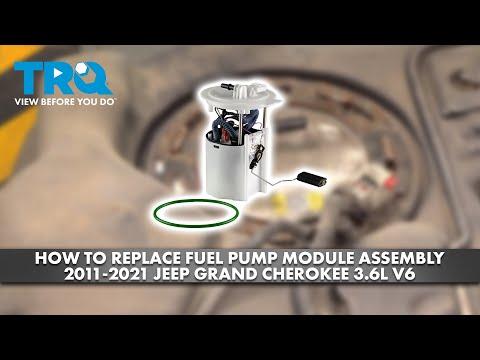







How to Replace the Fuel Pump Module on a 2011-2017 Jeep Grand Cherokee (In-Tank) (Engine: V8 6.4L)
Step-by-step tank-drop instructions with required tools, parts list, safety tips, and post-repair leak checks
How to Replace the Fuel Pump Module on a 2011-2017 Jeep Grand Cherokee (In-Tank) (Engine: V8 6.4L)
Step-by-step tank-drop instructions with required tools, parts list, safety tips, and post-repair leak checks for 2011, 2012, 2013, 2014, 2015, 2016, 2017


🔧 Grand Cherokee - Fuel Pump Module Replacement
On your Grand Cherokee, the fuel pump is part of an in-tank fuel pump module (pump + level sender + pressure regulator). Replacement typically requires lowering the fuel tank to access the module from underneath, then swapping the module and resealing it to prevent leaks and fuel vapor codes.
Difficulty Level: Advanced | Estimated Time: 3-5 hours
⚠️ Safety & Precautions
- ⚠️ Work outside or in a well-ventilated area; fuel vapors ignite easily.
- ⚠️ No smoking, no heat guns, no drop lights with hot bulbs.
- ⚠️ Relieve fuel pressure before disconnecting any fuel line to avoid spray.
- ⚠️ Support the tank with a transmission jack; a falling tank can injure you.
- ⚠️ Disconnect the negative battery cable before opening the fuel system.
🔧 Required Tools
You'll need the following tools for this repair:
- Safety glasses
- Nitrile gloves
- Fire extinguisher (Class B)
- Floor jack (rated 3-ton minimum)
- Jack stands (rated 3-ton minimum)
- Wheel chocks
- Transmission jack
- Socket set (8mm-21mm)
- Ratchet (3/8")
- Extension set (3/8")
- Torque wrench (10-200 Nm)
- Flat trim tool
- Fuel line disconnect tool set (5/16" and 3/8")
- Hose clamp pliers
- Brass punch
- Dead-blow hammer
- Fuel pump lock ring tool (specialty)
- Drain pan (10 liter minimum)
- Shop towels
🔩 Required Parts
HowToo sells all the parts you need for this repair:
- Fuel pump module assembly - Qty: 1
- Fuel pump module seal/O-ring - Qty: 1
- Evaporative hose clamp(s) - Qty: 1-3
📋 Before You Begin
- Park on level ground and chock the rear wheels with wheel chocks.
- Drive until the tank is as close to empty as possible; a full tank is much heavier.
- Open the fuel door to reduce tank vapor pressure.
- Disconnect the battery: use a 10mm socket to remove the negative battery cable and isolate it so it can’t spring back.
- Plan your lift points: raise and support the SUV on jack stands before going under.
🔨 Step-by-Step Instructions
Follow these steps in order:
Step 1: Relieve fuel pressure
- Remove the fuel pump power so the engine can use up pressure in the lines (this prevents fuel spray).
- Use your socket set (8mm-10mm) and ratchet to open the under-hood fuse/relay box cover.
- Remove the fuel pump relay/fuse (location varies by box legend), then start the engine and let it run until it stalls.
- Crank the engine for 2-3 seconds one more time to bleed off remaining pressure.
- Tip: Keep shop towels ready for any drips.
Step 2: Raise and support the SUV
- Use a floor jack (rated 3-ton minimum) to lift the rear safely.
- Set the vehicle securely on jack stands (rated 3-ton minimum) at the proper support points.
Step 3: Support the fuel tank
- Position a transmission jack under the center of the fuel tank.
- Add a wood pad (on the jack saddle) if needed to spread the load and prevent tank damage.
Step 4: Disconnect EVAP and vent connections
- Locate the EVAP/vent hoses at the tank.
- Use hose clamp pliers to release clamps (if equipped), and use a flat trim tool to gently help hoses slide off if stuck.
- Label hoses with tape so they return to the same ports.
Step 5: Disconnect the electrical connectors
- Unplug the pump/sender electrical connector(s) at the tank.
- Use a flat trim tool to release locking tabs if needed (don’t pull on wires).
Step 6: Disconnect the fuel supply line(s)
- Place a drain pan (10 liter minimum) and shop towels under the fuel line connection.
- Use the fuel line disconnect tool set (5/16" and 3/8") to release the quick-connect fitting(s).
- Cap/cover the open lines with clean towels to keep dirt out.
Step 7: Remove tank straps and lower the tank
- Support the tank firmly with the transmission jack before loosening straps.
- Use the correct size from your socket set (13mm-18mm typical) with a ratchet and extensions to remove the tank strap bolts.
- Lower the tank slowly while watching for any remaining hoses/connectors that may still be attached.
- When reinstalling strap bolts, use a torque wrench (10-200 Nm) and Torque to factory specification.
Step 8: Clean the area around the fuel pump module
- Before opening the tank, wipe dirt away with shop towels.
- Tip: Dirt in the tank can ruin the new pump.
Step 9: Remove the lock ring and remove the module
- The lock ring is the large ring that clamps the module to the tank; a fuel pump lock ring tool (specialty) grips it so you can turn it safely.
- Use the fuel pump lock ring tool (specialty) and a ratchet (3/8") to turn the lock ring counterclockwise.
- If you must tap it loose, use a brass punch and dead-blow hammer (brass helps reduce spark risk).
- Lift the module out carefully; angle it as needed to avoid damaging the fuel level float arm.
Step 10: Replace the seal and install the new module
- Remove the old seal/O-ring and wipe the sealing surface clean with shop towels.
- Install the new fuel pump module seal/O-ring (make sure it sits flat and is not twisted).
- Install the new fuel pump module assembly in the same orientation as the old one.
- Reinstall the lock ring using the fuel pump lock ring tool (specialty) and Torque to factory specification.
Step 11: Reinstall the tank and reconnect everything
- Raise the tank into place using the transmission jack.
- Reconnect fuel line quick-connects by pushing until they click; then tug lightly to confirm they’re locked.
- Reconnect all EVAP/vent hoses and clamps using hose clamp pliers.
- Reconnect electrical connectors (listen/feel for the click).
- Reinstall tank straps and bolts using your socket set and ratchet, then tighten with a torque wrench to factory specification.
Step 12: Reconnect battery and prime the fuel system
- Reconnect the negative battery cable using a 10mm socket.
- Turn the ignition to RUN (do not start) for 3 seconds, then OFF for 10 seconds; repeat 3-4 times to prime.
- Start the engine and let it idle.
✅ After Repair
- Inspect for leaks at the fuel line connection and around the tank/module area with a flashlight (no open flames).
- Confirm the fuel gauge reads normally and updates as fuel level changes.
- If the check engine light turns on, you may have an EVAP leak (often a loose vent hose or seal). A scan tool can confirm the code.
- Road test 10-15 minutes, then recheck for any seepage or fuel smell.
💰 DIY vs Shop Cost
Shop Cost: ₹35,000-₹75,000 (parts + labor)
DIY Cost: ₹18,000-₹55,000 (parts only)
You Save: ₹17,000-₹20,000+ by doing it yourself!
Shop labor rates vary but typically run ₹2,000-₹5,000/hour. This repair takes a shop approximately 3-5 hours.
🎯 Ready to get started?
HowToo makes it easy: same-day/2-day shipping on every part, plus all the tools and specialty tools you need! Check out the parts and tools sections below to add everything to your cart.