









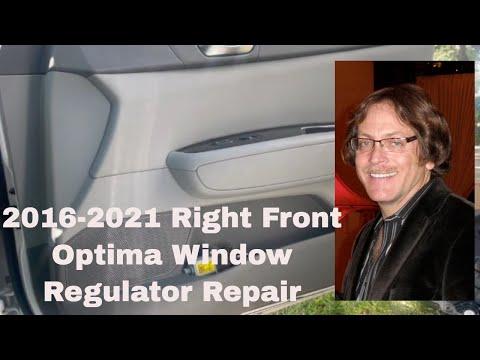




How to Replace the Front Window Regulator on a 2016 Kia Optima (Driver/Passenger)
Step-by-step door panel removal, tools/parts list, safety tips, torque specs, and window reset procedure
How to Replace the Front Window Regulator on a 2016 Kia Optima (Driver/Passenger)
Step-by-step door panel removal, tools/parts list, safety tips, torque specs, and window reset procedure


🔧 Optima - Front Window Regulator Replacement
The front window regulator is the cable-and-track assembly that raises and lowers your door glass. Replacing it means removing the door panel, securing the glass, swapping the regulator (and motor if needed), then reassembling and re-initializing the auto window function.
Difficulty Level: Intermediate | Estimated Time: 2-4 hours (per door)
⚠️ Safety & Precautions
- ⚠️ Disconnect the 12V battery negative terminal before working in the door to reduce airbag/short risk.
- ⚠️ Your Optima has side-impact airbags in/near the door area; do not probe yellow connectors or use a test light on airbag wiring.
- ⚠️ Support the window glass securely; falling glass can shatter and cut you.
- ⚠️ Keep hands clear of the regulator scissor/cable path when testing.
- ⚠️ Hybrid note: you are not servicing the high-voltage system here, but avoid orange high-voltage cables anywhere you see them.
🔧 Required Tools
You'll need the following tools for this repair:
- Safety glasses
- Mechanic gloves
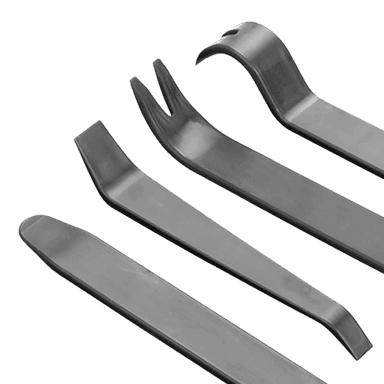
- Plastic trim removal tool set
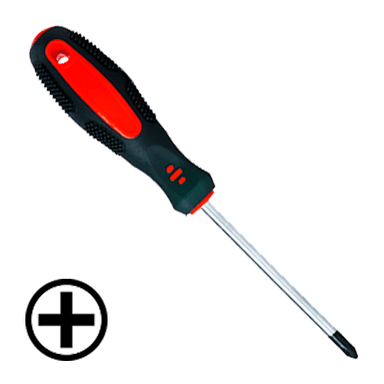
- Phillips #2 screwdriver
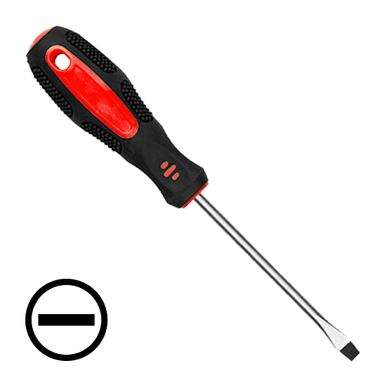
- Flat-blade screwdriver (small)
- 10mm socket
- 1/4" drive ratchet
- 6" socket extension (1/4")
- Torx T20 screwdriver
- Torx T30 screwdriver
- Needle-nose pliers
- Pick tool (small)
- Painter’s tape (1.5")
- Razor blade or scraper
- Torque wrench (inch-pound) (specialty)
- Torque wrench (ft-lb) (specialty)
- 12mm wrench
- Work light
🔩 Required Parts
HowToo sells all the parts you need for this repair:
- Front window regulator assembly - Qty: 1
- Front window motor - Qty: 1 (only if motor is faulty)
- Door panel trim clips - Qty: 6-12 (as needed)
- Butyl tape (door vapor barrier sealant) - Qty: 1
📋 Before You Begin
- Park on level ground, ignition OFF, and keep the key/fob away from the car.
- Open the front door you’re working on fully and support it so it won’t swing.
- Disconnect the 12V battery negative terminal using a 12mm wrench.
- Prepare painter’s tape to hold the glass in place once it’s loosened.
- Take photos as you unplug connectors.
🔨 Step-by-Step Instructions
Follow these steps in order:
Step 1: Remove the door handle/trim covers
- Use a plastic trim removal tool set to gently pry up the small trim cover(s) in the inner door pull and behind/near the interior handle (locations vary by door).
- If a cover is stubborn, use a small flat-blade screwdriver wrapped with tape to avoid marring.
Step 2: Remove door panel screws
- Remove exposed screws using a Phillips #2 screwdriver and/or 10mm socket.
- Some screws may be Torx; remove with a Torx T20 screwdriver or Torx T30 screwdriver.
Step 3: Pop the door panel loose
- Starting at the bottom edge, slide a plastic trim removal tool set between the panel and door to pop the clips.
- Work around the sides and bottom until all clips release.
- Lift the panel straight upward to unhook it from the window channel at the top.
- If a clip stays in the door, pull it out.
Step 4: Disconnect switches and cables
- Unplug electrical connectors using a pick tool (small) to release connector locks (a lock tab is a small latch that must be lifted/pressed to unplug).
- If equipped with an interior handle cable, unclip it carefully using needle-nose pliers and the pick tool (small).
- Set the door panel aside on a soft surface.
Step 5: Remove the vapor barrier
- Peel back the plastic water shield (vapor barrier) slowly.
- Use a razor blade or scraper to separate sticky butyl sealant without tearing the plastic.
- Don’t discard it; you’ll reseal it later with butyl tape.
Step 6: Position the glass to access the regulator clamps
- Temporarily reconnect the window switch (just the switch connector) and reconnect the 12V battery negative with a 12mm wrench.
- Turn ignition ON and move the glass until you can see the regulator-to-glass clamp bolts through the service holes.
- Turn ignition OFF and disconnect the 12V battery negative again with a 12mm wrench.
Step 7: Secure the window glass
- Apply multiple strips of painter’s tape (1.5") from the outside of the glass over the top of the door frame to hold the glass up.
- Use enough tape that the glass cannot slide down when unclamped.
Step 8: Unclamp the glass from the regulator
- Loosen (do not fully remove unless required) the glass clamp bolts using a 10mm socket, 1/4" drive ratchet, and 6" socket extension (1/4").
- Once loosened, confirm the glass is free from the regulator carrier and still held up by tape.
- Assumption (common hardware): If these are M6 bolts, Torque to 8-10 Nm (71-89 in-lbs) during reassembly.
Step 9: Unplug and remove the window motor (if transferring)
- Unplug the motor connector using a pick tool (small).
- Remove motor fasteners using a 10mm socket and 1/4" drive ratchet (or Torx if equipped, using Torx T30 screwdriver).
- Lift the motor straight off the regulator.
- Keep the motor gear aligned during install.
- Assumption (common hardware): Motor bolts (M6) Torque to 8-10 Nm (71-89 in-lbs).
Step 10: Remove the regulator assembly
- Remove the regulator mounting bolts using a 10mm socket, 1/4" drive ratchet, and 6" socket extension (1/4").
- Carefully maneuver the regulator out through the large service opening in the door.
- Assumption (common hardware): Regulator-to-door bolts (M6) Torque to 8-10 Nm (71-89 in-lbs).
Step 11: Install the new regulator
- Insert the new regulator through the service opening and align it to the mounting points.
- Start all bolts by hand first to avoid cross-threading, then snug with a 10mm socket and 1/4" drive ratchet.
- Final tighten using a torque wrench (inch-pound) (specialty): Torque to 8-10 Nm (71-89 in-lbs) (assumption as noted above).
Step 12: Reinstall/attach the motor (if applicable)
- Place the motor onto the regulator and install bolts using a 10mm socket and 1/4" drive ratchet (or Torx T30 screwdriver if equipped).
- Final tighten with a torque wrench (inch-pound) (specialty): Torque to 8-10 Nm (71-89 in-lbs) (assumption).
- Reconnect the motor electrical connector until it clicks.
Step 13: Reattach the glass to the regulator
- Temporarily reconnect the window switch connector.
- Reconnect the 12V battery negative using a 12mm wrench.
- Turn ignition ON and carefully move the regulator carrier to the glass clamp position (keep hands clear).
- Turn ignition OFF and disconnect the 12V battery negative using a 12mm wrench.
- Lower the glass carefully onto the regulator carrier (remove some tape as needed).
- Tighten clamp bolts using a 10mm socket and 1/4" drive ratchet, then final torque with a torque wrench (inch-pound) (specialty): Torque to 8-10 Nm (71-89 in-lbs) (assumption).
Step 14: Function test before closing the door up
- Reconnect the 12V battery negative using a 12mm wrench.
- Turn ignition ON and run the window fully down and fully up using the switch.
- Listen for clicking/grinding and watch for the glass tilting (a sign it’s not seated correctly in the run channels).
- Turn ignition OFF and disconnect the 12V battery negative using a 12mm wrench before reassembly.
Step 15: Reinstall the vapor barrier
- Press the plastic vapor barrier back into place.
- Use butyl tape (door vapor barrier sealant) to reseal any gaps so water can’t reach the door panel.
Step 16: Reinstall the door panel
- Reconnect all connectors and the interior handle cable using needle-nose pliers as needed.
- Hang the panel on the top lip first, then press clips in around the edges with firm, even pressure.
- Reinstall screws using a Phillips #2 screwdriver, Torx T20 screwdriver/Torx T30 screwdriver, and/or 10mm socket as equipped.
- Assumption (typical interior fasteners): Door panel screws Torque to 2-3 Nm (18-27 in-lbs) (snug, not tight).
- Snap all trim covers back on using a plastic trim removal tool set.
✅ After Repair
- Reconnect the 12V battery negative terminal using a 12mm wrench.
- Initialize auto-up/down (common Kia procedure): with ignition ON, run the window fully down and hold the switch for 2-3 seconds, then run fully up and hold for 2-3 seconds.
- Verify door lock, mirror, speaker, and handle operation.
- Check for wind noise or water leaks on the next drive/wash (vapor barrier seal matters).
💰 DIY vs Shop Cost
Shop Cost: $450-$900 (parts + labor, per front door)
DIY Cost: $120-$280 (parts only, per front door)
You Save: $330-$620 by doing it yourself!
Shop labor rates vary but typically run $100-$150/hour. This repair takes a shop approximately 2-3 hours.
🎯 Ready to get started?
HowToo makes it easy: same-day/2-day shipping on every part, plus all the tools and specialty tools you need! Check out the parts and tools sections below to add everything to your cart.