














How to Replace the Front Window Regulator on a 2014 Toyota Highlander
Step-by-step door panel removal, safety tips, required tools/parts, and key torque specs for 2014, 2015, 2016, 2017, 2018, 2019
How to Replace the Front Window Regulator on a 2014 Toyota Highlander
Step-by-step door panel removal, safety tips, required tools/parts, and key torque specs for 2014, 2015, 2016, 2017, 2018, 2019


🔧 Highlander - Front Window Regulator Replacement
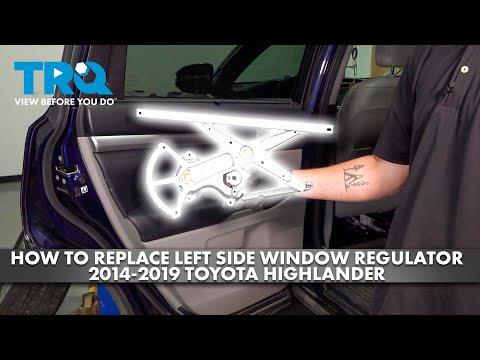
The front window regulator is the track-and-cable (or scissor) mechanism that raises and lowers your window glass. When it fails, the window may fall, move crooked, bind, or stop moving. This job involves removing the door panel, securing the glass, swapping the regulator, then re-initializing the auto window function.
Difficulty Level: Intermediate | Estimated Time: 1.5-3.0 hours (per door)
Assumption: replacing the regulator with motor as an assembly.
⚠️ Safety & Precautions
- ⚠️ Disconnect the battery before working in the door: many Highlanders have a side airbag in the door area.
- ⚠️ Support the window glass with tape so it can’t drop and shatter.
- ⚠️ Keep fingers clear of the regulator tracks and cable path (pinch hazard).
- ⚠️ Don’t turn the key ON with airbag connectors unplugged (can set an airbag warning light).
- ⚠️ Battery disconnect: remove negative terminal and wait at least 90 seconds before unplugging any yellow airbag-related connectors.
🔧 Required Tools
You'll need the following tools for this repair:
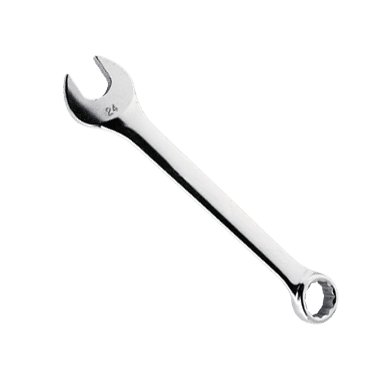
- 10mm socket
- 10mm wrench
- 1/4" drive ratchet
- 3" extension (1/4" drive)
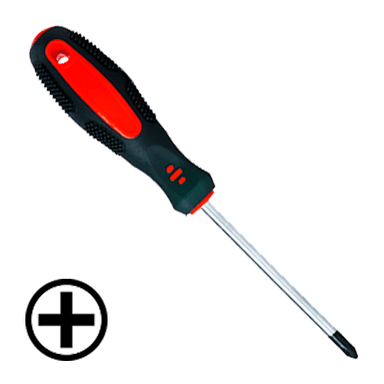
- Phillips #2 screwdriver
- Small flat trim screwdriver
- Plastic trim removal tool set
- Pick tool
- Needle-nose pliers
- Painters tape (1" or 2" wide)
- Shop light
- Magnetic parts tray
- Torque wrench (in-lb) (specialty)
- Safety glasses
- Work gloves
🔩 Required Parts
HowToo sells all the parts you need for this repair:
- Front door window regulator with motor - Qty: 1
- Door panel retainer clips - Qty: 6-12
- Vapor barrier butyl tape (weatherproof adhesive) - Qty: 1
📋 Before You Begin
- Park on level ground, shift to Park, and turn the ignition OFF.
- Open the window if you can, leaving it about halfway down (this usually lines up the glass-to-regulator bolts for access).
- Disconnect the battery negative cable using a 10mm wrench, then wait at least 90 seconds.
- Set up a clean workspace for screws and clips (a magnetic parts tray helps a lot).
🔨 Step-by-Step Instructions
Follow these steps in order:
Step 1: Remove the front door trim panel
- Use a plastic trim removal tool set to gently pry up the window switch panel (start at the rear edge).
- Unplug the switch connectors using a pick tool to release the locking tabs (press the tab, then pull).
- Remove any visible screws in the armrest/handle area using a Phillips #2 screwdriver.
- Pop off the small trim cover behind the inside door handle using a small flat trim screwdriver, then remove the screw behind it with a Phillips #2 screwdriver.
- Use a plastic trim removal tool set to pop the panel clips around the edges (you’ll hear them “snap” free).
- Lift the door panel straight up to unhook it from the top window channel.
- Disconnect the door handle cable(s): use needle-nose pliers to rotate the cable housing out of its bracket, then lift the cable end out of the lever.
- Tip: Pull clips near the bottom first.
Step 2: Remove the vapor barrier (water shield) carefully
- Peel back the plastic vapor barrier slowly using your hands and a plastic trim removal tool set.
- If the butyl adhesive strings, use the pick tool to help separate it.
- Do not tear the barrier—this keeps water out of the cabin.
Step 3: Secure the window glass
- With the glass positioned about halfway (or wherever you can access the clamp bolts), apply painters tape (1" or 2" wide) from the outside of the glass over the door frame, 2–3 strips.
- If the regulator is broken and the glass won’t stay up, hold the glass up by hand (wear work gloves) and then tape it in place.
Step 4: Unbolt the glass from the regulator
- Locate the two glass clamp bolts through the large access holes.
- Use a 10mm socket with a 1/4" drive ratchet and 3" extension to loosen/remove the clamp bolts.
- Carefully slide the glass fully up by hand, then add more painters tape to hold it securely.
- Torque on reassembly: Torque to 8 Nm (71 in-lbs) for the glass clamp bolts.
Step 5: Remove the regulator/motor assembly
- Unplug the window motor connector by releasing the lock tab with a pick tool.
- Remove the regulator mounting bolts using a 10mm socket, 1/4" drive ratchet, and 3" extension.
- If your replacement includes a motor: remove the whole assembly as one piece and guide it out through the access opening.
- Torque on reassembly: Torque to 8 Nm (71 in-lbs) for regulator/motor mounting bolts.
Step 6: Install the new regulator
- Feed the new regulator into the door cavity and align it with the mounting holes.
- Start all bolts by hand first (prevents cross-threading), then snug them with a 10mm socket and 1/4" drive ratchet.
- Final tighten with a torque wrench (in-lb) (specialty): Torque to 8 Nm (71 in-lbs).
Step 7: Reattach the glass to the regulator
- Lower the regulator slider/clamps to the glass level as needed by temporarily plugging in the motor connector and the window switch (do not fully reassemble yet).
- Reconnect the battery negative cable using a 10mm wrench only for this positioning step, then disconnect it again before handling connectors/door area further.
- Remove some painters tape and lower the glass carefully into the regulator clamps.
- Install the clamp bolts using a 10mm socket and 1/4" drive ratchet.
- Final tighten with a torque wrench (in-lb) (specialty): Torque to 8 Nm (71 in-lbs).
- Tip: Keep one tape strip until bolts are tight.
Step 8: Function test (before the panel goes back on)
- Reconnect the battery negative cable using a 10mm wrench.
- Plug in the window switch and run the window up/down while watching the tracks with a shop light.
- Listen for clicking/popping and watch for the glass tilting; if it tilts, loosen the clamp bolts with a 10mm socket, re-seat the glass, and retorque.
- Disconnect the battery negative cable again with a 10mm wrench before reassembling the door (safer around connectors).
Step 9: Reinstall the vapor barrier and door panel
- Press the vapor barrier back into place; add vapor barrier butyl tape anywhere the original adhesive is missing.
- Reconnect the door handle cable(s) using needle-nose pliers to seat the housing, then snap the cable end into the lever.
- Hang the door panel on the top channel, then press the clips in around the edges with your hands.
- Reinstall screws using a Phillips #2 screwdriver.
- Snap the trim covers and switch panel back in using a plastic trim removal tool set.
✅ After Repair
- Reconnect the battery negative cable using a 10mm wrench.
- Initialize the auto-up/down (if it acts weird): turn ignition ON, fully close the window, keep holding the switch UP for 2 seconds; fully open it, keep holding DOWN for 2 seconds.
- Verify the window seals evenly at the top and does not wind-noise whistle on a short drive.
- Confirm the door handle works from inside and outside, and all switches on the panel work.
💰 DIY vs Shop Cost
Shop Cost: $450-$900 (parts + labor)
DIY Cost: $120-$280 (parts only)
You Save: $330-$620 by doing it yourself!
Shop labor rates vary but typically run $100-$150/hour. This repair takes a shop approximately 1.5-2.5 hours per door.
🎯 Ready to get started?
HowToo makes it easy: same-day/2-day shipping on every part, plus all the tools and specialty tools you need! Check out the parts and tools sections below to add everything to your cart.